REVIEW · ALHAMBRA TOURS
Granada: Alhambra Guided Tour including Nasrid Palaces
Book on Viator →Operated by City Wonders Ltd · Bookable on Viator
Alhambra is mind-bending. This guided tour helps it click fast, with clear context at the entrance and a focus on the Nasrid Palaces so you’re not just staring at pretty walls.
My two favorite parts are the way the guide explains what you’re seeing as you go, and the pacing that leaves time to actually absorb key spaces like the Court of the Lions. The one real thing to watch is Alhambra’s ID rules: you must provide the required full name/ID or passport details and show your ID/passport before entry, or you can be turned away.
In This Review
- Key things I’d highlight before you go
- Meeting at the Alhambra Ticket Office: start smart
- The Alhambra entrance intro: making the complex make sense
- Generalife Gardens: the calm before the palace wow
- Alcazaba Fortress and Torre de la Vela: fortress logic and big views
- Nasrid Palaces: where the art and layout start to click
- Mexuar and the transition from public to ceremonial
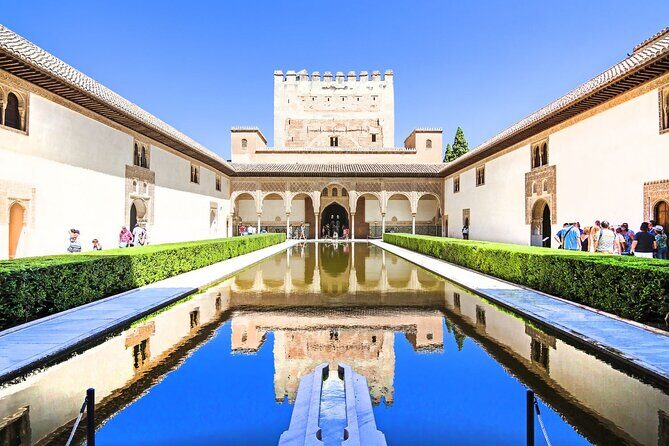
- Court of the Myrtles: stillness with structure
- Hall of the Ambassadors and the pull of geometry
- Court of the Lions: the iconic moment you actually understand
- Hall of the Two Sisters and Hall of the Abencerrajes
- Charles V Palace and what it adds (without stealing the show)
- Guides that make the difference: names to look for
- Practical tips that will save your feet and your mood
- The heat plan
- Comfortable shoes
- Your ID really matters
- Public transport and timing
- How much it costs, and whether it’s good value
- Who this tour suits best
- Should you book? My quick call
- FAQ
- How long is the Alhambra Guided Tour including Nasrid Palaces?
- Is this tour offered in English?
- What’s included with the price?
- What is the meeting point?
- Is hotel pickup or drop-off included?
- Do I need to bring my passport or ID?
- Is there a lot of walking?
- How big is the group?
- What is the cancellation policy?
Key things I’d highlight before you go
- Small group (max 25): easier questions, less crowd chaos while you’re moving between areas
- English expert guide: you’ll get the story behind the tiles, calligraphy, and layout, not just facts
- Nasrid Palaces is the centerpiece: highlights like the Court of the Myrtles and Court of the Lions are built into the route
- Generalife Gardens first: a calmer start in the summer retreat before the fortress and palaces
- Alcazaba + Torre de la Vela views: you get the strategic history and a panoramic payoff
- Tickets handled for you: Alhambra entry and Nasrid Palace entry are included, plus Charles V Palace visits
Meeting at the Alhambra Ticket Office: start smart

You meet at the Alhambra Ticket Office on P.º de la Sabica, 1f, Centro, 18009 Granada. It’s the right kind of meeting point for this site: you’re not wandering around trying to find your way into a maze of ticket lines and signage.
This tour lasts about 3 hours, and it’s set up for an efficient visit. That matters at the Alhambra, where every hour counts and the complex is large. You’ll also want to factor in walking time inside the monument—several guests noted it’s around a few miles total, though it’s generally not described as strenuous.
One more practical point: this is offered in English, and the group size is capped at 25. That’s a sweet spot. Big enough to feel lively, small enough that you’re not stuck behind a shoulder-to-shoulder wall of people.
You can also read our reviews of more guided tours in Granada



The Alhambra entrance intro: making the complex make sense
Your first stop is at the Alhambra itself. You meet your expert guide at the entrance and get a quick but meaningful overview of why the Alhambra matters—both as Moorish-era court architecture and as part of Spanish heritage.
This intro is more useful than it sounds. The Alhambra isn’t a single building. It’s a whole urban-style complex with functions: palaces, gardens, fortifications, and ceremonial spaces. A good guide helps you read the site like a map instead of a scavenger hunt.
You’ll also get an early sense of the “rules” of the place: what areas are focal points, how the spaces relate to one another, and what to look for. It’s the difference between seeing details and understanding why those details exist.
Admission to the Alhambra is included, so you’re not trying to figure out ticket procedures mid-trip.
Generalife Gardens: the calm before the palace wow
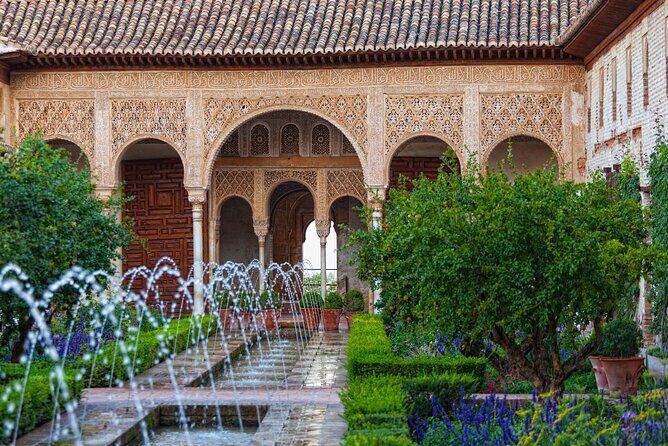
The tour begins in the Generalife Gardens, the summer retreat of the Nasrid rulers. This is your decompress moment, and it’s a smart sequencing choice. After the intro, you walk into landscaped terraces, fountains, and flowerbeds with views over Granada.
The Generalife also changes the tempo. Instead of moving fast toward the most famous interiors, you get open-air time. That makes the later palace sections feel even more dramatic when you step indoors.
Expect stunning outlooks over the city and countryside. You’ll also get a sense of how rulers used water, shade, and scenery as part of daily life—not just for ceremony.
Time here is about an hour, which is long enough to enjoy it but not so long that you lose the day to wandering. If you’re the type who likes photos, this is one of your best windows.
Alcazaba Fortress and Torre de la Vela: fortress logic and big views
Next comes the Alcazaba Fortress, including the Torre de la Vela. This is the oldest part of the Alhambra complex, and it gives you the “defense and control” side of the story.
You’ll learn how the fortress structure ties to strategic power in the Nasrid period. Then you’ll climb the Torre de la Vela for panoramic views of the Alhambra complex and Granada below. The climb is short enough to fit the tour schedule, but it’s high-impact because the view helps you understand layout.
One caution from the real world: this part of the visit can feel time-tight for people who want to linger. If you’re the type who loves forts and towers, you may feel like it moves on quickly to reach the Nasrid Palaces on schedule.
Still, as a “views plus context” stop, it’s one of the best ways to ground your palace experience in the big-picture logic of the complex.
Nasrid Palaces: where the art and layout start to click

This is the headline. The Nasrid Palaces are where the Alhambra earns its reputation, and your guide is there to keep you from treating it like a maze of decoration.
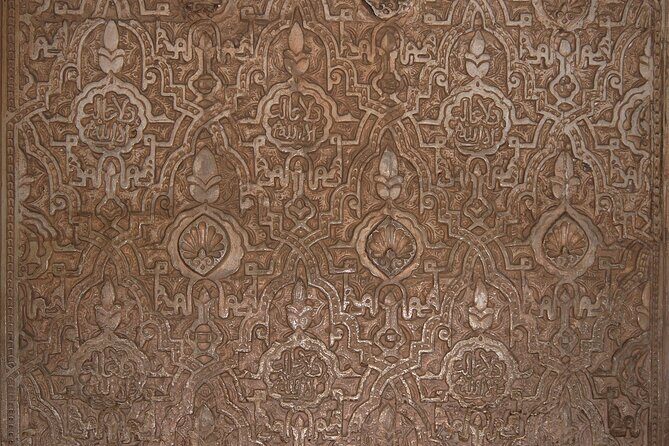
You’ll move through key spaces with an explanation of Islamic art and architecture—and you’ll see how the designs work together: tilework, stucco detailing, geometric patterns, and inscriptions. The guide also shares small stories that make the spaces feel more purposeful.




Mexuar and the transition from public to ceremonial
In the Mexuar, the tour emphasizes intricate decoration and the feel of a formal space. This is one of those areas where your brain starts connecting patterns. Once you know what you’re looking for, you notice how consistent the craftsmanship is across rooms.
Court of the Myrtles: stillness with structure
Then you’ll reach the Court of the Myrtles. It’s serene, and it’s also practical. The layout, water features, and greenery aren’t random. They’re part of how power and hospitality were performed.
This court is a great palate cleanser before the most famous interiors. It slows your thoughts down, so the next rooms land with more impact.
Hall of the Ambassadors and the pull of geometry
The Hall of the Ambassadors is known for grand geometric patterns and calligraphy. What makes this section worth a guided visit is how the guide frames those details—what they likely meant, how they fit into ceremonial use, and how they contribute to the emotional effect of the space.
Even if you’re not a “pattern person,” the room tends to grab you when you understand what the visuals are doing.
Court of the Lions: the iconic moment you actually understand
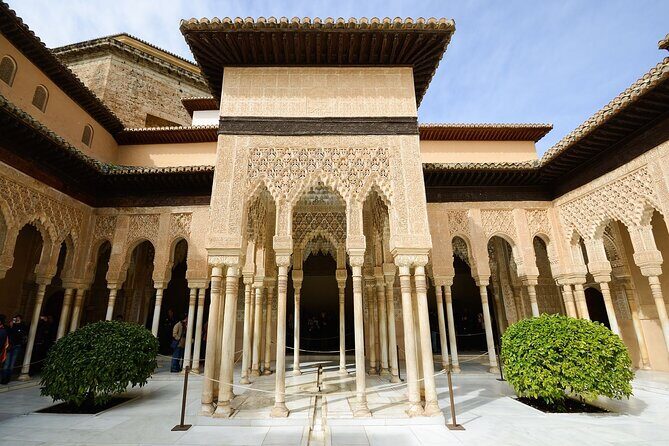
You’ll reach the Court of the Lions, including the central fountain supported by twelve marble lions. This is the photo-famous stop, sure. But with a guide, it becomes more than an Instagram frame.
You’ll get context for why the court is arranged the way it is, how the water feature anchors the space, and how the surrounding architecture shapes movement. That’s the kind of detail that turns a quick glance into a real memory.
Hall of the Two Sisters and Hall of the Abencerrajes
The tour continues to the Hall of the Two Sisters and the Hall of the Abencerrajes. These aren’t just “more rooms.” Each one has its own character and historical significance, and the guide helps you notice how they differ in mood and design language.
By this stage, the palace complex starts to feel like a connected story instead of separate rooms. That’s why this stop is worth the guided structure.
Charles V Palace and what it adds (without stealing the show)

Your ticketed stops also include a visit to the Palace of Charles V. This is a contrasting presence inside the Alhambra landscape, and it helps you see how the site evolved over time.
Even if your priority is Nasrid art, this part can be useful. It gives you a sense of layers—how later rulers occupied and reshaped the complex and how styles shifted across periods.
It’s included here, so you don’t have to decide whether it’s worth the extra time on your own.
Guides that make the difference: names to look for

The quality of your guide shows up in the details. Several guides were praised by name for bringing the site to life with humor, clarity, and good pacing.
You might be led by people like Gustavo, Ana, Javi, Sabina, Christina, or Conchi. The common thread is what you want: explanations that make specific rooms meaningful, plus a pace that feels reasonable instead of a sprint.
One practical bonus: at least one guest noted whisper devices/headphones provided during the tour. That’s a big deal at the Alhambra, where you can’t always hear a guide over crowds and open-air acoustics. If your hearing struggles in certain rooms, that’s usually a range/positioning issue—not you doing anything wrong.
Also, guides in this program tend to answer questions patiently. That’s what transforms “I saw it” into “I understood it.”
Practical tips that will save your feet and your mood

The heat plan
If you’re visiting in summer, plan like it’s a real event. One guest went at 3pm in conditions over 90°F and the tour still ran fine, but you’ll feel the heat.
Bring water and take shade breaks when they’re offered. Wear breathable clothes. And think about using a taxi or tourist train to get to La Alhambra area if you’re coming from higher-up neighborhoods—some people found the walk back and forth can be steep.
Comfortable shoes
Expect stairs and uneven walking surfaces inside the complex. Many guests described the walking as manageable and not overly strenuous, but you’ll still want shoes with grip and support.
Your ID really matters
This is the biggest “don’t mess around” item. Alhambra’s entry policy requires that City Wonders has each traveler’s full name, ID or passport number, and nationality. You must also present that ID or passport before entering the monument. If the details aren’t correct, entry can be rejected.
So: double-check spellings when you book. Then bring the physical passport or driver’s license on the day. Copies won’t cut it.
Public transport and timing
The meeting point is near public transportation. That helps. Still, because entry times and ID checks matter, build in buffer time so you’re not rushing while locating the group flag.
One guest advice that’s worth repeating: go early—around 15 minutes—to find the guide holding the City Wonders flag, especially in high season.
How much it costs, and whether it’s good value
At $54.44 per person, this is priced for what you’re getting: a guided route that includes entry tickets to the Alhambra and the Nasrid Palaces, plus visits to Generalife Gardens and the Palace of Charles V.
If you’re trying to do this solo, you still have to solve tickets, entry rules, and timing across multiple areas. And you’d be missing the biggest advantage: learning how each space is meant to work. That’s what turns the Alhambra from a checklist into a place you can actually read.
You’re also paying for someone to manage the flow. The tour is designed to hit major zones in about 3 hours without wasting time stuck in the wrong places.
So for the money, it’s best value for people who want understanding, not just photos. If you’re already well-versed and you’re comfortable navigating entry systems and palace rules on your own, you might save money by going independent. But if you’re trying to see the heart of the Nasrid palaces in limited time, this guided format is a strong deal.
Who this tour suits best
This tour fits best if you:
- Want a structured way to see the Alhambra’s core spaces without getting lost
- Like architecture and art details explained in plain language
- Prefer a small-group pace with time to ask questions
- Are visiting in peak season and want help with the timed-entry reality
It’s also a good match if you care about context. The guide role here is huge. Without it, the palaces can feel like beautiful rooms. With it, they become a functioning story of power, ceremony, and design.
If you’re the type who dislikes any walking at all, you might find the site pace demanding. It’s described as moderate fitness, but it still involves moving between areas and climbing for the Torre de la Vela.
Should you book? My quick call
Yes—book it if you want the Alhambra to make sense fast and you’d rather spend your time looking at details with a guide than guessing what you’re seeing.
Skip it only if you’re 100% set on touring at your own rhythm with zero guidance, or if you’re unable to meet Alhambra’s strict ID requirements. The tour’s success depends on those rules and on the guided pacing.
If you can handle that, you’ll leave with a clear picture of how Generalife, the Alcazaba, and the Nasrid Palaces fit together.
FAQ
How long is the Alhambra Guided Tour including Nasrid Palaces?
It runs about 3 hours (approx.).
Is this tour offered in English?
Yes, it is offered in English.
What’s included with the price?
You get an expert English-speaking guide, entry tickets to the Alhambra and the Nasrid Palace, plus visits to the Palace of Charles V and the Generalife Gardens.
What is the meeting point?
You meet at the Alhambra Ticket Office, P.º de la Sabica, 1f, Centro, 18009 Granada, Spain.
Is hotel pickup or drop-off included?
No, hotel pickup/drop-off is not included.
Do I need to bring my passport or ID?
Yes. You must make available your full name, ID or passport number, and nationality for each traveler, and you must present the ID or passport before entering the monument.
Is there a lot of walking?
There is some walking, and the tour is marked for travelers with moderate physical fitness. One guest noted it can be around 3 miles total, but not described as overly strenuous.
How big is the group?
The tour has a maximum of 25 travelers.
What is the cancellation policy?
This experience is non-refundable and cannot be changed for any reason.