REVIEW · ALHAMBRA TOURS
Guided visit to the Alhambra, Nasrid Palaces and Generalife
Book on Viator →Operated by Granada Turismo y Ocio · Bookable on Viator
Craft and water do the talking here. This guided route is built for fast understanding of the Nasrid Palaces and the living garden world of Generalife, with a guide who points out what you’re actually looking at as you move room to room. I especially like getting the explanations of the stucco and preserved woodwork ceiling techniques in the Comares area, and I love how the day finishes with orchard-and-patio details at Generalife, not just stone monuments.
One key consideration: the walking and elevation add up, and it’s not recommended for reduced mobility.
In This Review
- Key highlights worth planning around
- Your 3-hour rhythm: tickets, group size, and where you start
- Entering the Nasrid Palaces: Comares, Mexuar, and the Throne Room
- The Palace of the Lions: fountain focus and the rooms with names
- Alcazaba military walls and the Torre de la Vela viewpoints
- Carlos V Palace: a 16th-century interruption you can actually understand
- Calle Real de la Alhambra: the public city and the Christian layers
- Generalife on Cerro del Sol: orchards, orchitecture, and garden patios
- Guide clarity can make or break the day
- Price and value: why this feels like a fair deal
- A realistic caution: what can limit your comfort
- Should you book it? My take for different kinds of visitors
- FAQ
- How long is the guided tour?
- How much does the tour cost?
- What language is the tour offered in?
- Are admission tickets included?
- Where do I meet the tour?
- Is there a maximum group size?
- Is this tour suitable for people with reduced mobility?
- Are service animals allowed?
- What is the cancellation policy?
Key highlights worth planning around
- Comares to Lions without the guesswork: you learn the palace logic instead of just seeing decorations.
- Torre de la Vela panorama: views over Granada, Albaicín, and the Vega de Granada come with context.
- Stucco and wood ceiling craft explained: you’ll notice details you would otherwise miss.
- Generalife gardens as both Nasrid and Christian layers: orchards plus labyrinth garden design.
- Short stops that still point you to museums and ruins: even brief segments help you orient for later exploring.
Your 3-hour rhythm: tickets, group size, and where you start
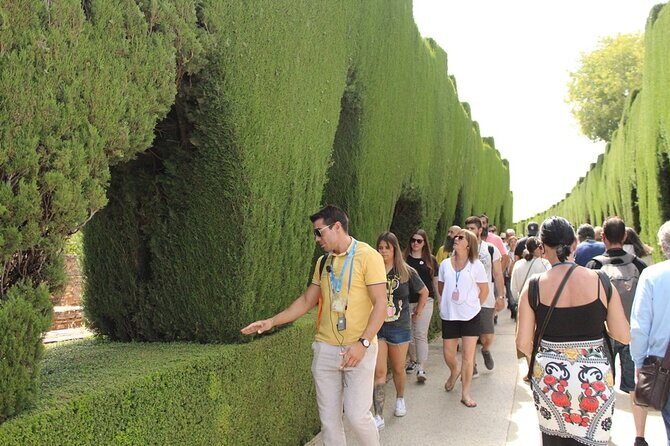
This is a compact circuit, about 3 hours total, with a small group cap of 30 travelers. The tour runs in English, and service animals are allowed. It’s also near public transportation, which matters because the Alhambra complex rewards arriving early and not rushing through the wrong entrance.
At $66.42 per person, the value comes from how much gets bundled into one guided flow. Multiple areas inside the Alhambra are covered, and admissions are included for the main palace blocks and Generalife, while one public area segment is free.
You meet at the Alhambra Meeting Point | Tienda de Souvenirs y Alhambra tours, at P.º de la Sabica, 1 (Centro, 18009 Granada). The tour ends in a different location, so it’s worth having your next plan loosely flexible rather than timed to the minute.
You can also read our reviews of more guided tours in Granada

Entering the Nasrid Palaces: Comares, Mexuar, and the Throne Room
The heart of the tour starts in the Nasrid palaces, where the Alhambra’s political power is expressed through design. You begin in the Comares Palace, with its administrative zone called the Mexuar. This part matters because it sets up the palaces as a working city of leadership, not just a pretty backdrop.
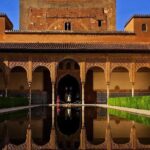
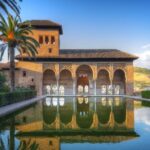
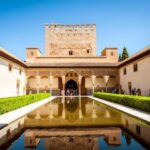
Next comes the Patio de los Arrayanes, known for its porticos and reflecting pool. This is one of those places where water is not decoration-only. When a guide explains how the space is meant to feel, you start noticing symmetry, movement, and why the room openings are placed where they are.
Then you move to the Comares Tower, where the Throne Room is located. This is where craft gets real. You’ll get explanations of the stucco construction techniques and the wood techniques used to make the original ceiling, including that parts of the original work are still preserved. If you’ve ever looked at ornate ceilings and wondered how they were built, this is the stop that turns admiration into understanding.
The Palace of the Lions: fountain focus and the rooms with names
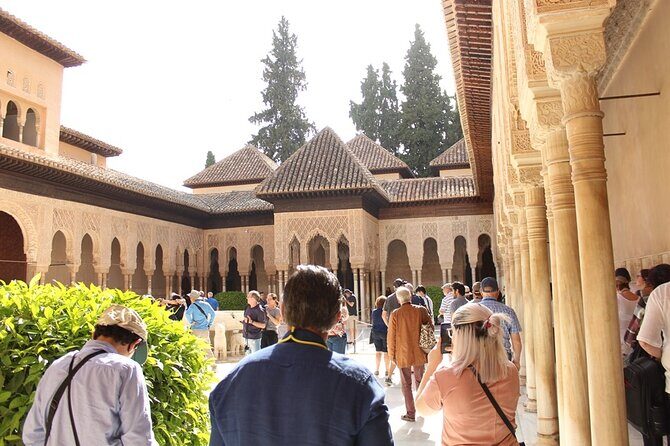
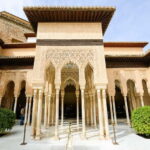
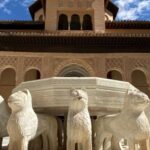
From Comares, the tour continues to the Palace of the Lions, associated with Sultan Mohammed V. The big moment is the patio with the famous fountain, but the value is in what the fountain represents in the palace layout—how water and architecture work together.
You also visit annexed rooms, including the Room of Two Sisters and the Room of the Kings. These names can feel like trivia until a guide ties them back to the design program. The result is you don’t just see carved surfaces—you learn what the room-to-room changes are doing.
The Nasrid portion doesn’t end at the Lions. The tour concludes the palace visit in the Partal area, including the Torre de las Damas. It’s a smart finish to the palaces section because it widens your mental map: you start seeing the Alhambra as a connected hillside complex rather than a single courtyard.
Alcazaba military walls and the Torre de la Vela viewpoints
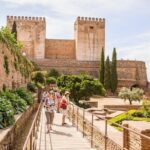
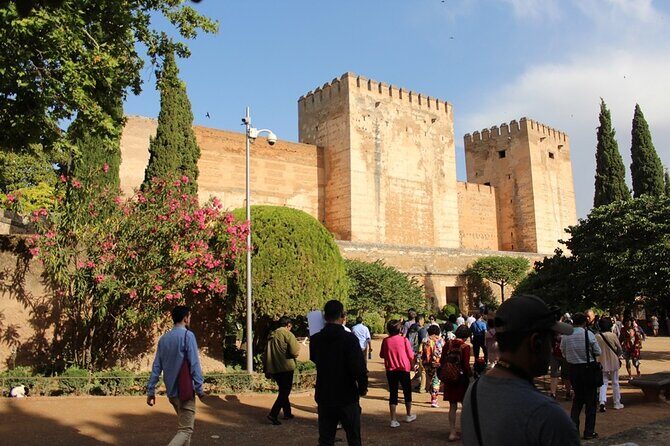
Next you head to the Alcazaba, the military part of the Alhambra. This stop gives you the defensive logic behind the pretty scenery. You’ll hear explanations about the defensive structure of the palatine city, and the way fortification shaped where people could live and move.
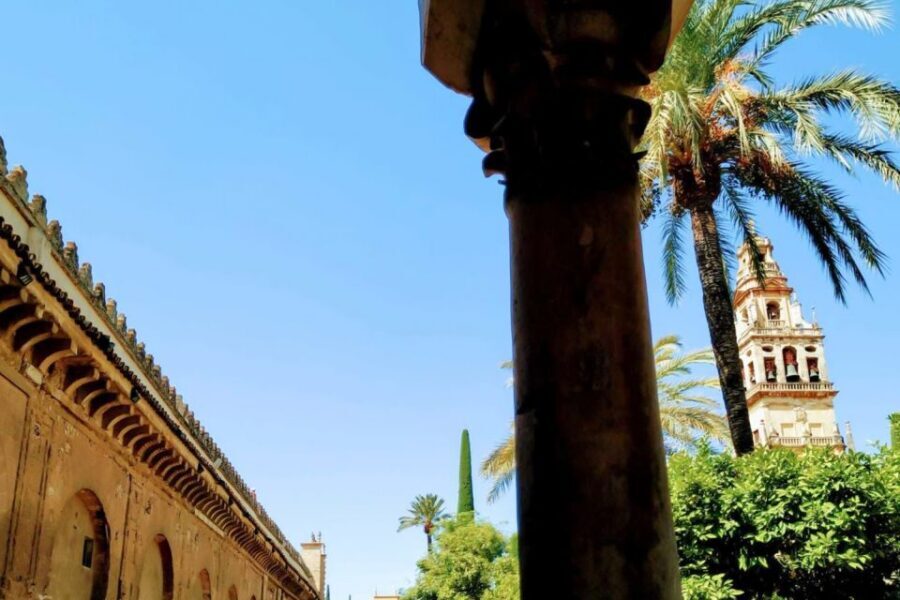
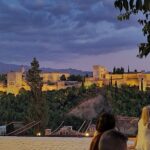
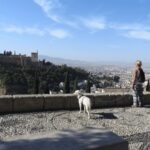
A key moment is the climb to the Torre de la Vela. From here, you get spectacular views of Granada, Albaicín, and the Vega de Granada. What makes this more than a photo break is the explanation of the tower’s function and what happened with it during the Christian conquest. The “why” changes how you look at the stone.
Then the tour moves through the Jardín de los Adarves and the Puerta de las Armas. Even in 25 minutes, these spots help you read the site correctly: gardens and gateways aren’t random; they fit the system of movement and defense.
Carlos V Palace: a 16th-century interruption you can actually understand
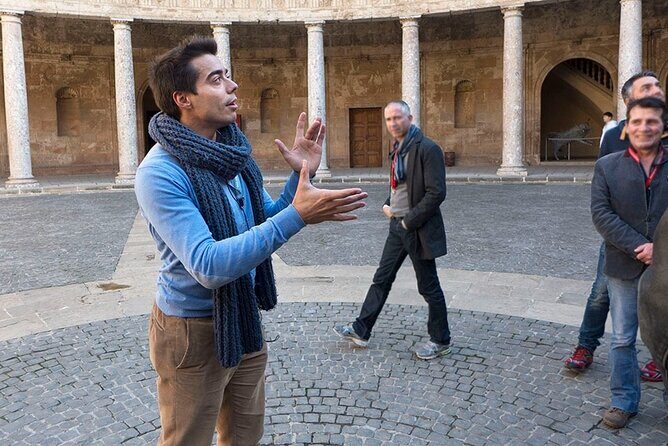
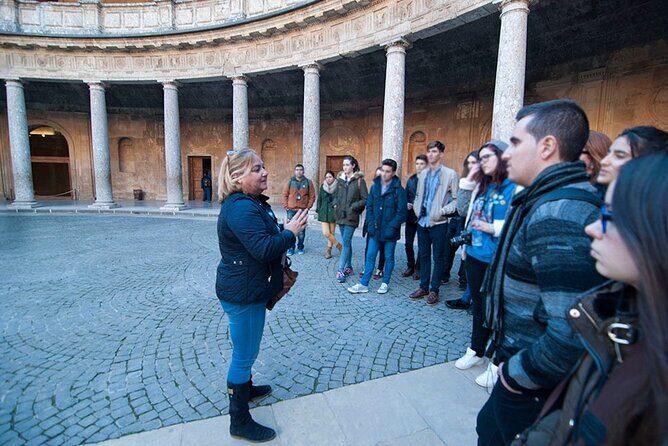
The tour includes a brief visit to the Palace of Carlos V, a 16th-century building within the Alhambra complex. You’ll get an explanation of its facades and the main courtyard, plus details about construction and the symbols the design uses.
Even though the time here is short, the guide also points out where the museums it houses are located. For you, that’s practical: you’re not leaving wondering where to go if you want extra time later. This is the part of the tour that helps the Alhambra stop being only “Nasrid” in your head.



Calle Real de la Alhambra: the public city and the Christian layers
After the fortified and palace zones, you step into the story of a city people actually moved through. The Calle Real de la Alhambra is the public area, covered, and the tour uses it to explain the structure of the city.
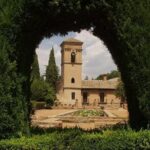
This is also where Christian modifications come into focus. You’ll visit the area that includes the church of Santa María de la Alhambra and the convent of San Francisco, which is now a national hostel. The tour notes that it was the burial place of Queen Elizabeth, a detail that adds weight to what you’re seeing.
You also reach a section of the “dry land” where the ruins of the Palacio de los Abencerrajes are located. This family was prominent in the Nasrid court, and having that context makes the ruins feel less like leftover stones and more like a chapter in a specific ruling story.
Finally, you look at the Medina area, where ruins of workshops and ovens show how decorations were produced. That’s a smart way to end a public-area segment: you connect the finished beauty you saw in palaces to the behind-the-scenes tools and processes.
Generalife on Cerro del Sol: orchards, orchitecture, and garden patios
The last major stop is Generalife, on the Cerro del Sol hill. You spend about 45 minutes here, and it works as a breather after palace interiors and defensive walls. It’s also where you feel the Alhambra as a place that grew food and shaped leisure, not just ceremonies.
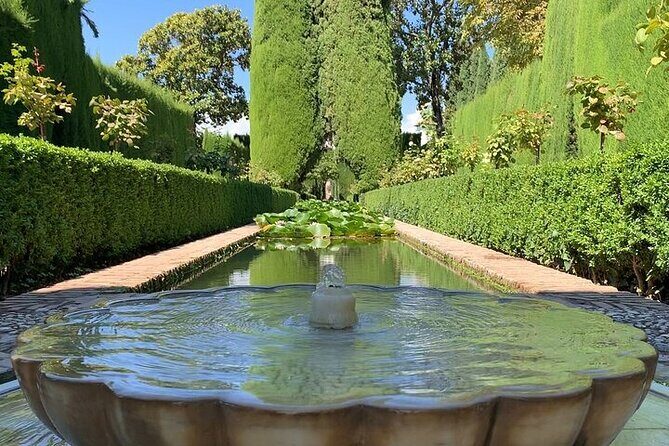
The route includes Nasrid orchards and the Christian labyrinth gardens. You’ll get explanations of the flora in the gardens and the fruits produced in the orchards, which is a nice way to make the landscape more specific than just green space.
You also visit the Generalife Palace and hear about its physical communication with the city of the Alhambra. That connection is important because it explains how power and pleasure were linked.
Then you move through the patios:
- Patio de Polo
- Patio de la Guardia
- Patio de la Acequia, where you’ll see the summer house of the Sultan
- Patio de la Sultana, with cypress trees and taller garden areas
The tour exits through the Paseo de las Adelfas, which is a practical finish because you can leave without backtracking through the busiest parts.
Guide clarity can make or break the day
The best part of this kind of Alhambra visit is not the architecture by itself. It’s the order and the explanations. The feedback highlights that guides often make the story clear and the pacing comfortable. I’d especially watch for guides like Noelia and Victoria, whose commentary is described as very clear and attentive, the kind that helps you understand what you’re looking at instead of just walking past it.
Here’s how to get the most out of your guide, regardless of who leads your group:
- Listen for build-and-technique details, especially around the palaces’ ceilings and stucco work. Those are the details that turn a “wow” into a “now I get it.”
- Use the fountain and water moments as your memory anchors: Arrayanes and the Lions fountain are not random focal points.
- When you reach the viewpoint at Torre de la Vela, take 30 seconds to orient. The tour includes the names you need, so you can place the sights in your head.
With a group size up to 30, the guide can usually keep things moving while still making sure you’re following the main thread.
Price and value: why this feels like a fair deal
Let’s talk value without pretending this is cheap. At $66.42, you’re paying for:
- a structured 3-hour route across multiple Alhambra zones,
- English guidance throughout,
- and admission tickets included for the major palace and garden segments (Nasrid Palaces, Alcazaba, Carlos V, Generalife).
There’s also a built-in logic to the time: your Nasrid portion gets the lion’s share (about an hour), Alcazaba gives you the views and defensive context, Carlos V adds the 16th-century layer in a short orientation stop, then Calle Real and Generalife round out the story with the public city and garden life.
If you tried to plan all of this on your own, you’d spend time figuring out routes, ticket timing, and what to notice. This tour saves you from that friction by giving you the “what it means” as you go.
A realistic caution: what can limit your comfort
This tour isn’t recommended for everyone. If you have mobility limits, expect difficulty due to uneven surfaces and elevation changes across the complex. Even if you’re generally fine, plan for sun and walking time between stops.
There’s also a fixed-ticket reality: the experience is non-refundable and cannot be changed once booked. That matters for you if your trip schedule is shaky. This tour is best when you’re confident in your chosen time slot.
One more practical note: the tour ends in a different location, so don’t plan a tight connection right at the finish. Leave breathing room so you can reorient and head where you need to go.
Should you book it? My take for different kinds of visitors
Book this tour if:
- You want the core Alhambra story in one guided pass: Nasrid palaces, military Alcazaba, the Carlos V layer, the public city areas, and Generalife gardens.
- You like learning what you’re seeing, especially craft details like stucco and ceiling techniques.
- You value efficient pacing when your time in Granada is limited.
Skip or rethink if:
- You need step-free routes or have reduced mobility (it’s specifically not recommended).
- You prefer long, slow museum-style wandering. The itinerary is thoughtful, but time at each stop is limited, and you may want extra independent time after.
If you’re visiting Granada for the first time and want to understand the Alhambra beyond postcard views, this is a strong way to do it. You’ll leave with a clearer mental map and a set of specific scenes that make the complex feel connected.
FAQ
How long is the guided tour?
The duration is approximately 3 hours.
How much does the tour cost?
The price is $66.42 per person.
What language is the tour offered in?
The tour is offered in English.
Are admission tickets included?
Yes. Admission tickets are included for the Nasrid Palaces, Alcazaba, Palace of Carlos V, and Generalife. Calle Real de la Alhambra is listed as admission free.
Where do I meet the tour?
You meet at the Alhambra Meeting Point | Tienda de Souvenirs y Alhambra tours, P.º de la Sabica, 1, Centro, 18009 Granada.
Is there a maximum group size?
Yes, the tour has a maximum of 30 travelers.
Is this tour suitable for people with reduced mobility?
It is not recommended for people with reduced mobility.
Are service animals allowed?
Yes, service animals are allowed.
What is the cancellation policy?
The experience is non-refundable and cannot be changed for any reason. If you cancel or request an amendment, the amount you paid will not be refunded.