REVIEW · ALBAICIN & SACROMONTE TOURS
Albaicin guided tour with dogs
Book on Viator →Operated by Balea Travel · Bookable on Viator
Granada’s oldest streets meet your dog. This Albaicín guided tour with dogs takes you from Plaza Nueva up through classic viewpoints and story-filled squares, finishing near Puerta Elvira. I like that it’s built around a dog-friendly rhythm while still delivering real cultural context about the neighborhood’s past.
I also like the route’s big visual payoff: you reach the Mirador de San Nicolás and then keep moving through landmarks tied to the old citadel area. The one thing to consider is that it is still a 2-hour walking experience on steep, historic lanes, and it depends on good weather.
In This Review
- Key highlights worth knowing
- Why the Albaicín-with-dogs format feels right
- Route at a Glance: Plaza Nueva up to Puerta Elvira
- Getting set up for the 10:30 start (and not losing the group)
- Stop 1: Calle Elvira, then a classic Arab-past street finish
- The Santa Inés climb: streets and squares with stories
- Mirador de San Nicolás: the viewpoint moment that anchors the walk
- Plaza Larga and the Alcazaba Cadima area: where the neighborhood’s power feels closer
- Puerta Elvira and Arco de Elvira: end with atmosphere, not just a zip-out
- How the tour treats dogs (and why your comfort improves too)
- Price and value: $28.91 for two hours of guided, dog-adapted culture
- What to expect from the guide style (Eva’s friendly, close-up approach)
- Weather, walking comfort, and who this fits best
- Should you book this Albaicín dog-friendly walk?
- FAQ
- How long is the Albaicín guided tour with dogs?
- What is the starting time and meeting point?
- Where does the tour end?
- How much does it cost?
- Is a mobile ticket included?
- Are dogs allowed on the tour?
- Are service animals allowed?
- How big is the group?
- What language is the tour offered in?
- What happens if weather is bad?
Key highlights worth knowing
- Dog-friendly pace that’s meant for rest and social time so you’re not rushing your pup through everything
- Small group size (max 10 travelers) for a calmer experience around narrow streets
- A classic Albaicín route from Plaza Nueva past Santa Inés, Plaza Larga, and the citadel area
- Mirador de San Nicolás included, a main stop for views and atmosphere
- Finish near Puerta Elvira and Arco de Elvira, ending in one of the most recognizable streets from the Arab past
- Guide named Eva appears in multiple comments, so you may get a particularly warm, close-up style
Why the Albaicín-with-dogs format feels right
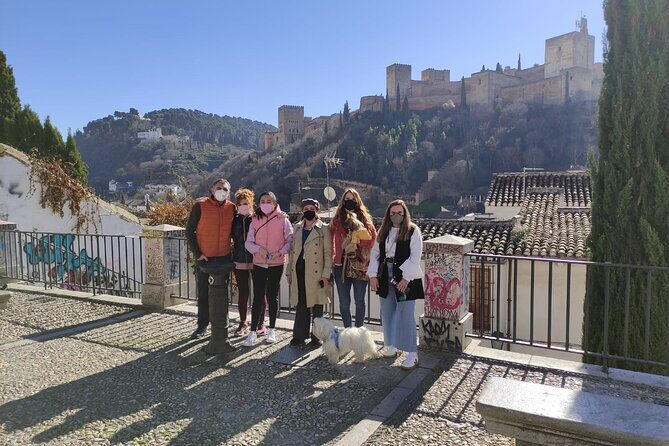
The Albaicín is Granada’s oldest neighborhood and a UNESCO World Heritage Site, so it’s not just about pretty streets. It’s about layers: moving from square to square and hearing how the area formed and changed over time. What makes this tour different is that it’s not a standard human-only history walk with dogs as an afterthought.
The main idea is simple: your dog comes along, and the schedule is meant to work with real dog needs—slower moments, chances to drink, and time to settle while other dogs are around. I love that approach because it keeps the walk comfortable for you too. If you’ve ever watched a pup struggle through a crowded route, you know how fast a “culture day” turns into stress.
The other big plus is the guide style. In the comments I see a guide who’s friendly and close, with a pace that helps you pay attention to the neighborhood details instead of checking your watch every few minutes. One practical benefit of a small group is that you can actually talk, listen, and look up without feeling like you’re moving with a herd.
You can also read our reviews of more guided tours in Granada
Route at a Glance: Plaza Nueva up to Puerta Elvira
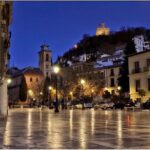
You start at Plaza Nueva (Pl. Nueva, 10, in the Albaicín area) at 10:30 am, and the tour runs about 2 hours. The finish is listed near Puerta Elvira (Pl. del Triunfo, 19, Albaicín), and the walking flow ends around the Arco de Elvira area along Calle Elvira. In practice, that means you finish in the right zone to continue exploring on foot—without needing a vehicle or a complicated plan.
The route climbs in stages. You go up the way that links Plaza de Santa Inés with the higher viewpoints—then you reach Mirador de San Nicolás. After that, the tour keeps you inside the neighborhood’s historic core, moving toward Plaza Larga and the Alcazaba Cadima area, which is tied to the old citadel idea. Then you work your way toward the end gate area: Puerta Elvira and the street corridor around Calle Elvira.
Why this layout matters: it’s a “best of” flow that mixes lookout moments with storytelling stops, instead of treating the viewpoints as quick photo stops. It also helps you understand the neighborhood as a system—where people gathered, where power sat, and how streets connect.
Getting set up for the 10:30 start (and not losing the group)
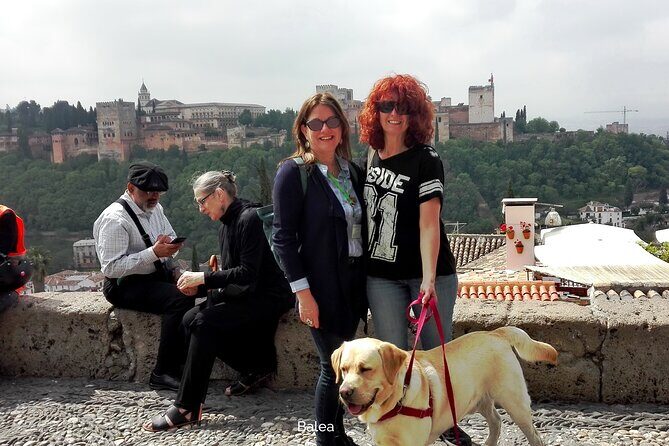
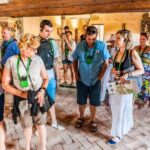
Granada’s old districts can be confusing if you arrive late or wander while waiting. Here, the good move is to show up a bit early so you can find the meeting spot confidently: Plaza Nueva, Pl. Nueva 10. The tour starts at 10:30 am, and the duration is about 2 hours, so you’ll want to give yourself enough time to park your headspace and let the morning settle.
This is a mobile ticket experience, and confirmation happens at booking time. That’s convenient because you’re not juggling paper, and it also means you can focus on the practical stuff: getting your dog ready for a calm walk.
Since the tour is capped at 10 travelers, it’s not a giant crowd. Still, narrow streets plus a small group means you should keep a steady pace when the guide signals moving on. For you, that translates to comfy shoes and a light layer. For your dog, it’s about keeping things controlled so the group stays relaxed.
Stop 1: Calle Elvira, then a classic Arab-past street finish
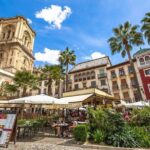
The tour structure is designed around the Albaicín’s landmarks, but it also uses street atmosphere as part of the history lesson. Calle Elvira shows up in the tour’s ending section: you finish in the Arco de Elvira area, so you get to stroll through one of Granada’s most typical and well-known streets connected to the city’s Arab past.
That matters because the best cultural tours don’t only tell you stories. They show you where those stories lived day to day. Ending here gives you a satisfying wrap-up: you’ve been climbing and looking outward, but you finish back in a street setting that helps the neighborhood feel real.
If you like the idea of mixing viewpoints with “walkable history,” this end point is a good match. You don’t leave feeling like you saw things from far away and then disappeared into an unrelated part of the city.
The Santa Inés climb: streets and squares with stories
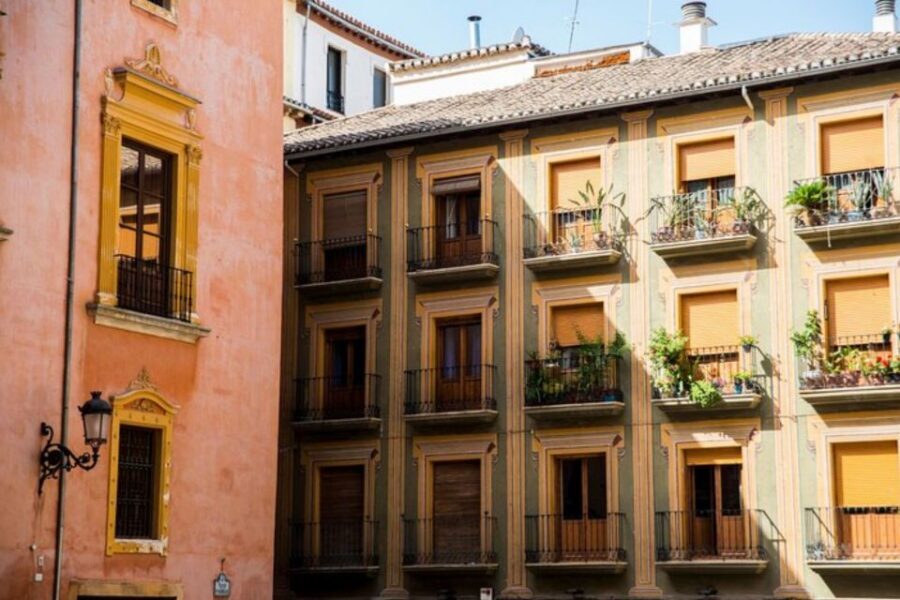
After Plaza Nueva, you head up through Plaza de Santa Inés. From there, the tour moves along streets and squares with stories and legends as you work your way toward the next major stop. This is one of those routes where the details matter: the little turns, the small open spaces, and the way the neighborhood’s layout shapes your walking path.
I like that the tour doesn’t treat this section as filler. The Albaicín can feel like a maze if you’re just wandering, so having a guided line of sight helps you connect the physical streets to the historical narrative. You’re not just moving uphill—you’re learning how the neighborhood formed and why certain areas gained meaning.
A practical note: because it’s an older quarter with uneven streets and a climb, the pacing becomes important. This is where the dog-friendly design is helpful. Your guide is working to keep the group moving at a speed that lets dogs pause, sniff, and recharge.
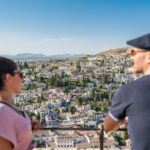

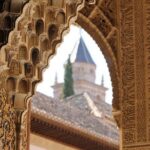
Mirador de San Nicolás: the viewpoint moment that anchors the walk
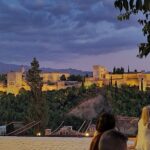
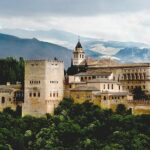
The tour reaches Mirador de San Nicolás, and this is typically the emotional peak of many Albaicín walks. Even if you’ve seen photos, you’ll usually notice a difference once you’re there in person: the air shifts, the neighborhood’s depth becomes obvious, and the perspective makes the whole area feel linked together.
Here’s the value of including it in a guided tour: you’re not only there to look. You’re there as part of the story of the neighborhood—so you understand why this view point matters and how the city’s shape connects to the Albaicín’s identity.
Because the route is about 2 hours total, you don’t linger for ages, but you get a proper viewpoint stop instead of a rushed drive-by. For dog owners, it’s also useful as a built-in break moment. Even without a specific “rest stop” being guaranteed, a viewpoint pause naturally gives your pup time to settle.
Plaza Larga and the Alcazaba Cadima area: where the neighborhood’s power feels closer
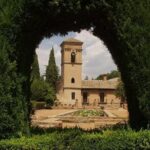
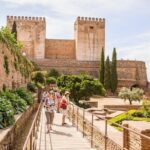
After the view, the tour shifts from outward looking to inward meaning—through Plaza Larga and toward the Alcazaba Cadima (old citadel area). This is the kind of segment that turns a neighborhood from a pretty walk into an actual place with structure.
Plaza Larga helps because it’s not just a corridor. It gives you breathing space within the historic core, so the guide can connect what you’re seeing with what used to happen there. Then the route moves into the citadel-adjacent area concept, where you can start to picture defense, settlement, and the way power shaped the layout.
A helpful reality check: since this section is tied to an old citadel concept, you may encounter steeper or rougher walking depending on the exact path. The overall tour is still designed for most travelers, but the comfort level will depend on your dog’s tolerance and your willingness to slow down during the climbs.
Puerta Elvira and Arco de Elvira: end with atmosphere, not just a zip-out
The tour finishes at Puerta Elvira (Pl. del Triunfo, 19, Albaicín). But it doesn’t feel like an abrupt stop. It transitions into that end-stroll near Calle Elvira and the Arco de Elvira, keeping the experience grounded in a recognizable historic street.
This is a smart finish, because it gives you a natural next step: you’re in the right neighborhood zone to keep wandering at your own pace. For couples, friends, and families—especially those traveling with dogs—it’s easier than ending somewhere that forces you to re-navigate the city from scratch.
I also like that this ending connects back to the idea of the Arab past through a street you can continue to experience on foot. The tour doesn’t only point; it leaves you with a route you can actually walk again after the official two hours.
How the tour treats dogs (and why your comfort improves too)
This is not a “dogs are allowed, good luck” situation. The whole tour framing is dog-friendly, with a rhythm that aims to keep dogs from overheating or getting overwhelmed. In the comments, the dog-specific setup shows up clearly: dogs can rest, drink water, and socialize with other dogs during the walk.
That social element matters more than it sounds. If your dog is used to calm walks and other dogs, a controlled, small-group setting can be a relief. And if your dog is more sensitive, it’s still helpful that the guide is intentionally managing pace and the flow of the group.
One detail that stands out is that the tour is described as adapting the rhythm strategically for pups. That means you’re not simply dragging your dog through history while trying to act like the dog doesn’t exist. You’re both part of the same experience, with the guide using a slower tempo and built-in pauses.
I’ll add one practical suggestion: bring what you normally need for your dog (leash, water if your dog prefers it, and any small comfort items). Even if the tour includes chances to drink, having your own basics makes the experience smoother.
Price and value: $28.91 for two hours of guided, dog-adapted culture
At $28.91 per person for about 2 hours, this isn’t the cheapest option in Granada. But it’s also not priced like a high-end private tour. For me, the value comes from three things happening at once:
- You get a guided cultural route through major Albaicín zones
- The walk is adapted for dogs, not just tolerant of them
- The group is small (max 10), which improves the quality of both listening and dog management
If you’re traveling with a dog, you’re usually paying a premium somewhere for anything that works. Here, the price includes the benefit of having a guide who knows how to run the route without ignoring the dog’s needs.
For solo travelers with a pup, it can also be a social win: small-group walks are often easier than finding a private route with the right pacing yourself.
What to expect from the guide style (Eva’s friendly, close-up approach)
Multiple comments mention a guide named Eva, and the tone is consistent: close, friendly, and attentive. That matters on a tour like this because the streets are narrow and the climbs are real. A guide who keeps the pace aligned with the group helps everyone stay present.
Also, the guided storytelling seems to focus on making the neighborhood understandable—how the lanes link together, why certain areas mattered, and what the key landmarks represent. That turns the walk into something you can remember, not just something you pass through.
If you want a tour that feels more like a conversation with a local than a lecture, this style seems like a good fit. And for dog owners, it’s especially important because it keeps the focus on the walk while still giving you cultural context.
Weather, walking comfort, and who this fits best
This tour requires good weather, so if Granada weather is looking questionable, expect the operator to offer an alternative date or a full refund if it has to be canceled due to poor conditions.
As for who it fits best, the data says most travelers can participate, which usually points to a moderate effort level rather than something extreme. Still, consider your dog’s mobility and your own tolerance for older-street walking. If your dog is young and energetic, the sniffing and social time can be a fun highlight. If your dog tires quickly, plan for more frequent pauses and keep your expectations realistic for a 2-hour route.
This is a strong pick for:
- Families who want a culture walk without leaving the dog behind
- People who like history but also need a relaxed pace
- Dog owners who want a structured route that accounts for dog behavior
It may be less ideal for:
- Dogs that are very reactive in group settings
- Anyone expecting mostly flat walking or long seated breaks
Should you book this Albaicín dog-friendly walk?
If you want a two-hour, high-value guided walk in Granada’s Albaicín that actually includes your dog as a first-class participant, I’d say yes. The combination of a smart route (Santa Inés → Mirador de San Nicolás → Plaza Larga/Alcazaba Cadima → Puerta Elvira and Arco de Elvira) and a dog-adapted pace is the real selling point.
Book it especially if you’re the type who likes to understand where you are while you’re walking. This route helps you connect the neighborhood’s layout to its story—and it does it without turning your pup into an inconvenience.
If you’re on the fence, your best “decider” is your dog’s walking tolerance. If your pup handles uphill streets and prefers calm, structured outings, this tour looks like one of the more thoughtful ways to see the Albaicín.
FAQ
How long is the Albaicín guided tour with dogs?
It lasts about 2 hours.
What is the starting time and meeting point?
The start time is 10:30 am. You meet at Pl. Nueva, 10, Albaicín, 18009 Granada, Spain.
Where does the tour end?
The tour ends in the Puerta Elvira area, near Pl. del Triunfo, 19, Albaicín, 18010 Granada, Spain, and it finishes around Arco de Elvira.
How much does it cost?
The price is $28.91 per person.
Is a mobile ticket included?
Yes, the tour includes a mobile ticket.
Are dogs allowed on the tour?
Yes. The tour is specifically a guided Albaicín walk with your dog.
Are service animals allowed?
Yes, service animals are allowed.
How big is the group?
The tour has a maximum of 10 travelers.
What language is the tour offered in?
You select the language as part of the booking, and you should double-check that date, language, and itinerary match what you want before confirming.
What happens if weather is bad?
The experience requires good weather. If it’s canceled due to poor weather, you’ll be offered a different date or a full refund.