REVIEW · 2-DAY EXPERIENCES
Granada City Train 1 or 2-Day Hop-On Hop-Off Ticket
Book on GetYourGuide →Operated by Julia Travel Gray Line Spain · Bookable on GetYourGuide
Granada hills feel less steep when you ride. This hop-on hop-off city train lets you explore the historic center at your pace, with big views as it crawls through narrow streets. I love two things most: getting close to the Alhambra from the Alhambra Generalife start, and having a 12-language audioguide that keeps you oriented while you hop around. The main catch is simple: it can get busy, and the ride over cobblestones is a bit bumpy.
If you’re trying to see a lot without burning your legs, this is a smart tool. The service runs often (about every 30 to 45 minutes on the Alhambra route), so you can repeat stops and build your own mini itinerary instead of buying one fixed tour. And based on the overall rating around 3.5 from thousands of reviews, the pattern is consistent: most people like the value and convenience, while crowding and occasional wait times show up on peak days.
In This Review
- Key Things to Know Before You Ride
- A City Train That Makes Granada Walkable
- Ticket Value: Why This Costs So Little (and Still Works)
- Starting at Alhambra Generalife: The Green Line’s Rhythm
- Stop-by-Stop Guide: What Each Alhambra Route Stop Is For
- Alhambra Generalife (Ticket Office) — Your Launchpad
- Alhambra / Puerta de la Justicia — The Alhambra Close-By Stop
- Plaza Nueva — The Old Square Moment (and Coffee Break)
- Alhóndiga — A Mid-Route Break Point
- Catedral / Capilla Real — Cathedral Territory
- Mirador de San Cristóbal / Jardines de Zoraya — Views You Can Feel
- Arco de Elvira / Hospital Real — Classic Center Connections
- Calle Reyes Católicos / Plaza Isabel la Católica — Street-Life Granada
- Calle Molinos / Campo del Príncipe — A Break in the Monument Pace
- Carmen de Los Mártires — Ending Point for a Longer Walk Day
- Ride Comfort and Audio Guide: How to Make It Pleasant
- Bring Your Own Headphones
- Listening Tips for Noisy Streets
- Making It Work on Busy Days (Without Burning Time)
- Schedule Traps: Alhambra Hours and the 2:00–2:30 p.m. Gap
- The weekday Alhambra gap
- Holiday hours can shift
- Strollers, Bumpy Streets, and Practical Travel Notes
- Should You Book the Granada City Train Hop-On Hop-Off?
- FAQ
- Where is the meeting point for the Granada City Train?
- How often do the trains run on the Alhambra route?
- What’s included with the ticket?
- Do I need to bring headphones?
- What stops are on the Alhambra route?
- How long is the ticket valid?
- Are trains to the Alhambra available all day on weekdays?
- Are strollers allowed?
- What languages are available for the audioguide?
Key Things to Know Before You Ride
- Alhambra route is the star (Green Line): it connects the Alhambra area to the center’s major sights.
- Hop on, hop off as much as you want: use the train like local transportation, not a one-and-done ride.
- 12-language audioguide is included: you can learn as you move without reading maps constantly.
- Stop 6 is a top photo and sunset moment: Mirador de San Cristóbal is built for views.
- Coffee break is easy at Plaza Nueva: it’s an obvious stop to pause and reset.
- Plan for crowds at popular stops: especially around the Alhambra area.
A City Train That Makes Granada Walkable
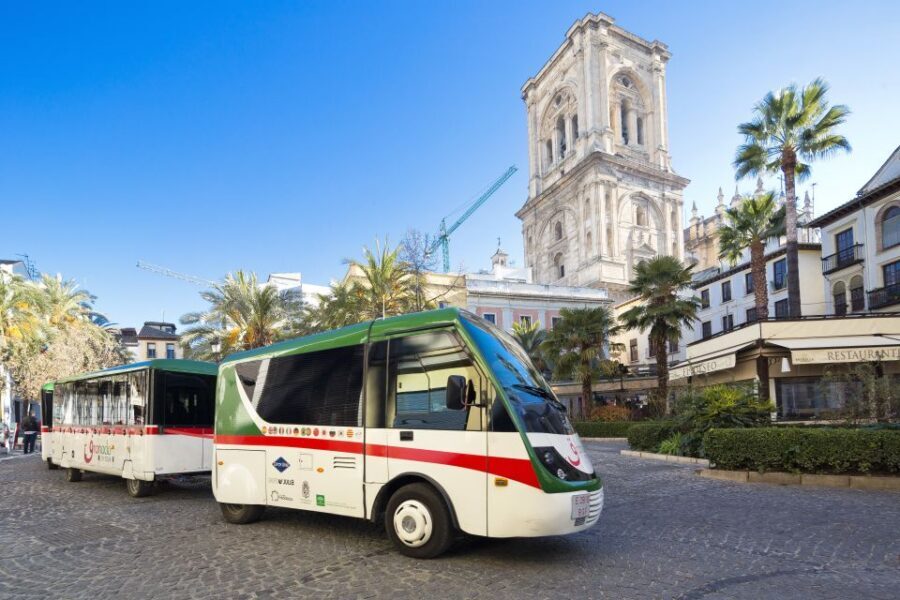
Granada’s old streets are charming, narrow, and often steep. That’s great for wandering, but it can be exhausting if you’re juggling the Alhambra area, cathedral sights, and a few neighborhoods in one day. The Granada City Train is basically a practical workaround: it brings you close to the landmarks, then lets you choose how long to stay at each stop.
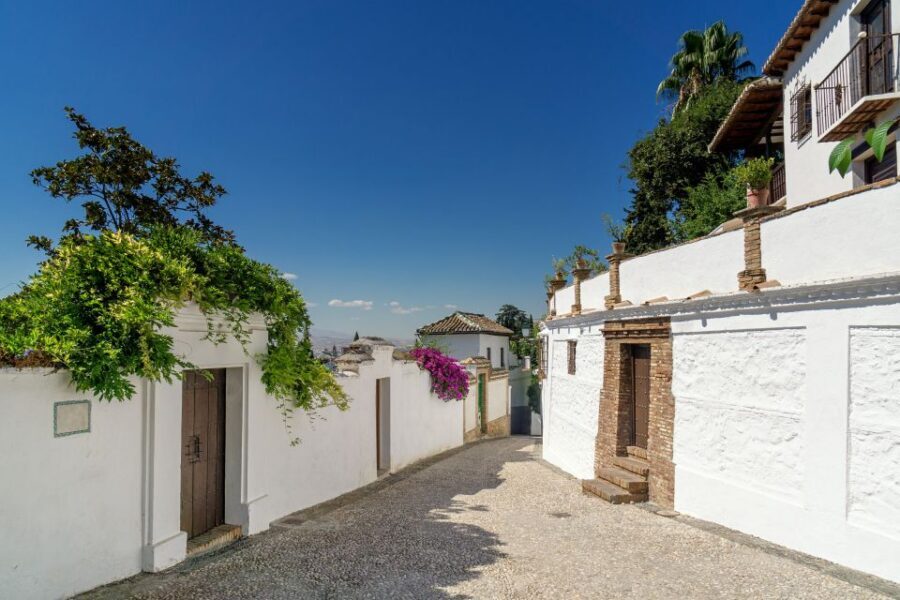
What makes it feel “Granada” is the way the route threads through the historic center. You’re not whisked through wide boulevards; you’re riding through the kinds of lanes that force normal cars to squeeze and creep. From the train, those turns and views make the ride feel like part of the sightseeing, not just transportation.
Most importantly, the hop-on hop-off format prevents the common vacation mistake: rushing. Instead of committing to a single rigid tour, you can hop off, walk a bit, take photos, then get back on when you’re ready.
You can also read our reviews of more tours and experiences in Granada


Ticket Value: Why This Costs So Little (and Still Works)
The price point is the headline here. The ticket is listed at about $8 per person, and you can choose a 1-day or 2-day option (or a 1-trip ticket, depending on what you select). On paper, that sounds almost too cheap for a vehicle that hits the Alhambra area and multiple big-name sights.
In practice, the value comes from three things:
- You’re paying for access plus orientation. The audioguide helps you understand what you’re seeing while you’re moving.
- You can repeat stops. A second pass at the same area is often where you slow down and actually enjoy it.
- You avoid the “wrong footwear” problem. If your shoes or legs aren’t up for a steep day, this train becomes your safety net.
One thing to be clear about: this isn’t a luxury ride. You’re on a city train meant for short-distance sightseeing through old stone streets. A few reviews mention it’s a little bumpy and the ride can feel rough, and that occasional brakes can be surprising. If you’re sensitive, plan for that reality and don’t expect a smooth, cushy coach.
Also, the audioguide is included, but headphones are not. Bring your own so you can listen without added stops or last-minute purchases.
Starting at Alhambra Generalife: The Green Line’s Rhythm
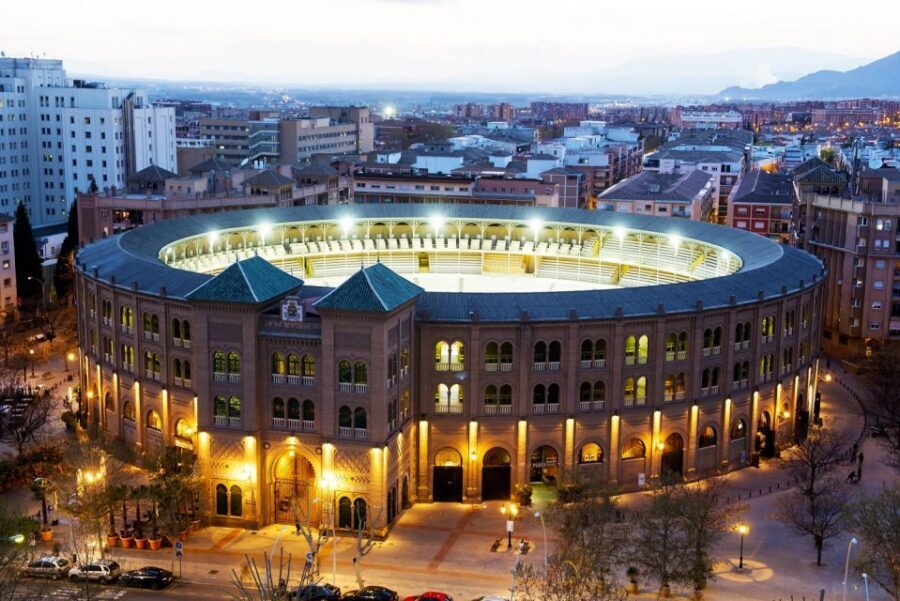
Your boarding point is straightforward: the ticket office at Stop No. 1 Alhambra, where the route starts at Alhambra Generalife. From there, the Alhambra route (the Green Line) strings together the Alhambra area, the city center, and viewpoint territory.
On the Alhambra route, the trains run about every 30 to 45 minutes. That frequency is high enough that you can actually use this like transport, not like a schedule you fear missing. It also helps you do the best strategy for a short visit: ride once to get your bearings, then hop off to revisit what you want.
One useful detail to note: Monday to Friday, from 2:00 p.m. to 2:30 p.m., there are no regular train rides to the Alhambra because the access route through Cuesta del Caidero is closed. Outside those hours, the train does make its regular route.
If you’re aiming to connect your sightseeing to a specific Alhambra visit window, it’s worth planning your train ride earlier in the day or after that short closure.
Stop-by-Stop Guide: What Each Alhambra Route Stop Is For
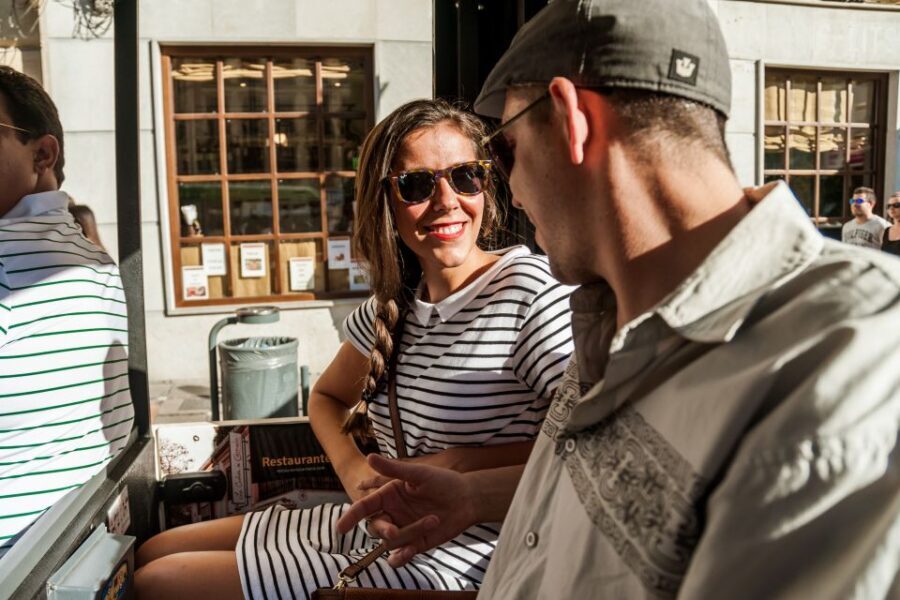
The Green Line stops give you a sequence that makes sense if you want both big monuments and the classic Granada core. Here’s how I’d think about each stop, including what it’s best used for.
Alhambra Generalife (Ticket Office) — Your Launchpad
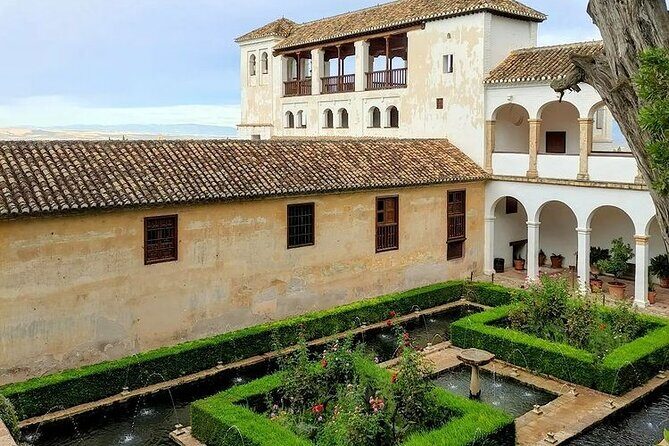
Start here. This is the practical choice for first-time orientation because you’re placed at the top end of the route. If you want to do the smart walking plan, start at this highest point and do downhill walking afterward. Then let the train bring you back up when your legs need a break.
You can also read our reviews of more city tours in Granada





Alhambra / Puerta de la Justicia — The Alhambra Close-By Stop
This is your main Alhambra connection. The goal isn’t just to say you rode; it’s to get close to the Alhambra monument. If you plan to spend significant time inside the Alhambra, use the train to reach the area efficiently and then build the rest of your schedule around it.
Plaza Nueva — The Old Square Moment (and Coffee Break)
Plaza Nueva is famous on this route for a reason: it’s a simple place to regroup. One of the highlights specifically calls out a stop for a coffee, and it fits how people actually use this train. Hop off here, grab a drink, and reset before heading back toward the cathedral area.
This stop also works well if you want your sightseeing to include a pause that doesn’t feel like a production.
Alhóndiga — A Mid-Route Break Point
Alhóndiga sits in the middle of the route, and that makes it handy. Think of it as a good place to step off if you want to explore a neighborhood-like stretch without committing to a full major attraction.
If you like wandering between landmarks rather than bouncing directly from one monument to the next, this stop gives you that flexibility.
Catedral / Capilla Real — Cathedral Territory
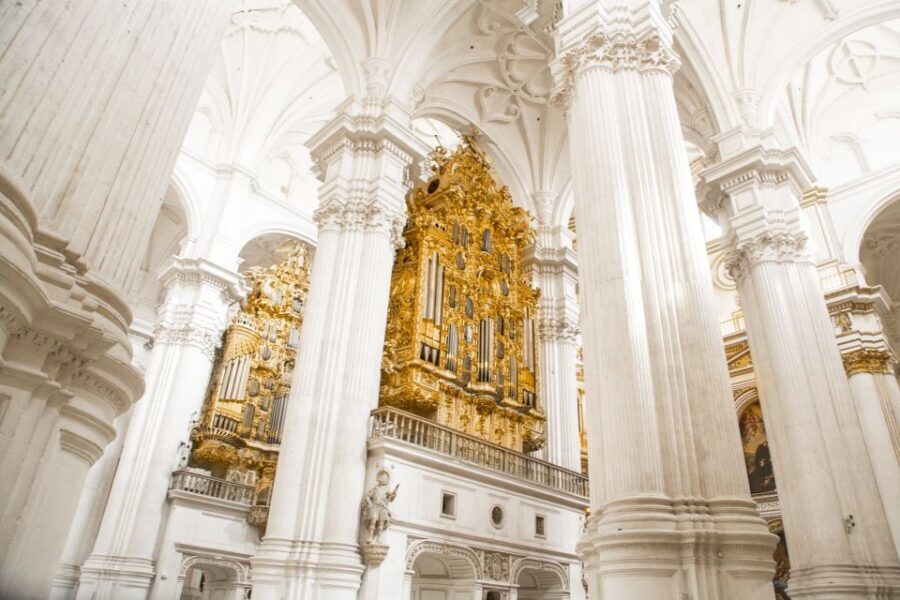
This stop is for your cathedral-area time. If you want a straightforward plan, hop off here when you’re ready for the most iconic religious landmark segment. The train gets you to the right area, and from there you can decide how much walking you want to do before getting back on.
Mirador de San Cristóbal / Jardines de Zoraya — Views You Can Feel
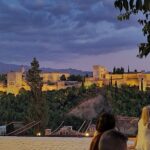
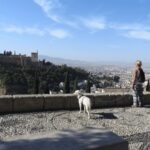
This is the stop I’d prioritize for photos and timing. The route description explicitly says to enjoy the views from Mirador de San Cristóbal, and at least one review points out that stop #6 is great for a sunset moment.
Even if you’re not the type to chase golden hour, this is where the ride pays off: you step off for a viewpoint, not another quick photo at street level.
Arco de Elvira / Hospital Real — Classic Center Connections
This stop ties together the “core Granada” feel. Use it when you want to explore around Arco de Elvira and the Hospital Real area, without arranging a more complicated transfer plan. It’s also a good choice if you’re mixing sightseeing with casual wandering.
Calle Reyes Católicos / Plaza Isabel la Católica — Street-Life Granada
This stop puts you on major streets and close to Plaza Isabel la Católica. It’s a helpful anchor point if you want to move between key attractions and keep your walking loop logical. Hop on and hop off from here depending on where your energy level is that day.
Calle Molinos / Campo del Príncipe — A Break in the Monument Pace
Campo del Príncipe is often a relief from the big-monument intensity. If you find yourself needing a more relaxed section of your day, hop off here, stretch your legs, and walk at a slower pace. It’s also a smart stop if you’re doing a 2-day pass and want variety rather than repeating the same headline sites.
Carmen de Los Mártires — Ending Point for a Longer Walk Day
Carmen de Los Mártires is at the far end of the named stops. Use it as your wrap-up if you want to end with a calmer, more low-key area after a heavy sightseeing day. It’s also useful if you’re building a “ride, walk, ride again” plan.
Ride Comfort and Audio Guide: How to Make It Pleasant
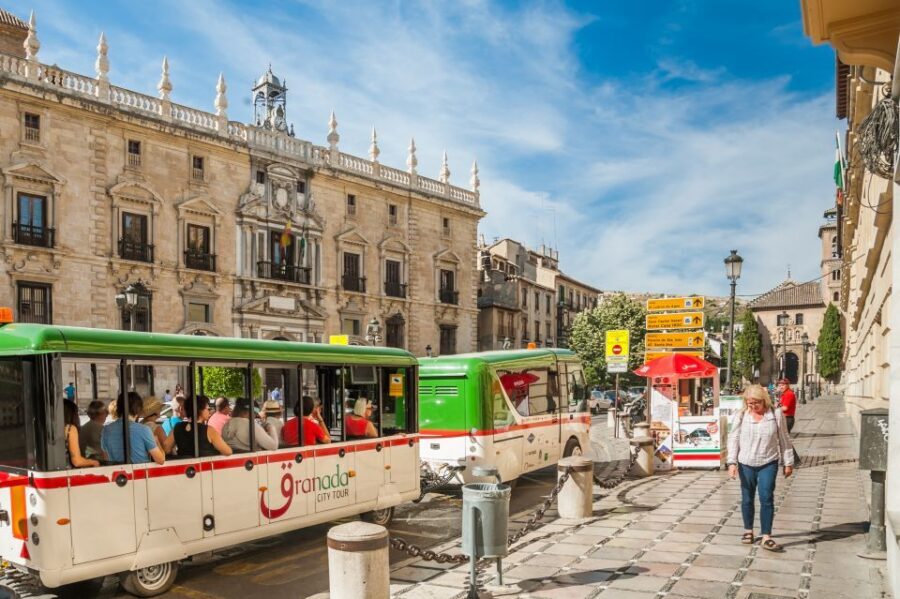
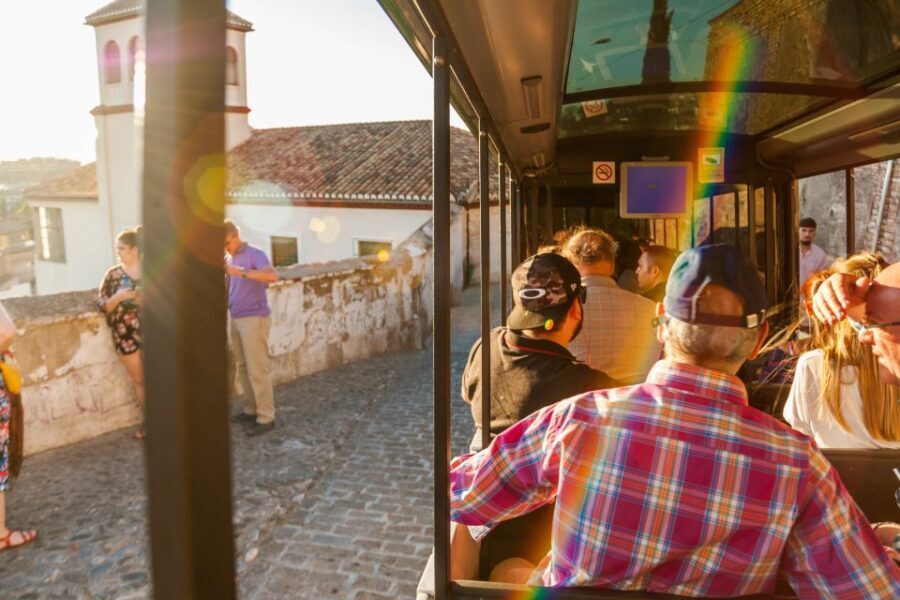
Let’s talk about what the ride feels like. This is a mini open-style train that goes through cobblestone streets. That’s part of the charm, but it can also be part of the discomfort. A few reviews mention it’s bumpy due to the road surface, and some people also mention unexpected braking that can feel abrupt.
If you have a back issue or you’re sensitive to jerky movement, I’d treat the ride like a short urban train hop rather than a long, smooth ride. Stand steady, hold on if needed, and plan to take it slow when you get off.
Bring Your Own Headphones
The audioguide is included in 12 languages, including Spanish, Catalan, Chinese, English, French, German, Italian, Japanese, Arabic, Portuguese, Russian, and Korean. What’s not included is headphones. If you show up without them, you might have to buy or rent on the spot.
I strongly recommend bringing a small pair in your bag. It turns the ride into a guided experience without friction.
Listening Tips for Noisy Streets
Open-air city travel is always a little loud. If you want the audio to land clearly, keep your volume reasonable and sit where the speaker works best for you. The audioguide can be heard even with street noise, but it’s easier when your headphones aren’t fighting the wind and ambient sound.
Also, one review singled out a guide named Jimmy as friendly and professional. That lines up with the overall feel: staff tend to be helpful when you’re figuring out where to hop next or how to use the ticket.
Making It Work on Busy Days (Without Burning Time)
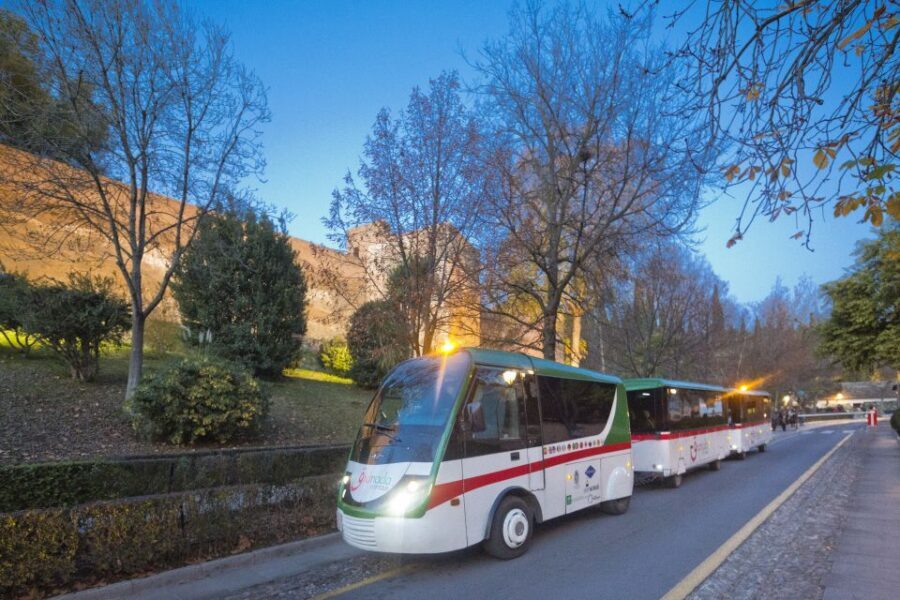
Granada’s Alhambra area gets attention, and this train is also popular. On holidays or peak periods, the biggest practical challenge is not the ride itself. It’s waiting: crowded stops can mean you’ll wait for a later train to fit everyone in.
So here’s my favorite timing strategy:
- Do one full loop first so you know where the stops are and what you actually want to revisit.
- Then use your second pass to get off with intent, not impulse.
This matches the way many people describe getting value from a 1-trip ticket: it gives you a map of where to return. With a 2-day ticket, it’s even easier to spread that out so you’re not rushing through everything in one afternoon.
Schedule Traps: Alhambra Hours and the 2:00–2:30 p.m. Gap
Two schedule points matter enough to plan around.
The weekday Alhambra gap
From Monday to Friday, 2:00 p.m. to 2:30 p.m., there are no regular rides to the Alhambra due to municipal regulation tied to the Cuesta del Caidero access.
If you’re trying to time your ride to an Alhambra visit, check your day and aim to be near the Alhambra stop outside that window.
Holiday hours can shift
During Easter week and Christmas, special opening hours are listed:
- 10–16 April: 09h00 to 15h00
- 17 April: 16h00 to 20h00
- 24 and 31 December and 5 January: 10h00 to 16h00
The big takeaway: if your trip overlaps these dates, expect changes. Build buffer time so you’re not stuck between plans.
Strollers, Bumpy Streets, and Practical Travel Notes

This isn’t a full-day hike disguised as a tour, but it’s still an outdoor street route. Strollers are allowed as long as they’re folded and don’t exceed 35 cm in height and 55 cm in width when folded.
And yes, it’s worth saying plainly: the ride can be noisy, and it can feel like a bit of a workout for your ears if you don’t have headphones. Bring them, and you’ll enjoy the audio more than fighting the sound.
Finally, if you’re doing Granada with kids, or you want an easy pace for older legs, this train is usually a good fit because it reduces stair-and-steep fatigue without killing your freedom.
Should You Book the Granada City Train Hop-On Hop-Off?

I’d book it if you want three things from Granada sightseeing: flexibility, an efficient connection to the Alhambra area, and a low-cost way to get your bearings fast. The pricing is hard to beat, the route hits the major stops you’d normally build separate plans for, and the included 12-language audioguide turns the whole day into learning mode.
I wouldn’t book it as your only plan if you hate crowds or if you require a smooth, quiet ride. On peak days, waiting at popular stops can cut into your time, and the cobblestone ride isn’t gentle.
If you’re planning a 1-day visit, I’d treat it like your orientation tool: do the loop, then return on foot (or by train) where you want more time. If you have 2 days, you can build a calmer schedule with an intentional sunset moment at Mirador de San Cristóbal, plus a coffee pause at Plaza Nueva.
One more practical note: you can keep plans flexible because the experience includes free cancellation up to 24 hours in advance and a reserve now, pay later option. That’s useful when your Granada days are still shaking out.
FAQ
Where is the meeting point for the Granada City Train?
The ticket office at Stop No. 1 Alhambra is the meeting point, and the route starts at Alhambra Generalife (ticket office).
How often do the trains run on the Alhambra route?
The Alhambra route (Green Line) trains run every 30 to 45 minutes.
What’s included with the ticket?
Your ticket includes the hop-on hop-off service (1-day, 2-day, or 1-trip option) and an audioguide in 12 languages.
Do I need to bring headphones?
Yes. Headphones are not included, so you should bring your own to listen to the audio guide.
What stops are on the Alhambra route?
The stops listed are: Alhambra Generalife (ticket office), Alhambra/Puerta de la Justicia, Plaza Nueva, Alhóndiga, Catedral/Capilla Real, Mirador de San Cristóbal/Jardines de Zoraya, Arco de Elvira/Hospital Real, Calle Reyes Católicos/Plaza Isabel la Católica, Calle Molinos/Campo del Príncipe, and Carmen de Los Mártires.
How long is the ticket valid?
The ticket is valid for 1 to 2 days, depending on the option you choose.
Are trains to the Alhambra available all day on weekdays?
No. From Monday to Friday, there are no regular train rides to the Alhambra from 2:00 p.m. to 2:30 p.m.
Are strollers allowed?
Yes, baby strollers are allowed as long as, when folded, they do not exceed 35 cm in height and 55 cm in width.
What languages are available for the audioguide?
The audioguide is available in Spanish, Catalan, Chinese, English, French, German, Italian, Japanese, Arabic, Portuguese, Russian, and Korean.