REVIEW · FOOD
Albayzín: Granada’s Albayzín Tour with Food Tasting
Book on GetYourGuide →Operated by Sol Oriens Tours · Bookable on GetYourGuide
Albayzín rewards slow steps. This 2.5-hour walking tour in Granada’s old Moorish quarter blends Alhambra views with an Arabic tea-and-food tasting in a small group. I also like that the guide keeps the pace comfortable while still hitting the best viewpoints—just know you’ll be climbing and descending uneven streets.
What makes this tour work is the human factor: guides like Nacho bring the area to life with clear storytelling and good humor, and you get time at the viewpoints to actually look. A possible drawback is that the meal at the end is described as simple, so don’t book expecting a big gourmet variety spread.
If you’re here for your first Granada visit and want more than postcard facts, this is a smart way to understand how Granada became the last capital of a long Muslim conquest—and how the Albayzín still carries that heritage.
In This Review
- Albayzín in 2.5 Hours: What You Really Get
- Key Stops and Why They Matter
- Starting in Plaza de Santa Ana and Getting Oriented
- Plaza San Gregorio: The Neighborhood’s Everyday Rhythm
- Mirador de Los Carvajales: Photo Stop With Context
- Aljibe de Trillo: Why Water Tech Changes a Whole Neighborhood
- Placeta Comino: A Quick Pause for the View
- Plaza de San Nicolás: The Main Viewpoint Break
- Carmen de los Geranios: Max Moreau’s House-Museum Stop
- Mirador Ojo de Granada: Sunset-Style Photo Time
- Arabic Tea and Dessert at Calle Calderería Nueva
- Food as a Cultural Tool (Not Just a Snack)
- Guide Style: Why Nacho’s Storytelling Works
- Price and Value: Is 94 USD Worth It?
- Who This Tour Fits Best (and Who Should Rethink)
- Quick Practical Tips Before You Go
- Should You Book the Albayzín Tour With Food Tasting?
- FAQ
- What’s the meeting point for the Albayzín tour?
- How long is the tour?
- Is tea and Arabic food included?
- How large are the groups?
- What languages is the tour offered in?
- Who should avoid this tour due to mobility or health limits?
Albayzín in 2.5 Hours: What You Really Get
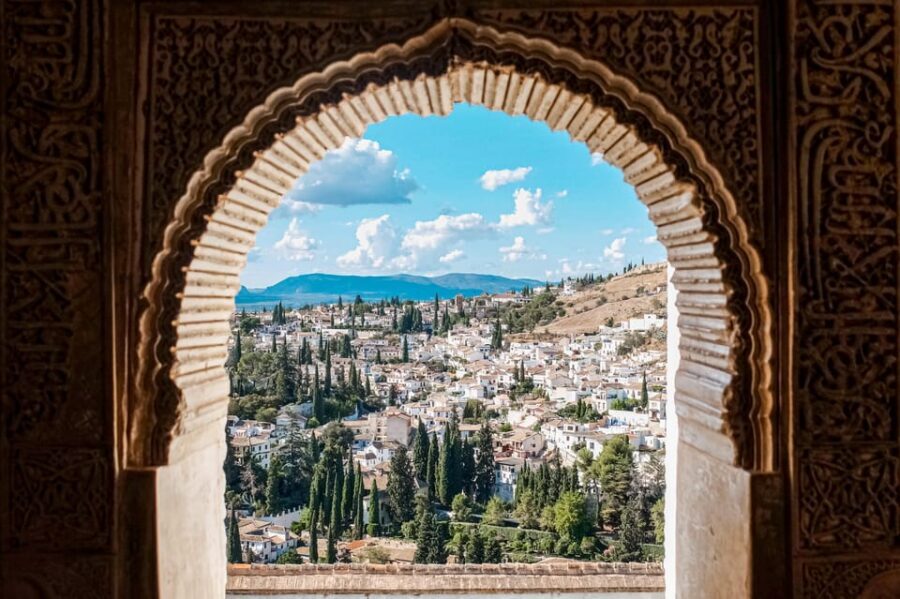
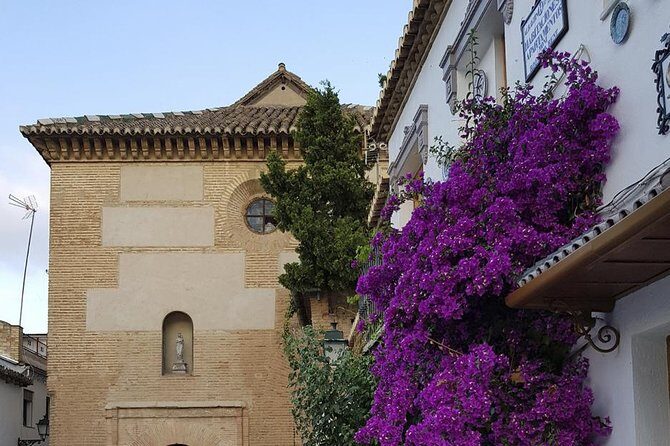
This tour is built for people who want the feel of Granada’s Arab roots without spending the whole day reading plaques. You start in the historic center area at Plaza de Santa Ana (in front of the Pilar del Toro), then you wind into Albayzín’s maze of streets and viewpoints.
The big payoff is the combination of history + food. You learn why certain places matter, then you pause with Arabic tea high up to take in the view. Later, you finish with an Arabic meal so the cultural theme has a taste to go with it. That’s not just a gimmick. It helps the neighborhood stick in your brain.
The “small group” part also matters. With a limit of 10 participants, it’s easier to hear the guide, move at an unhurried pace, and get your questions answered while you’re standing in front of something worth staring at for a while.
Key Stops and Why They Matter
- Mirador de San Nicolás (Plaza de San Nicolás): a real viewpoint break, with free time to take photos and soak up the Alhambra backdrop.
- Tea stop with big views: you pause up high with Arabic tea while you look out, not while you’re rushing through.
- Aljibe de Trillo: an actual water cistern stop that helps explain how this neighborhood functioned long before modern plumbing.
- Carmen de los Geranios (Max Moreau’s house-museum): a quick cultural stop inside a preserved setting tied to local art life.
- Calle Calderería Nueva food tasting finale: you end where the neighborhood’s daily rhythm shows up, with Arabic meal tasting and dessert/tea items.
You can also read our reviews of more food & drink experiences in Granada



Starting in Plaza de Santa Ana and Getting Oriented
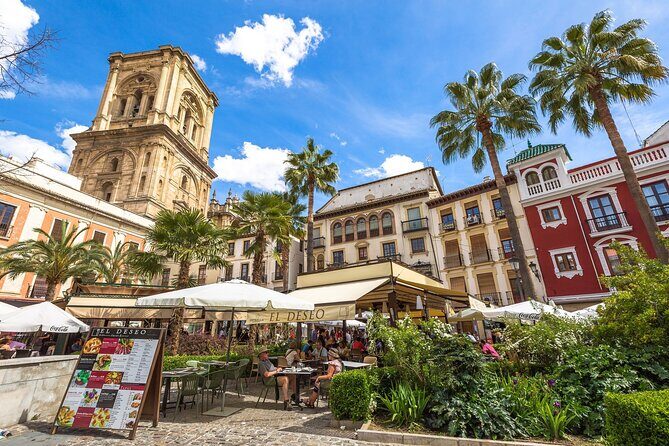
You meet at Plaza de Santa Ana, right by the Pilar del Toro Fountain. It’s a straightforward meeting point, and it helps if you arrive a little early and get your bearings before the group gets moving.
Before you head deeper, there’s a brief safety briefing stop around Plaza Nueva. It sounds basic, but on Albayzín, it’s practical. Streets can be narrow, stairs can be steep, and you’ll want to watch your footing, not your phone.
This is also where the tour’s tone becomes clear: it’s not a sprint. You’re guided through layers of the neighborhood in a way that feels like a thoughtful evening walk, not a checklist.
Plaza San Gregorio: The Neighborhood’s Everyday Rhythm
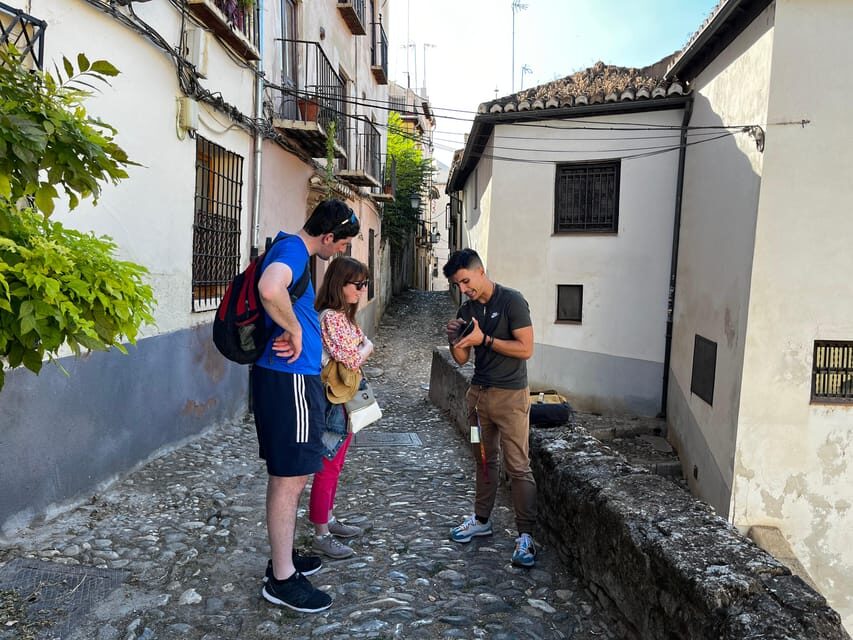
One of the early stops is Plaza San Gregorio, with a short visit. This kind of stop is useful because it breaks up the climb and lets you see how Albayzín isn’t only viewpoints. It’s daily life—streets, corners, and community spaces that still work.
Even though the visit time is brief, the guide’s job here is to set context: what you’re going to see later makes more sense if you understand what the neighborhood looks like at street level first.
Mirador de Los Carvajales: Photo Stop With Context
Next comes Mirador de Los Carvajales, with time for photos plus scenic viewpoints along the way. This part is one of those “yes, you’ll take pictures” moments, but it’s also about learning the angles—where certain lines of sight place Granada’s historic layers in the same frame.
You’ll get value if you’re the type who likes to understand what you’re looking at. The guide points things out so the view isn’t just pretty background. You start noticing how the Alhambra fits into the city’s geography.
If you’re traveling in warm months, remember that the mirador stops can feel exposed. Bring a hat or something light even if you’re only outside for short breaks.
Aljibe de Trillo: Why Water Tech Changes a Whole Neighborhood
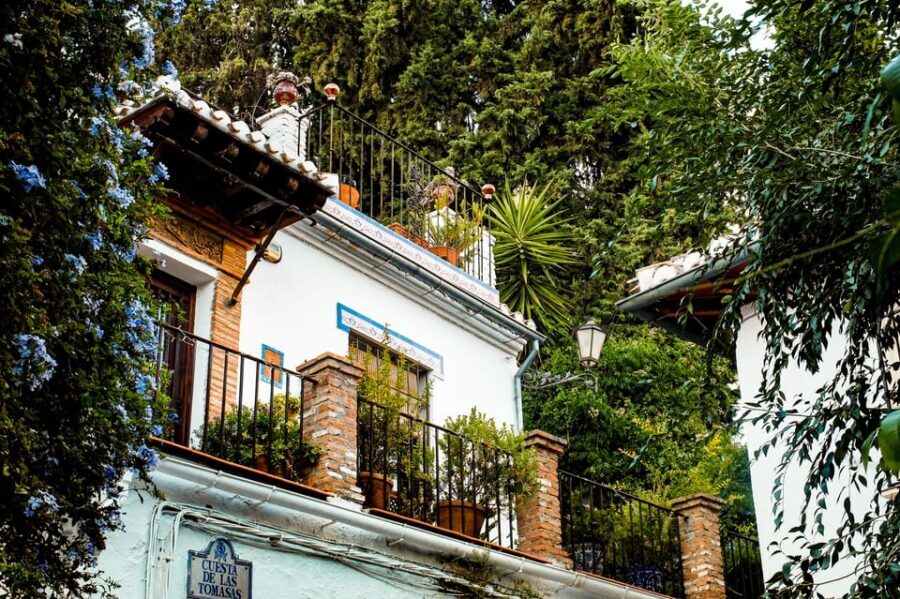
Then you head to Aljibe de Trillo, where you get both visit time and sightseeing time. An aljibe is a water cistern, and it’s a smart stop because it turns “history” from vague stories into real infrastructure.
This is where your tour earns points for usefulness. Knowing how water was stored and managed helps you understand why settlements formed where they did. It’s not romance. It’s engineering.
It’s also a nice change of pace from constant stairs and viewpoints. Even if your legs are working, your mind is getting a different kind of workout.
You can also read our reviews of more tours and experiences in Granada



Placeta Comino: A Quick Pause for the View
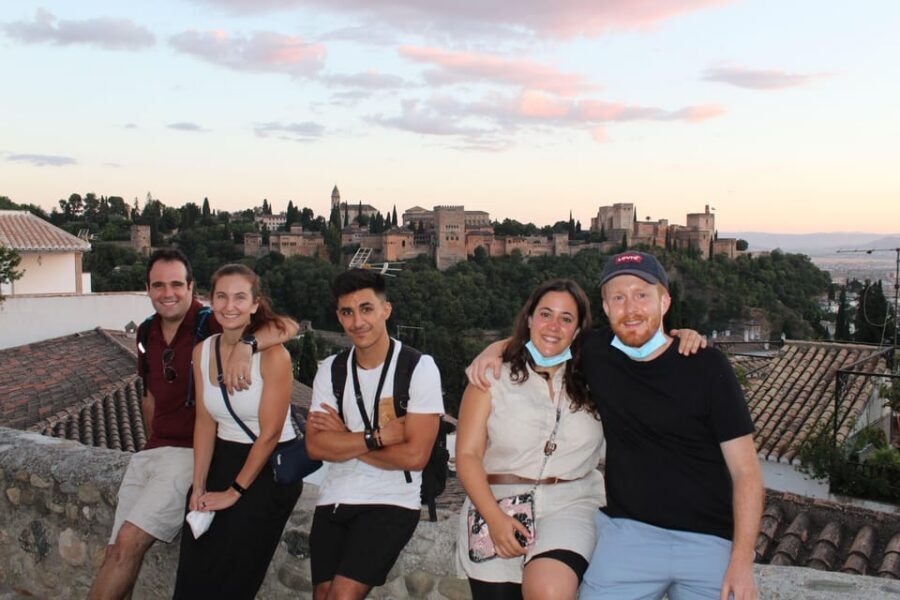
You pass through Placeta comino for a short photo stop and a bit of scenic viewing along the way. This is brief by design, and it’s exactly the kind of stop that makes a walking tour feel full without being exhausting.
Think of it as a “reset moment.” You’ll likely feel your legs again later, so grabbing a short look now keeps the energy steady.
Plaza de San Nicolás: The Main Viewpoint Break
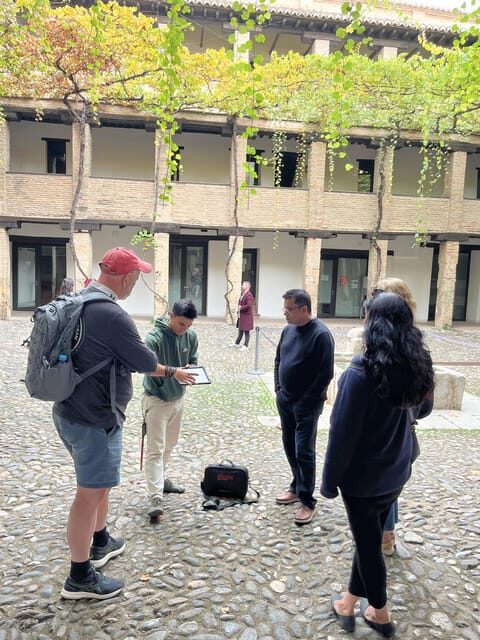
This tour’s best-known photo stop is Plaza de San Nicolás. You’ll get a photo stop plus visit and free time, giving you about 25 minutes here. That’s enough time to take photos without feeling like you’re being herded.
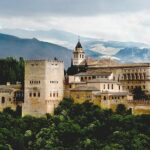
This is also where the tour shifts from walking-and-learning into soaking. You’re looking toward what’s often called the Eighth Wonder of the World—the Alhambra—and you’ll start spotting the connection between the neighborhood’s high ground and its historic role.
If you want your photos to look better, try not to position yourself right at the first obvious spot. Walk a few steps, find a calmer angle, and let the crowd move a bit. The guide’s route choices are part of what makes the photos work.
Carmen de los Geranios: Max Moreau’s House-Museum Stop
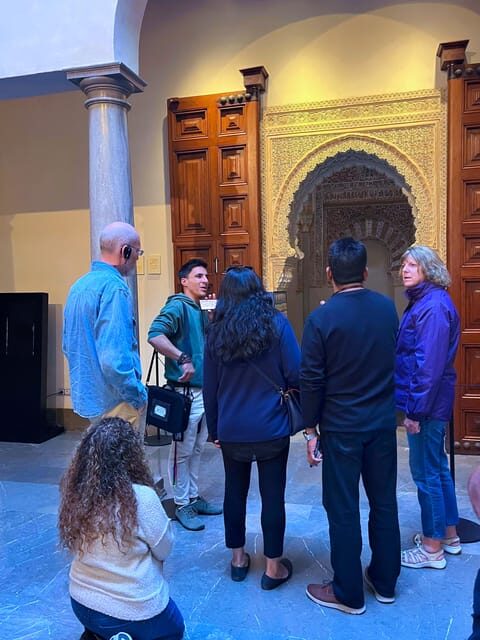
After the big viewpoint, you visit Carmen de los Geranios – Casa Museo de Max Moreau for about 15 minutes. This stop gives you a break from outdoors, and it adds a cultural layer beyond street history.
You’re seeing how people preserve and experience space in Albayzín. The “carmen” style of these homes and gardens (and the idea of a house-museum) helps you understand the neighborhood as a living space, not only an outdoor museum.
It’s short, so don’t expect a long slow visit. Instead, use it to reframe what you’ve been walking through: a place where art, memory, and daily life overlap.
Mirador Ojo de Granada: Sunset-Style Photo Time
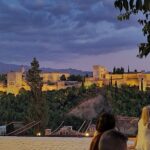
Then comes Mirador Ojo de Granada, with a photo stop and sunset-style scenic time. Even if you’re not traveling specifically for sunset, this stop is timed to feel dramatic, with light that makes the city look warmer.
It’s also short—about 5 minutes—which keeps the tour moving before the food portion. Don’t use your phone during the guide’s framing of the view. Watch first, then shoot.
This is one of the reasons the tour feels like more than a basic history walk. It’s paced to land emotional moments, not just factual ones.
Arabic Tea and Dessert at Calle Calderería Nueva
The finale happens on Calle Calderería Nueva. After walking through the earlier stops, you finally get the food and drink focus: Arabic tea, dessert, and a food tasting that lasts about 1 hour.
This section is where the “heritage with a taste” idea becomes real. Instead of ending after a viewpoint, the tour sends you into a restaurant setting where you can sit, talk, and let the stories settle.
The food offerings mentioned include items like hummus, couscous, tomato soup, and bread. The meal is described as simple at times, which is important. You’re not buying a multi-course luxury feast. You’re getting a taste of Arab-Andalusian food in a neighborhood context.
If you’re picky about trying new things, you’ll still likely find familiar textures and flavors. If you’re a “more variety or nothing” eater, you might wish for a wider spread.
Food as a Cultural Tool (Not Just a Snack)
Here’s why I like the way they pair food with the walking route. Tea is served at a viewpoint moment, so it’s tied to the geography of Albayzín. The meal at the end then connects that geography to everyday flavors—stuff people ate and cook into local tradition.
It’s also a good pacing choice. You’ll be out for a while, climbing stairs, and then you land somewhere you can sit and refuel. That’s how you avoid the classic problem of tours that rush you into the next stop before your energy resets.
And if you’re with someone who isn’t as interested in historical details, food still gives them a reason to stay engaged.
Guide Style: Why Nacho’s Storytelling Works
In the reviews, the guide name Nacho comes up repeatedly, and that checks out with how tours like this usually succeed. He’s described as friendly, energetic, and funny, while also explaining local history and culture clearly.
That combo matters in a place like Albayzín. If the guide is only reading facts, the streets can blur. If the guide is only charming, you miss the context. When a guide blends both, you leave with the feeling that the neighborhood actually has logic.
If you want your experience to feel personal, the small group size helps. You’re more likely to get answers to your questions, not just hear the next talking point as you squeeze past someone.
Price and Value: Is 94 USD Worth It?
At $94 per person for about 2.5 hours, you’re paying for four things: a guided walking route through a complex old neighborhood, viewpoint time, Arabic tea, and an Arabic meal tasting.
If you were doing this on your own, you could wander Albayzín and reach some viewpoints. But getting the right route, the water-cistern and house-museum context, and the tasting at the end is the part that usually costs time and trial-and-error.
What you should weigh is meal expectations. The food is described as simple, not elaborate. You’re paying mostly for the guided experience and the included tastings, not for a long buffet.
For the right traveler—someone who wants structure, story, and a cultural food finish—this price feels fair for Granada.
Who This Tour Fits Best (and Who Should Rethink)
This is a walking tour through steep and narrow streets. It’s best for people who are comfortable climbing stairs and spending time outdoors at miradors.
It isn’t suitable for:
- people with mobility impairments or wheelchair users
- people with respiratory issues
- people with recent surgeries
- visually impaired people
- babies under 1 year
- people over 95 years
It also has basic safety and conduct rules: no weapons or sharp objects, no smoking, no drones, and no intoxication. If you’re tempted to treat this like a casual stroll with stops wherever you want, that won’t match the pace.
If you’re traveling with teenagers or an active family member, it can be a great fit because it blends views, culture, and food.
Quick Practical Tips Before You Go
- Wear grippy shoes. Albayzín streets can be uneven.
- Plan for stairs. This is part of the experience, not an accident.
- Come hungry enough to enjoy the tea-and-meal portion. The walk builds to it.
- If you care about photos, use the free time at Plaza de San Nicolás to experiment with angles.
Also, note the tour runs in multiple languages, including English, Italian, Chinese, and Spanish (and other languages may be offered). If language matters for you, confirm your tour language when booking.
Should You Book the Albayzín Tour With Food Tasting?
Book it if you want a structured evening in Albayzín that includes tea with a viewpoint, a guided route with meaningful stops like Aljibe de Trillo, and an end meal that ties the culture to your plate.
Pass or consider another option if you need a fully flat route, or if you want a big variety food experience. This is more about the story and the tastings than about a massive culinary menu.
FAQ
What’s the meeting point for the Albayzín tour?
You meet in Plaza de Santa Ana, in front of the Pilar del Toro fountain.
How long is the tour?
The tour lasts about 2.5 hours.
Is tea and Arabic food included?
Yes. You get an Arabic tea tasting at a viewpoint and an Arabic meal tasting at the end of the tour, on Calle Calderería Nueva.
How large are the groups?
The group is kept small, limited to 10 participants.
What languages is the tour offered in?
The tour can be conducted in English, Italian, Chinese, and Spanish.
Who should avoid this tour due to mobility or health limits?
The tour is not suitable for people with mobility impairments, wheelchair users, respiratory issues, recent surgeries, visual impairments, and it also has age limits (not for babies under 1 year and not for people over 95).