REVIEW · ALHAMBRA TOURS
Alhambra: Ticket with Audioguide
Book on GetYourGuide →Operated by Andalucia Travel Experience · Bookable on GetYourGuide
The Alhambra feels like a puzzle made of light. I love the freedom of walking at your own rhythm with an audio guide, and I also like that it steers you toward the big moments, like sweeping views over Granada. It’s a UNESCO World Heritage Site, so you’re not just sightseeing—you’re learning as you go.
Here’s the catch: the audio guide needs internet access, and it can lose signal (plus, you won’t be stopping for questions). If you hate relying on a phone connection, plan for it and keep expectations realistic when parts of the complex feel a bit tech-prone.
In This Review
- Key things to know before you go
- Why an Alhambra audio guide is the smart match for your day
- Tickets, pickup point, and the 3-hour timing reality
- Entering the Alhambra complex: what to prioritize first
- Nasrid Palaces: where the details do the talking
- Alcazaba Fortress: the big Granada views you’ll want on your route
- Generalife Palace and Gardens: the calm counterweight to the palaces
- Practical tips that make the difference (especially with kids)
- Value at about $45: what you’re actually paying for
- Who this Alhambra ticket fits best
- Should you book the Alhambra with audio guide ticket?
- FAQ
- How long is the Alhambra visit with the audio guide?
- Where do I pick up the audio guide?
- Is a passport or ID card required?
- Do I need internet access for the audio guide?
- Does the ticket include the Nasrid Palaces?
- What is the cancellation refund policy?
Key things to know before you go
- Self-paced walking through the Alhambra complex with an official audio guide
- Nasrid Palaces included if you pick the complete ticket option
- Alcazaba Fortress viewpoints over Granada and the surrounding mountains
- Generalife Palace and Gardens with rose garden areas, courtyards, and water features
- Audio guide languages include English, French, German, Italian, and Spanish
Why an Alhambra audio guide is the smart match for your day
The Alhambra is famous for a reason, but it’s also easy to get overwhelmed. Too much tour talk can push you past the details that make it special. With this ticket, you control the pace. You scan, you pause, you move on—like the place deserves.
I like that the audio guide doesn’t just list facts. It ties the buildings to the people who lived here: the former sultans during the Nasrid Dynasty, and how the site became a UNESCO World Heritage Site in 1984. That context helps you stop seeing everything as “pretty rooms” and start seeing it as a real, lived-in palace system.
And because it’s self-guided, you can make the route match your brain. Want architecture first? Do that. Want gardens first? You can. Want the views from Alcazaba before you’re tired? You can aim for them early.
You can also read our reviews of more tours and experiences in Granada



Tickets, pickup point, and the 3-hour timing reality
This experience is about 3 hours, with starting times that you can check based on availability. That time window matters. The Alhambra complex is large, and the best experience comes from pacing yourself rather than trying to sprint through every section.
You’ll receive your tickets by email. Then you pick up the audio guide at P.º de la Sabica, 32, Centro, 18009 Granada. From there, you enter the complex and explore. The activity ends back at the meeting point, so you’re not wandering back alone with a vague “maybe we walk this way” plan.
Two practical notes that change how smoothly the visit goes:
- Hotel pickup isn’t included, so you’re responsible for getting to the meeting point.
- You need to bring a passport or ID card to enter the complex, and you’ll need internet access for the audio guide.
So, yes—this is easy. But it works best when you come set up.
Entering the Alhambra complex: what to prioritize first
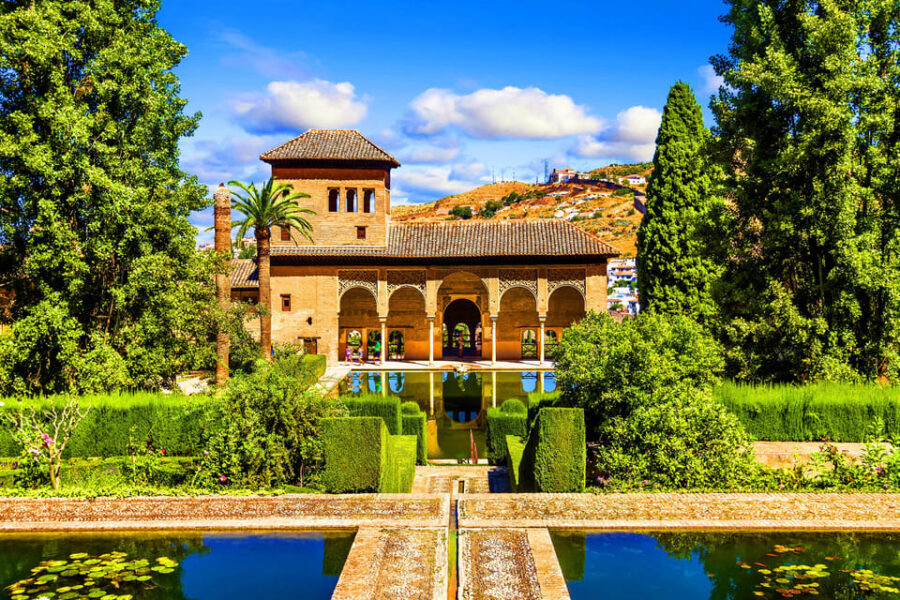
Once inside, you’ll be exploring a site that has several “zones,” each with its own mood. The key is choosing an order that keeps you from backtracking.
A solid way to structure your visit (without racing) is:
- Start with the sections that require the most attention and concentration.
- Save the calmer, scenic areas—especially gardens—for when you want your brain to slow down.
If you’re including Nasrid Palaces, treat that as your main event. It’s the most detail-heavy part of the complex, and the architecture is exactly the sort of thing where sitting for 10 minutes in the right spot can beat walking for 10 minutes in the wrong one.
Also, plan for a day where your feet will do some work. This is not a “grab a photo and float away” situation. You’ll want comfortable shoes and a little patience with crowds depending on your time slot.
Nasrid Palaces: where the details do the talking
If you select the complete ticket option, your entry includes the Nasrid Palaces. This is the heart of the Alhambra experience for most people, because the palace interiors show off the signature style—intricate architecture built to impress, but also built to function as a statement of power and culture.
In your audio guide, you’ll hear about the Nasrid sultans and how these spaces fit into Granada’s story. That makes a difference. Without context, you might just think: wow, pretty. With it, you start noticing how the design supports movement, ceremony, privacy, and awe.
One tip that comes up again and again: if you can, go earlier. Early access gives you a better shot at a calmer pace for the Nasrid Palaces—especially helpful if you’re visiting with kids. The good part? Even with a shorter 3-hour window, careful pacing still lets you experience the palaces properly.
The only “drawback” to the Nasrid Palaces is also the best thing about them: they require attention. If you’re looking for something light and fast, they may feel like a lot. But if you like details, you’ll be in your element.
Alcazaba Fortress: the big Granada views you’ll want on your route
Next up is Alcazaba Fortress. This section shifts the tone from palace elegance to military scale. It’s a fortress, so you get open space, strategic positioning, and—most importantly—views.
From Alcazaba, you’ll see sweeping panoramas of Granada and the surrounding mountains. This is one of those moments where your brain finally gets to step back. After corridors and ornament, the view helps you understand why this site made sense. It’s not just beautiful; it’s positioned to dominate the landscape below.
In a self-paced visit, I recommend treating Alcazaba as a “reset.” Take a short break, look out, and let your eyes translate what you’ve seen into something bigger. It also helps if your feet are starting to feel it—standing still for a view can feel like a mini vacation.




Generalife Palace and Gardens: the calm counterweight to the palaces
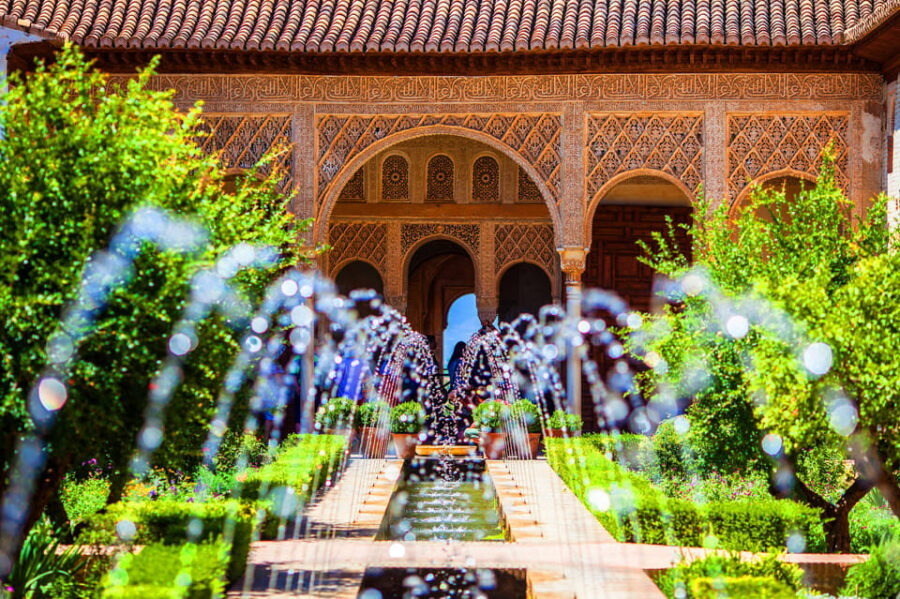
Then comes Generalife Palace and Gardens, the Emir’s old summer palace. This is where the complex’s energy shifts again. Instead of stone and power, you’re in a more relaxed world of courtyards, water features, and garden areas.
Expect to find:
- Rose garden areas
- Planted courtyards
- Water features that add movement and a sense of cooling calm
The gardens are a great place to use your audio guide strategically. You don’t need to listen at every second. You can put it on for key points, then let the space do the rest. In fact, the best garden moments often happen when you’re not trying to absorb everything at once.
Generalife also works well for families and mixed-age groups. One parent-friendly detail: eating restrictions exist in much of the complex, and vending stops can be rare. So when you reach Generalife, it’s a good time to settle into the slower rhythm—then plan your snacks earlier rather than later.
Practical tips that make the difference (especially with kids)
This experience scores well for people who want a controlled pace, and it also shows a few common “gotchas” you can avoid.
1) Bring your ID and get your tech ready
You need an ID/passport, and your audio guide requires internet access. If your phone struggles with signal, consider downloading what you can ahead of time and carrying a backup power option if you rely heavily on your device.
2) Plan food like a strategist
Eating is forbidden around most of the complex. That means you can’t treat the Alhambra like a flexible walking park. And vending machine stops can be rare, so don’t count on last-minute snacks.
If you’re bringing kids, a simple move helps: feed them before you go, and bring small, practical items that fit the rules for where eating is allowed.
3) Expect self-guided means no Q&A
If you want to ask questions on the spot, an audio guide won’t be that format. You’ll get the commentary, but it won’t turn into a conversation. For most people, that’s fine. If you’re the kind of traveler who always has a question, you’ll need to switch into a listening-and-observing mindset.
4) You can still “read” and “listen”
Some visitors like that the guide content can be used both ways—listened to and read—so you can fit it to how you travel best. If you’re in a noisy stretch, reading can help you keep up.
Value at about $45: what you’re actually paying for
At roughly $45 per person, the value here comes from what’s included and how much flexibility you get.
You’re paying for:
- Entry into the entire Alhambra complex, including Generalife Palace and Gardens and Alcazaba Fortress
- Plus Nasrid Palaces if you choose the complete ticket option
- An official audio guide
- A visit style that’s not locked to a group’s speed
That matters. Many tours try to rush you through major sights with one big timeline. Here, you’re buying time flexibility with strong interpretive support. You can stop when something catches your eye—like a doorway detail, a view angle from Alcazaba, or a garden feature at Generalife—and still keep moving without feeling lost.
The other value driver: you don’t need to hunt down information. The audio guide handles history and context for you, including the UNESCO recognition in 1984 and the role of the Nasrid sultans. That’s the difference between seeing the Alhambra and understanding what you’re seeing.
Who this Alhambra ticket fits best
This experience suits you if:
- You like historic sites but don’t want nonstop narration.
- You want to see both palace areas and garden areas in one entry ticket.
- You prefer control over pacing—especially if you travel with family members who move at different speeds.
- You’d rather learn in short segments while you walk than in one long lecture.
It might not fit if:
- You hate relying on internet access for your audio.
- You want real-time answers to questions from a live guide.
- You’re looking for a very low-effort visit with minimal walking and zero planning.
Still, for most people planning a smart Granada day, this is a practical way to do it without feeling boxed in.
Should you book the Alhambra with audio guide ticket?
If you’re aiming for maximum freedom inside a major UNESCO site, this is an easy yes—with one condition: come ready for the tech. Bring your ID, make sure you have internet access for the audio, and plan food ahead since eating is restricted in much of the complex.
Book it if you want a calm, self-paced Alhambra day that still gives you history at your shoulder. Pick the complete ticket option if Nasrid Palaces are your priority. Then set your expectations for a walk-heavy, detail-friendly visit—and you’ll get a very satisfying mix of palaces, fortress views, and Generalife garden calm.
FAQ
How long is the Alhambra visit with the audio guide?
The visit is scheduled for about 3 hours. Starting times depend on availability.
Where do I pick up the audio guide?
After you receive your tickets by email, you pick up the audio guide at P.º de la Sabica, 32, Centro, 18009 Granada.
Is a passport or ID card required?
Yes. You need a passport or ID card to enter the complex.
Do I need internet access for the audio guide?
Yes. Internet access is necessary for the audio guide.
Does the ticket include the Nasrid Palaces?
It includes the Nasrid Palaces if you choose the complete ticket option. The general entry covers the rest of the Alhambra complex, Generalife Palace and Gardens, and Alcazaba Fortress.
What is the cancellation refund policy?
You can cancel up to 2 days in advance for a 60% refund.