REVIEW · 1-DAY TOURS
Coasts and Mountains: Nerja to Frigiliana with Nerja Caves Small-Group Day Trip
Book on Viator →Operated by Not Just a Tourist · Bookable on Viator
Coast views and caves in one long day. This small-group cap of 8 plus round-trip transfers from Granada makes the day feel smooth and low-stress, even though you’re packing in a lot of ground. You ride in a comfortable air-conditioned vehicle, which matters on a day that runs about 8 hours.
My second big win is Cueva de Nerja: you get the cave entrance and an audio guide for an easy, self-paced hour underground. One caution: if you add optional kayaking or stand-up paddle surfing, there’s a supplement and it can stretch the schedule.
In This Review
- Key things that make this day trip work
- Starting in Granada: easy pickup, quick orientation, then straight to the coast
- Nerja beach time: a real break, not just a photo stop
- Entering Cueva de Nerja: stalactites, cave art, and an audio guide that keeps you moving
- Balcony of Europe: 1505 viewpoint history with real sea views
- Burriana Beach and Verano Azul: where TV set meets real sand
- Frigiliana old town: quick hits at San Antonio, El Ingenio, and Calle Zacatín
- How the 8-hour schedule really feels (and how small-group size helps)
- Price and value: what $325.46 buys you in real time
- Best-fit for families, first-timers, and people who like a plan
- A quick note on optional extras and timing surprises
- Should you book this Nerja to Frigiliana day trip?
Key things that make this day trip work
- Hotel pickup and drop-off in Granada city centre keeps the start simple
- Max 8 travelers means you’re not squeezed into a rushed cattle-car
- Cueva de Nerja includes entry plus an audio guide for a guided-feeling walk underground
- Balcony of Europe viewpoint has a specific backstory: the original viewpoint was erected in 1505
- Burriana Beach connects to Spanish TV (Verano Azul was filmed there)
- Frigiliana old-town stops are short but varied: church, fountain, old streets, and historic buildings
Starting in Granada: easy pickup, quick orientation, then straight to the coast
The best part of this trip is how it removes friction. You’re picked up from hotels in Granada city centre, then you’re dropped back there at the end. That alone saves you the hassle of coordinating buses or trains on a long day.
You also get a comfortable ride in an air-conditioned vehicle, which sounds basic until you’re doing a coast-and-mountains loop. This is the kind of day where comfort is value. If you’re traveling with kids or you just want your legs to stay fresh, this format helps.
There’s also an approach that feels practical: you get a short Granada stop (around 10 minutes) and then the real time starts outside the city. In plain terms, the schedule is built to see Nerja and Frigiliana without eating your whole day in transit.
One more small detail that matters: the tour is offered in English, and they use a mobile ticket. That cuts down on paper fuss and keeps you focused on the places.
You can also read our reviews of more tours and experiences in Granada
Nerja beach time: a real break, not just a photo stop
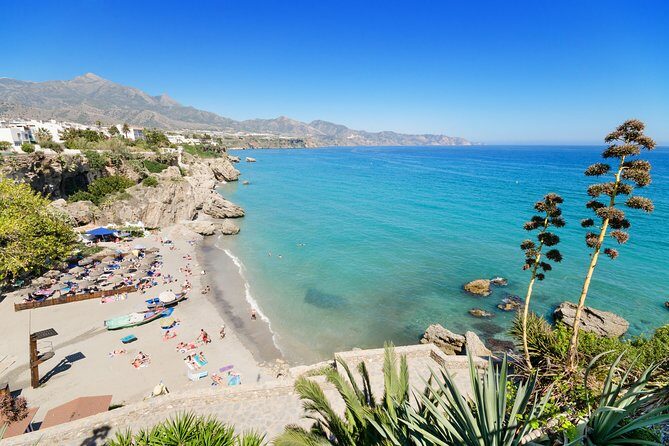
Nerja is where the day turns from travel mode into vacation mode. You get about an hour by the coast. This is your window for beach time, a slow stroll, and yes, snacks if you want them.
This stop is flexible enough for different styles. If you want low-key, just sit, walk, and take in the Mediterranean light. If you want action, this is where optional water activities can come in. You can try kayaking or stand-up paddle surfing, but they’re not included and there’s a supplement. The timing can also change depending on what you book, so it’s worth going in knowing this part may affect the rest of the day.
Even if you skip the optional activities, that hour still feels useful. Nerja’s coastal vibe is the main reason to do a day trip like this instead of just driving past. You’ll feel the pace shift.
For practical planning, I’d bring sunscreen and swimwear if you think you might want it. And if you’re doing any paddle sport, comfortable footwear for getting on and off the water helps a lot—your day will feel less like logistics and more like fun.
Entering Cueva de Nerja: stalactites, cave art, and an audio guide that keeps you moving
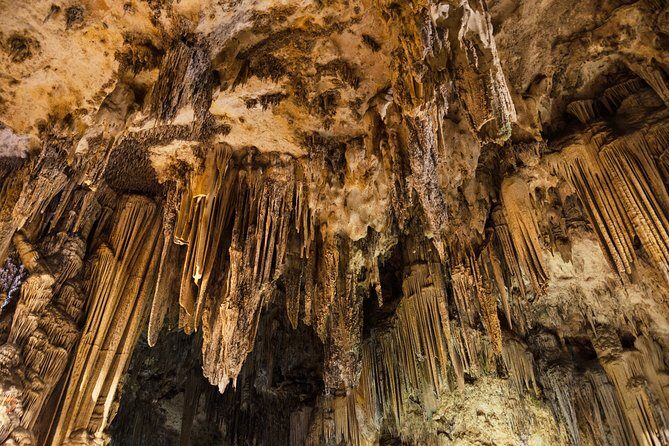
The tour’s anchor stop is Cueva de Nerja. You’ll spend about an hour here, with cave entrance and an audio guide included.
What you’re walking into is a natural wonder under the mountain. The cave was discovered about 64 years ago, and it’s known for hanging stalactites plus all sorts of treasures, artefacts, and archaic art. This is the kind of place where having an audio guide really helps, because you’re not just staring at rocks—you’re learning what you’re seeing as you go.
One of the standout claims is the biggest stalagmite in the world. Even if you don’t memorize every fact, that knowledge changes how you look at the cave formations. You start paying attention to size and shape, not just darkness and damp air.
Another detail to understand before you go: a live guide inside the cave is not included. That doesn’t mean you’re on your own in a bad way. The audio guide does the job of pacing and explaining, and it’s included in your ticket.
Tips that make the cave experience better:
- Wear something that’s comfortable for walking on uneven surfaces.
- Keep your phone lighting minimal if the audio guide is using sound cues.
- If you’re bringing kids, an audio guide can be a lifesaver for attention spans—quick stops and constant narration beat long silent wandering.
Balcony of Europe: 1505 viewpoint history with real sea views

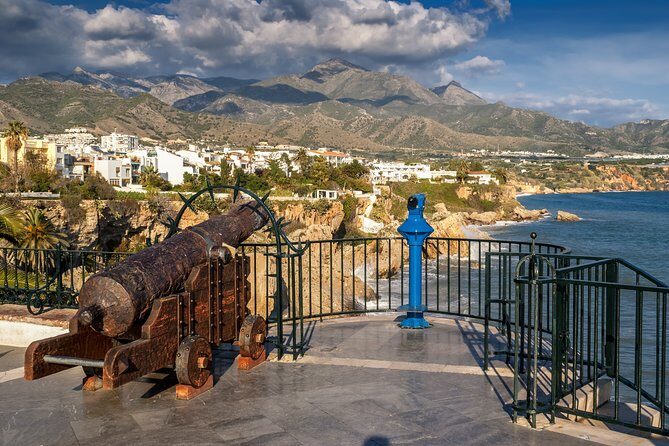
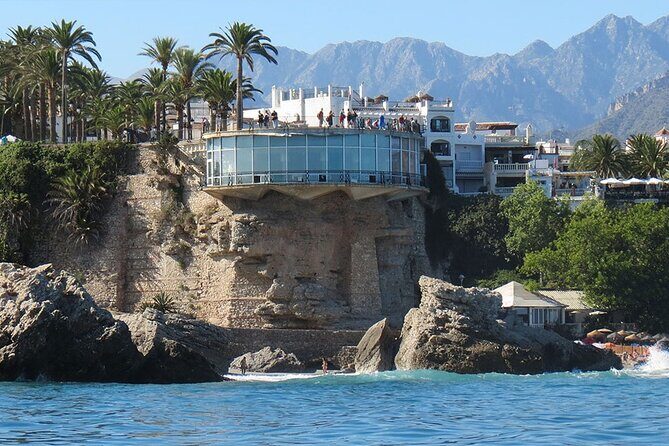
After the cave, you go back up into daylight and the day opens wider. The Balcony of Europe is the Nerja stop that most people remember, and this tour gives it about 30 minutes.
The viewpoint is famous for the Mediterranean coastline views. It’s also the most photographed point in Nerja. But the detail that makes it more than a generic overlook is the story behind it: the original viewpoint was erected in 1505, and it separated the El Salón and Calahonda beaches.
That matters because it gives your photos a context. You can stand there and understand why the spot became iconic in the first place—people weren’t just looking out, they were also organizing the coastline into recognizable zones.
This is also a good pause after time underground. You’ll feel the temperature shift, your eyes reset, and you get a natural “breather moment” before more coastal stops.
For best results, go early in your 30 minutes to catch the best light. If you’re doing photos, plan to do them first, then use the rest of the time to just enjoy the view without rushing.
Burriana Beach and Verano Azul: where TV set meets real sand

Then comes Burriana Beach, again about 30 minutes. It’s a sandy stretch in Nerja that also has a pop-culture link: one of the most famous Spanish TV series, Verano Azul, was filmed here.
That’s a fun connection, especially if you’ve ever watched the show or know the cultural footprint it left. Even if you haven’t, the point is practical: this stop is a known place people come to relax, so you’re not arriving at some random patch of shoreline with no context.
This half-hour works best if you keep it simple. Sit for a few minutes, walk a bit if you want, then be back in time for the next leg. Don’t overthink it—your next segment is a different pace entirely: Frigiliana’s old-town atmosphere.
If it’s warm, you’ll likely feel the urge to linger. Just remember the tour keeps moving, so use the time you have, then enjoy the momentum rather than fighting it.





Frigiliana old town: quick hits at San Antonio, El Ingenio, and Calle Zacatín

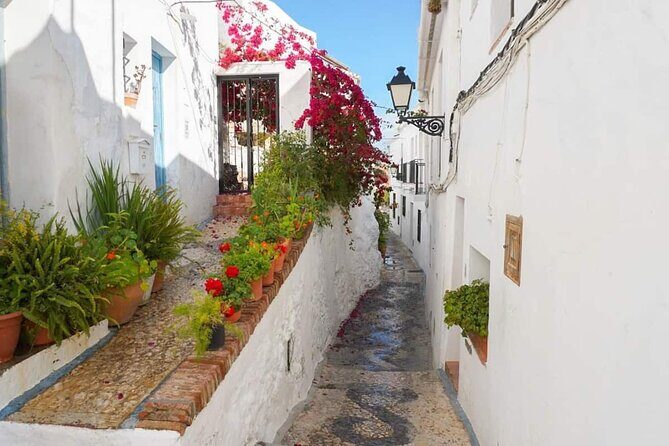
After Nerja, the day shifts uphill to Frigiliana, the other half of the title: Coasts and Mountains. You don’t get a single long block of time here. Instead, you get a sequence of short orientation stops that add up.
You’ll spend time in the old town area, then move through highlights like the Church of San Antonio and stops tied to local landmarks such as El Ingenio. You’ll also see the Museo Arqueológico – Casa del Apero, the Old Fountain, and Calle Zacatín. Near the end, you may also be pointed toward the Palacio de los Condes de Frigiliana or El Ingenio again, depending on what the guide prioritizes that day.
Because these are shorter stops (around 10 minutes each), I’d treat Frigiliana as a “first look that helps you decide what to return for.” You’ll get enough to appreciate the feel and the key sights, but it’s not a full independent exploration where you can wander for hours without checking the time.
This is also where shoes matter. Old towns can mean uneven pavement. Even if you’re not climbing big steps, you’ll be walking enough to feel it after a long day.
If you care about culture and small details, ask questions. The value of a small-group format isn’t just comfort—it’s that your guide can point out what to notice in the limited time you have.
How the 8-hour schedule really feels (and how small-group size helps)
On paper, the trip is about 8 hours. In real life, it can feel like a full day because you’re balancing three different modes: travel, coastal downtime, and sightseeing stops.
What makes it tolerable is the structure. You get real time for the cave (about an hour), real time for the coast (a beach hour plus two 30-minute viewpoints), and then short, purposeful Frigiliana stops. That pacing keeps you from spending your whole day in a bus window, even though transfers are part of the deal.
The small group size helps in subtle ways. With a maximum of 8 travelers, you’re more likely to get:
- Clear timing and fewer bottlenecks at viewpoints
- Better odds of asking questions without shouting
- A bit more flexibility if your group wants more photo time or a quicker bathroom break
Comfort and safety details are also handled with care. Vehicles are disinfected before use, and drivers and guides wear masks and gloves, with hand sanitizer available. That’s extra reassurance, especially if you’re sensitive to hygiene.
One more angle: tours can be customized, and private tours are available for a supplement. If you have a specific interest—coastal viewpoints, family-friendly pacing, or history-focused stops—this format gives you a better chance to tailor your day.
Price and value: what $325.46 buys you in real time
At $325.46 per person, this isn’t a budget impulse buy. But it’s also not just a sightseeing drive. Most of what you’re paying for is:
- Round-trip transfers from Granada city centre
- An air-conditioned vehicle for the whole day
- Driver/guide service
- Cave entrance plus audio guide
- Insider tips
That cave component is important. Cave tickets, transport, and a guided route all add up fast if you try to build it yourself. Here, you’re buying convenience and a planned flow, not just a destination.
Is it worth it? For me, it comes down to your priorities:
- If you want Cueva de Nerja without navigating tickets and timing, it’s strong value.
- If you want a day that mixes coastal breaks with Frigiliana’s old-town highlights, it’s efficient.
- If you hate structured itineraries, the short Frigiliana stops might feel a bit fast.
Also note what’s not included: food and drinks, gratuities (optional), optional activities, and a live guide inside the cave. So you’ll still want to plan for lunch spending.
The good news is that this tour doesn’t make you scramble for basics. It gives you the big paid elements up front, and lets you spend your time on the places themselves.
Best-fit for families, first-timers, and people who like a plan
This trip tends to suit people who want to see a lot without doing the legwork. You’ll enjoy it if:
- You’re in Granada and want an easy day trip outside the city
- You like coast-and-culture days rather than long museum marathons
- You prefer small-group attention and a calm pace
It’s also a solid option for families. One note from the experience style: the day is designed so you’re not rushed, and guides have been praised for making it work smoothly even with younger kids. That doesn’t remove the fact it’s a full day, but it can make the day feel more manageable.
If you’re a solo traveler, the small group helps. You’re not alone in logistics, and it can turn into a friendly day without the stress of navigating every stop yourself.
If you’re a seasoned traveler who already knows Nerja and Frigiliana well, you might prefer a more flexible plan or a private version. Still, the cave plus coordinated viewpoints are enough reason to consider it even if you’re picky.
A quick note on optional extras and timing surprises
The only big timing wildcard is optional water activity in Nerja. If you do kayaking or paddle surfing, it costs extra and may change the length of your day.
That’s why it helps to decide early:
- If you want a predictable schedule, keep Nerja beach time simple.
- If you want the water experience, budget extra patience for logistics and let the day run as it runs.
Kids under 5 are also charged on this tour, and a baby booster is available for 15€. If that applies to you, plan ahead so you’re not dealing with last-minute questions.
Should you book this Nerja to Frigiliana day trip?
I think this is a smart booking if you want a one-day Nerja + Frigiliana hit with the must-see cave included and a real coastal break. The combination of Cueva de Nerja, Balcony of Europe, and Frigiliana’s old-town stops is a good match for first-timers and for anyone short on time in Andalusia.
Skip it or choose a private/custom version if you:
- Want long, unstructured wandering in Frigiliana
- Dislike any schedule that depends on optional activities
- Are looking for a very budget-friendly day (this is mid-priced, not cheap)
If you like the idea of being driven door-to-door from Granada, then spending your day doing more than planning, this is the kind of trip that feels worth it.