REVIEW · GRANADA
From Granada: Alpujarra Villages Guided Day Tour
Book on GetYourGuide →Operated by Discovering Spain · Bookable on GetYourGuide
White villages climb into the Sierra Nevada. This day trip is a focused route through the Alpujarra—Granada’s mountainous neighbor—where you’ll see how people built homes to survive steep hills and cold winters. I love that the stops aren’t just pretty postcard shots; they come with real local context from the guide.
Two parts I especially like: the Poqueira Valley viewpoint (big skies, deep valleys, and Sierra Nevada peaks in the same frame) and the village wandering, where the streets feel old and narrow instead of staged for tourists. One thing to consider up front: there’s walking on slopes, steps, and uneven ground, and it’s not set up for wheelchair access or people with mobility impairments.
In This Review
- Key highlights worth setting your alarm for
- Why Alpujarra feels like a different Spain from Granada
- From Granada to Puente de Tablate: history at a stone bridge
- Lanjarón: the region’s oldest town, seen briefly but well
- Poqueira and Guadalfeo miradors: where the views do the talking
- Fuente Agria and the Chorrerón: spring water and waterfall payoff
- Capilerilla: calmer streets away from the main tourist stream
- Pampaneira: free time for coffee, plus the best lunch rhythm
- What the best guides do (and why names matter here)
- Walking, weather, and footwear: your comfort checklist
- Price and value: what $108 buys you (and what it doesn’t)
- The most practical way to enjoy the day
- Should you book this Granada to Alpujarra villages tour?
- FAQ
- How long is the Alpujarra villages guided day tour from Granada?
- What’s included in the tour price?
- Is lunch included?
- Where do I meet the tour?
- Is hotel pickup included?
- What language will the guide speak?
Key highlights worth setting your alarm for
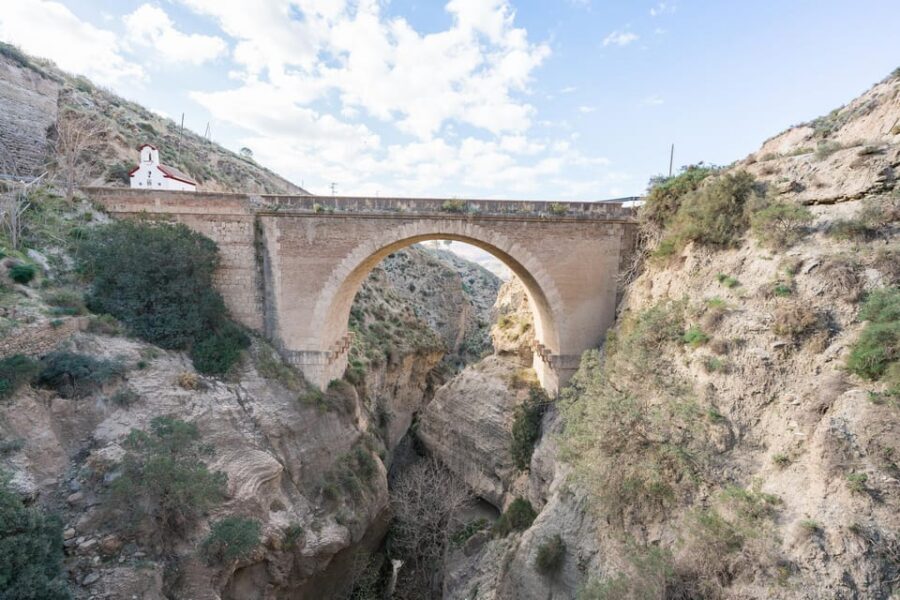
- Puente de Tablate: a guided stop tied to Morisco life in the Alpujarra
- Lanjarón: an early photo stop in the region’s oldest town
- Poqueira and Guadalfeo viewpoints: landscapes you can’t fully appreciate from inside a city
- Fuente Agria + Chorrerón: a guided stroll toward mineral spring waters and natural waterfalls
- Capilerilla + Pampaneira: calmer village time plus free time for coffee, shopping, and lunch
Why Alpujarra feels like a different Spain from Granada
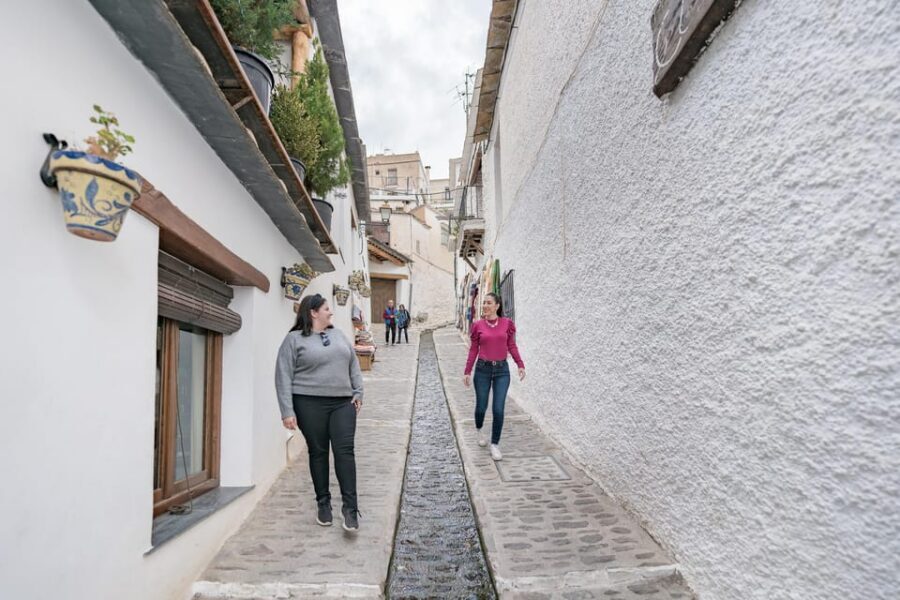
Granada’s charm is intense—Alhambra shadows, tapas energy, street life. The Alpujarra is a different rhythm. You trade city noise for mountain air and villages built like stacked terraces. The result is that you start noticing practical things: how streets “zig” around corners, how houses hug the hillside, and how water shows up everywhere (springs, streams, and old channels).
What makes this tour work well is its balance. You get enough guided time to understand what you’re seeing, then you get small pockets of free wandering so you can slow down. And because it’s transport + local guide included, you’re not spending your day figuring out routes or transfers.
You can also read our reviews of more guided tours in Granada

From Granada to Puente de Tablate: history at a stone bridge
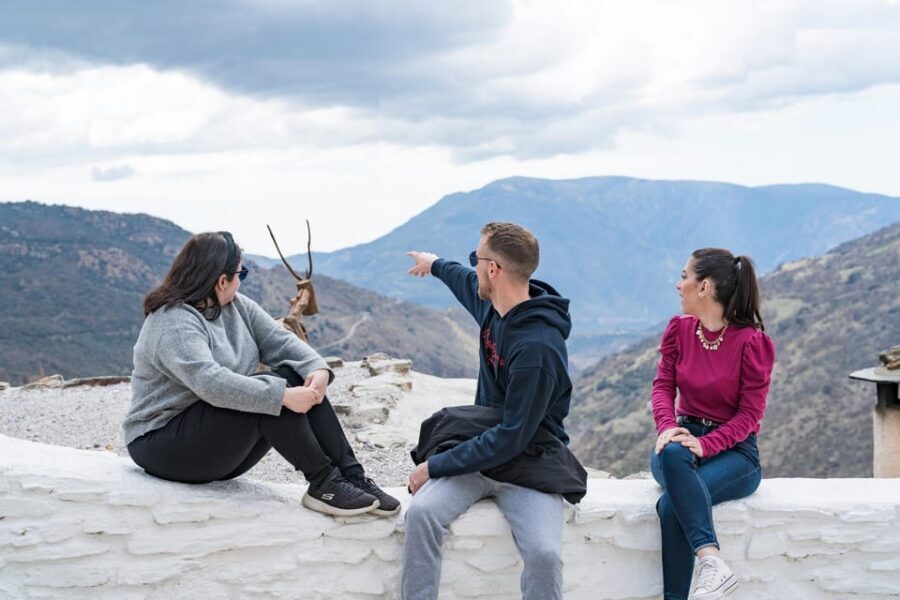
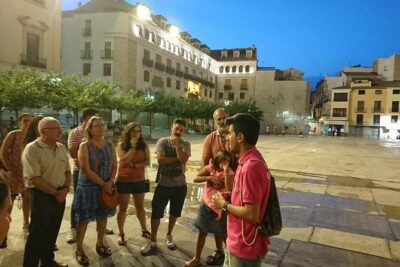
You set out from Discovering Spain’s office at Plaza de las Descalzas, 3, then ride up toward the mountain villages. After about the first van drive, the day’s first real attention-grabber is the Puente de Tablate.
This stop is more than a quick photo. You’ll get a guided look at the Nasrid-era connection—plus the relationship of the Moriscos with the Alpujarra. It’s the kind of context that turns a stone structure into a clue about how communities lived here. You also visit the nearby Nasrid castle area for views over the surrounding region, which helps you “place” the story in the geography.
Lanjarón: the region’s oldest town, seen briefly but well
Next up is Lanjarón, the oldest town in the Alpujarra region. You won’t have hours to explore here, but the early stop is useful. You’ll get your first sense of how these villages sit against the slopes—and you’ll likely spot why Lanjarón is still known in Andalusia.
Because this is a photo stop rather than a long guided walk, I treat it like a warm-up. Bring your camera, but also take a moment to look past the buildings at the terrain. When you know where the valleys and ridgelines are, the later viewpoints hit harder.
Poqueira and Guadalfeo miradors: where the views do the talking
One of the best moments on this kind of tour is when you stop expecting “more villages” and start appreciating scale. That’s exactly what happens at the Mirador de Poqueira.
You’ll take a scenic photo stop that frames the Poqueira Valley, the Guadalfeo Valley, and the Sierra Nevada in the same general sweep. Even if you’ve seen mountains before, this is the kind of lookout that makes you understand why these settlements cling to certain slopes and not others. You can visually trace where water runs, where land opens up, and where the terrain forces tight pathways.
Practical tip: stand where the guide tells you for the best sightlines. On windy days, people shift positions to get a steadier footing—so it helps to follow local advice rather than guess.
Fuente Agria and the Chorrerón: spring water and waterfall payoff
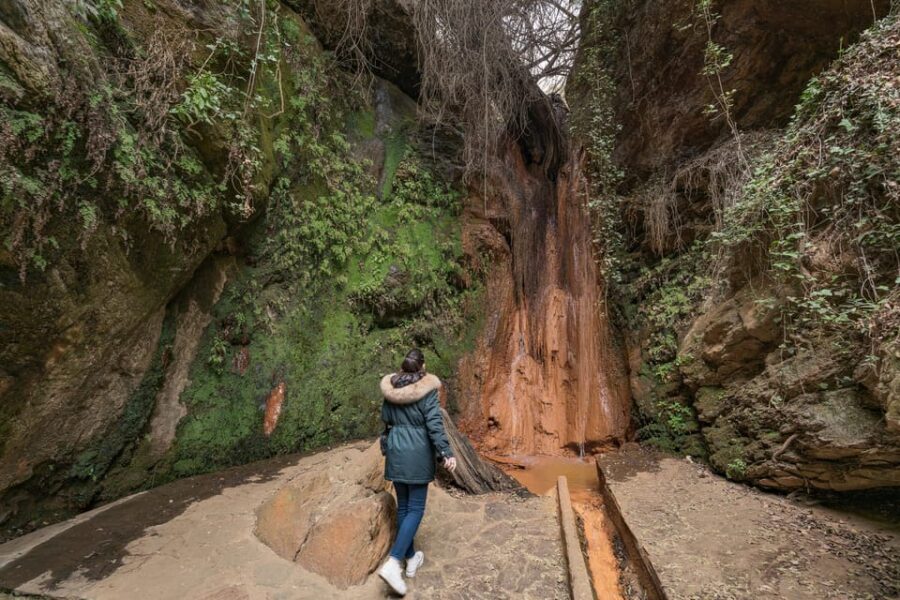
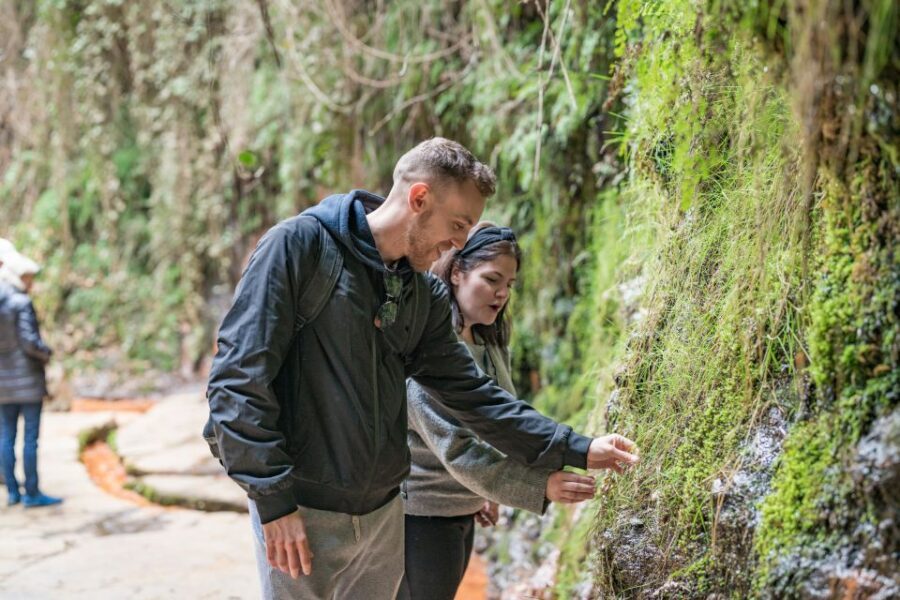
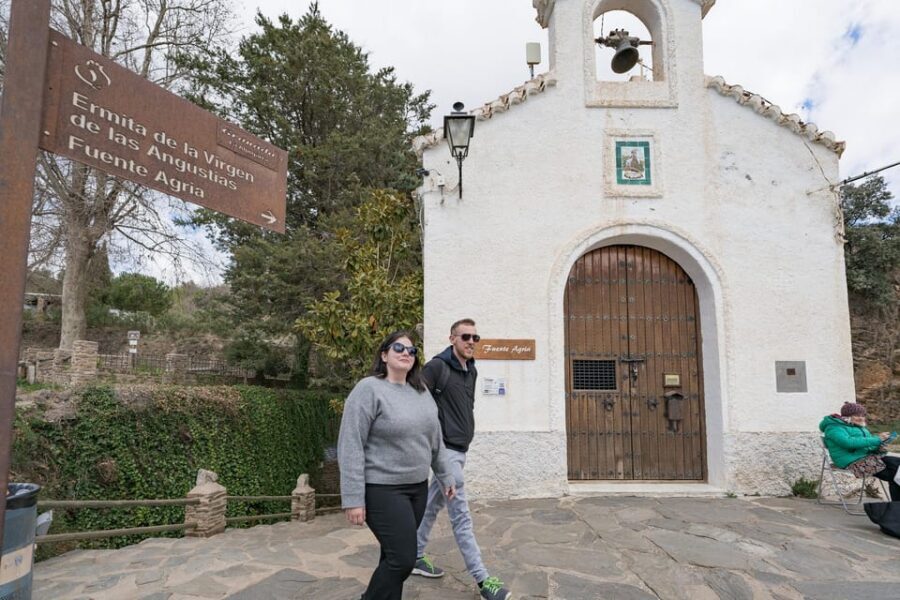
This part of the day is where you get your “move your legs” moment—without it turning into an all-day hike. You’ll stop for the Ermita and Fuente Agria area, where you’ll learn and then likely see the spring context before continuing toward Pórtugos.
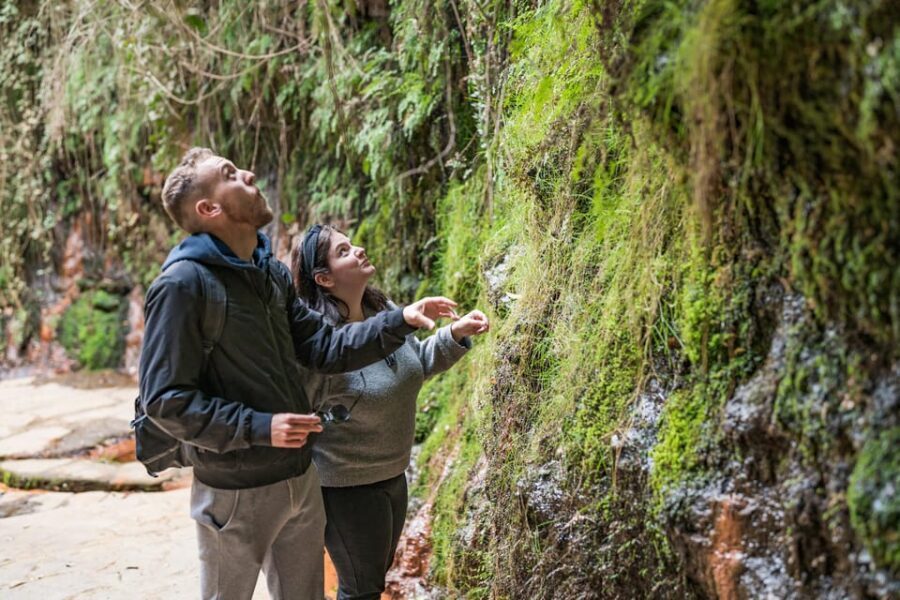
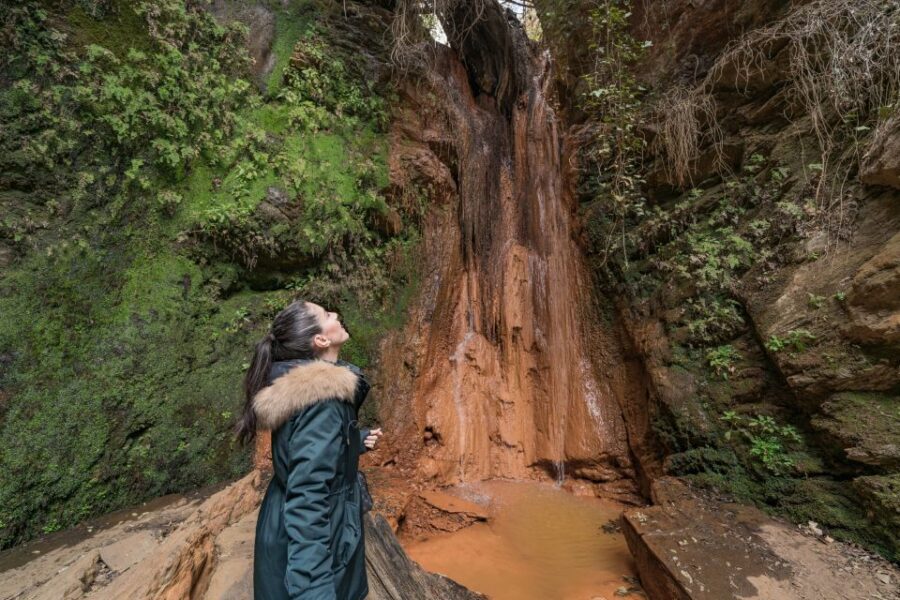
Then comes the highlight: you walk down to the Chorrerón, described as impressive natural waterfalls. Even if the water flow varies with season, the value here is that you’re not just staring at mountains—you’re learning how water shaped daily life in steep terrain.
Wear comfortable shoes with good grip. Several visitors flag that the ground can be slick when wet, and the villages themselves include steps and inclines. You don’t need hiking boots, but you do need shoes that won’t betray you on a short downhill.

Capilerilla: calmer streets away from the main tourist stream
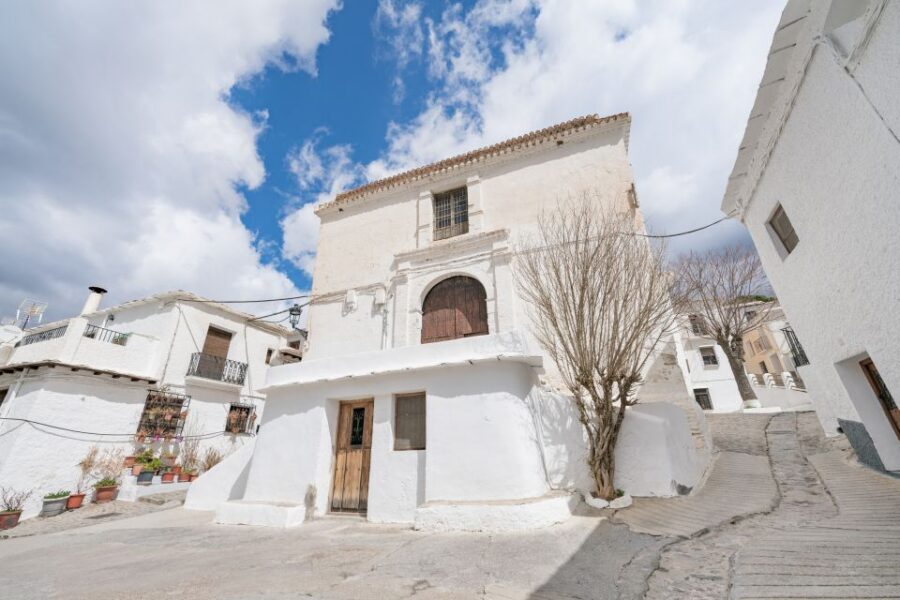
After the natural stop, the day shifts back into village mode with Capilerilla. This is where the tour starts to feel like it’s steering you toward quieter corners rather than only the headline names.
You’ll get a guided experience here, and the vibe is exactly why I like it on this itinerary. It’s a smaller village stop with charming architecture and narrow streets—ancient-feeling, with time to look without feeling herded. You’ll likely notice how the buildings relate to the street and how the village layout helps with sunlight and shelter.
Pampaneira: free time for coffee, plus the best lunch rhythm
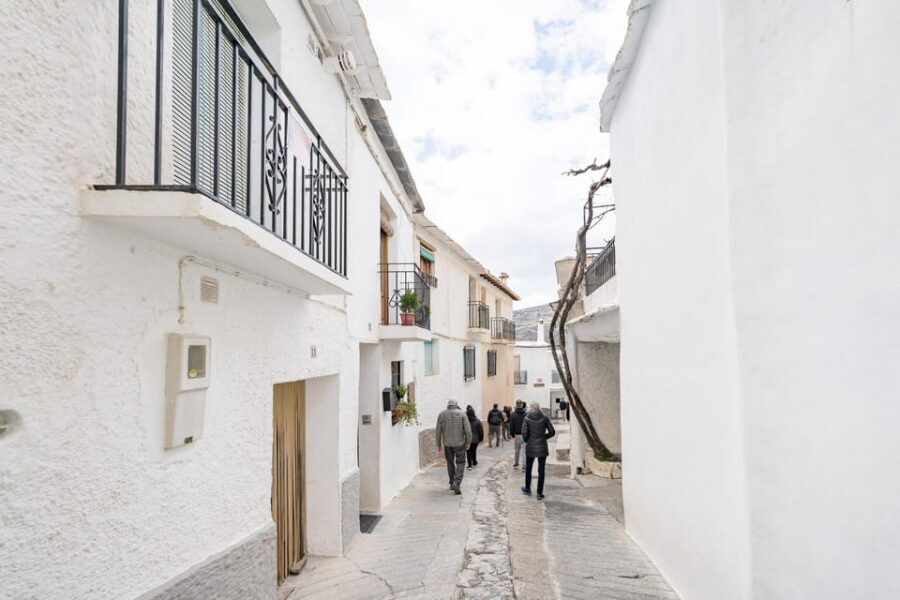
Finally, the tour reaches Pampaneira, one of the most representative Alpujarra villages and part of that short list of Spain’s most beautiful village networks. This is your big “linger” stop.
You’ll have guided time first, then free time later for coffee and independent wandering. Lunch is also built into this portion of the day, with a 1.5-hour lunch/free time window.
One practical reality from past guests: lunch can land late. One visitor specifically pointed out that lunch timing felt like around 3 pm (very late if you’re used to earlier Spanish meals). I’d plan your energy accordingly. The operator even recommends bringing a snack, and I agree. A small snack in your daypack makes the later lunch window feel way more comfortable.
Also, don’t rush Pampaneira. Several visitors mention that the best part is turning corners and realizing you’ve moved onto a completely different street “layer.” If you like photography, this is the stage where you’ll start wanting extra minutes—so take them.
What the best guides do (and why names matter here)
A tour like this lives or dies on the guide. In this case, many guides have been highlighted by name, and the recurring theme is how they pace the day and connect stories to what you’re seeing.
You may get a guide like Gonzalo / Gonzales, praised for friendly, patient explanations and the ability to slow down instead of rushing between photo stops. Others named include Carlos, Manuel, Jose, and Enrique—each described as helpful, calm on winding mountain roads, and good at mixing practical info with local history.
Why this matters for you: on a day with viewpoints, springs, and steep streets, your guide is the person who decides when you pause, where you stand, and what you notice. If you care about understanding architecture and local life (not just collecting images), this is where the money turns into meaning.
Walking, weather, and footwear: your comfort checklist
This tour is not marketed as wheelchair-friendly, and it’s not ideal for mobility impairments. Expect steps, inclines, and uneven ground—especially around village walking and the waterfall walk.
Weather in the mountains can change fast. Some days are mild and sunny; others are windy or wet. Bring layers and be ready for cooler air at elevation. A rain shell is more useful than you think if you’re visiting in shoulder seasons.
For your own sanity:
- bring water
- wear comfortable shoes with grip
- pack a snack if you get hungry before lunch
- bring a light jacket even if Granada feels warm in the morning
Price and value: what $108 buys you (and what it doesn’t)
At $108 per person for a roughly 7-hour small-group outing, you’re paying for the big stuff: transport plus a local guide to connect the dots between villages, water features, and history.
What you’ll still need to budget:
- Lunch isn’t included
- Hotel pickup isn’t included unless you choose the private option; pickup is optional and you’ll confirm details
So how do you judge value? Think of it as paying to compress a lot of hard-to-organize driving and guided stops into one day from Granada. If you tried to do this on your own, you’d be spending time on route planning, timing, and finding the right viewpoints and walking spots. Here, the day is structured for you.
It also helps that the tour often runs with small group sizes—past departures have been described as groups of four, six, and around eight. Smaller groups usually mean you spend more time looking and less time waiting.
The most practical way to enjoy the day
This is a day where a little strategy goes a long way.
- Start with your expectations: you’re not doing one “main” attraction. You’re collecting a series of meaningful stops—bridge, oldest town, mirador, spring/waterfall walk, then village time.
- Pace your photos: the viewpoints and village corners invite constant stops, so keep your camera ready but don’t freeze in place every time someone calls out a spot.
- Save energy for Pampaneira. That’s where your free time matters most.
- Ask the guide questions on the van. It’s often the fastest way to get context you can use immediately at the next stop.
Should you book this Granada to Alpujarra villages tour?
I think this tour is a strong choice if you want an efficient, well-guided day outside Granada that shows the Alpujarra’s mix of white villages + water + mountain viewpoints. It’s especially good if you care about the “how” and “why” behind what you’re seeing—Morisco-era connections, Nasrid-era structures, and why villages sit where they do.
You might skip it if you need a fully flat, low-step experience. The walking and uneven ground aren’t minimal, and the Chorrerón walk plus village steps won’t feel good for everyone.
If you do book, aim for comfortable shoes and a snack. Then relax into it. This is the kind of day where you’ll leave with more than photos—you’ll leave with a clearer sense of how life works on these steep mountain slopes.
FAQ
How long is the Alpujarra villages guided day tour from Granada?
The tour lasts about 7 hours.
What’s included in the tour price?
Transport and a local guide are included.
Is lunch included?
No. Lunch is not included, and you’ll have a lunch/free time window in Pampaneira.
Where do I meet the tour?
Meet at the Discovering Spain office at Plaza de las Descalzas, 3.
Is hotel pickup included?
Hotel pickup isn’t included unless you select the private option. Pickup is optional, and you may be asked to confirm the meeting point, especially if vehicles can’t reach your exact accommodation area.
What language will the guide speak?
The tour guide works in Spanish and English.