
REVIEW · ALHAMBRA TOURS
Private tour in all complete complex of Alhambra with ticket
Book on GetYourGuide →Operated by Granada Tours a Pie · Bookable on GetYourGuide
One ticket, four very different worlds. I love the private 3-hour format and the presence of an official local guide, because the Alhambra is too big and too symbolic to just wander through. You’ll cover the main parts of the UNESCO site—Alcazaba, Generalife Gardens, Charles V (Carlos V) Palace, and the Nasrid Palaces—so the story lands in the right order.
One thing to consider: at $412 per person, the value depends heavily on how strong (and how interactive) your guide is. In one case, the guide was friendly but didn’t seem as engaged with questions, which matters a lot when you’re paying for a private experience.
In This Review
- Key highlights worth centering your plans on
- What you get with a private Alhambra ticket and an official guide
- Meeting the orange umbrella at the Access Pavilion
- Entering the Alhambra fast with the complete complex ticket
- Alcazaba: the fortress walls that explain the site’s mindset
- Generalife Gardens: shade, water, and the art of comfort
- Carlos V Palace: the Renaissance detour inside Moorish walls
- Nasrid Palaces: where you need a guide to slow you down
- Choosing your tour order and getting the pacing right
- Price and value: is $412 per person fair for an Alhambra private tour?
- Rules that affect your entry day (ID and bags)
- Who this tour is best for (and who should choose something else)
- Should you book this Alhambra private tour?
- FAQ
- How long is the Alhambra private tour?
- Is this a private tour?
- Which languages are available?
- What parts of the Alhambra complex are included?
- Do I need to bring my passport or ID?
- How do skip-the-line tickets work here?
- Where do I meet the guide?
- Is transportation included?
- What identification info do I have to send before the tour?
- Is this tour suitable for people with mobility impairments?
Key highlights worth centering your plans on
- All-complex access in 3 hours: Alcazaba, Generalife Gardens, Carlos V Palace, and Nasrid Palaces
- Skip-the-line entry tied to tickets for the complete complex
- Official guide expertise in English, Spanish, or French
- You can choose the tour order, so you can fit your pace and priorities
- Meet-up is easy: Access Pavilion, look for the orange umbrella
- Headsets included if the group is larger than 10
What you get with a private Alhambra ticket and an official guide
This is one of those rare tours where the paperwork and the on-site timing really matter. You’re not just buying a ticket—you’re getting a private, 3-hour, guided walk through the Alhambra’s full set of core areas, plus an official local guide who knows how to explain the place without rushing past the details.
What makes this setup feel “worth it” (when it goes well) is that the Alhambra isn’t one building. It’s a massive complex that grew in layers: it began as an Arabic fortress in the 9th century, then expanded during the Emirate of Granada under the Nasrid Dynasty in the 13th and 14th centuries. Later, the Catholic Monarchs used it as a Christian court after 1492, and expansions followed. Your guide’s job is to connect those shifts so you’re not just looking at pretty walls—you’re understanding why those walls look the way they do.
You’ll also benefit from skip-the-line access, which is a big deal at a site this popular. Even if you’re a patient person, time lost at queues can turn a dream morning into a stressed one. With this format, your time is supposed to stay on the monument itself.
You can also read our reviews of more tours and experiences in Granada



Meeting the orange umbrella at the Access Pavilion
Your meet-up point is the Access Pavilion of the Alhambra. Look for the orange umbrella, and your guide should be waiting near a poster that says Guides. That’s simple, but it’s also the moment where your day either flows or gets shaky.
A practical tip: confirm your start time ahead of time. One published experience reported that the start hour wasn’t communicated until the day of the issue. That doesn’t mean it’s common, but it’s enough to justify a quick check so you don’t end up waiting when you’d rather be inside already.
Once you’re with your guide, you’ll begin at the main entrance/ticket office area. Then the tour moves into the complex, covering the main zones within the 3-hour window.
Entering the Alhambra fast with the complete complex ticket

This tour includes tickets for the complete Alhambra complex: Nasrid Palaces, Generalife, Alcazaba, and Carlos V Palace. That’s an important distinction. Some half-day tours focus on one area and leave you wishing you’d seen more, or they swap one part for another. Here, the promise is that you’ll see the full spread, which is what most people want from their first visit.
You’re also given headsets for groups bigger than 10 people. For a private group, you might not always need them, but it’s good to know the plan is designed so you can hear the guide clearly without craning your neck.
And because this is private, you get something you won’t get on a big group bus tour: flexibility. That can mean adjusting the pace, pausing where you’re most interested, or rebalancing the walk if something is taking longer than expected. The guide can also tailor how you move between areas.
Alcazaba: the fortress walls that explain the site’s mindset
The Alcazaba is the part that feels like a defensive backbone. It’s the fortress side of the complex, and it helps you understand how the Alhambra worked as a controlled space, not just a decorative palace.
When you visit with a guide, Alcazaba becomes more than a viewpoint. You start to see the logic of the layout—how the fortifications support the broader complex. This matters because the rest of the Alhambra (especially the Nasrid Palaces) can feel like a dream sequence if you haven’t first wrapped your head around the fortress setting.
Expect a mix of walking and looking: walls, strategic spaces, and a sense of height over Granada. If you like architecture and planning, this is the section where the monument starts to feel structured instead of simply beautiful.
Generalife Gardens: shade, water, and the art of comfort
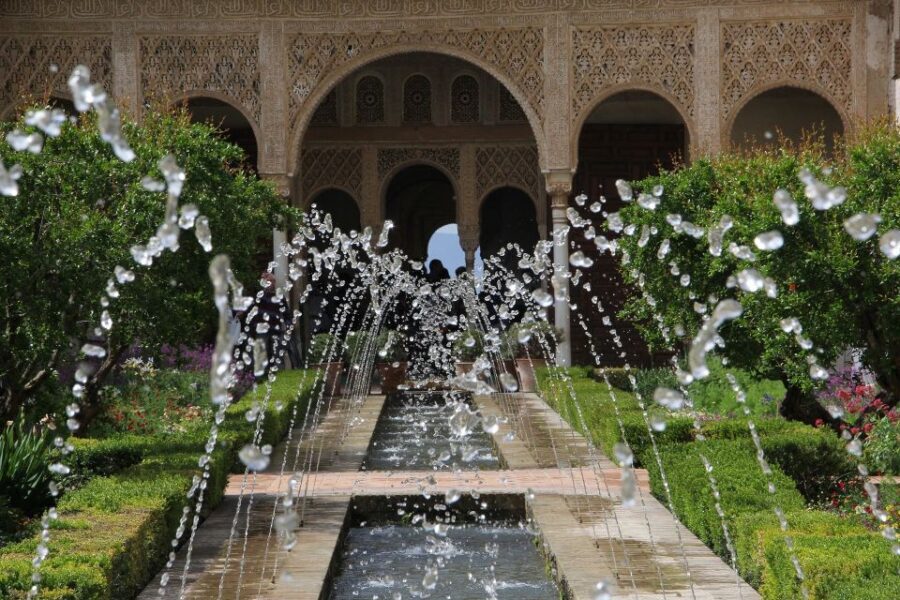
Next up are the Generalife Gardens. This is where the atmosphere shifts. The Alcazaba gives you control and protection; Generalife feels like leisure and atmosphere.
Even if you’re not a “gardens person,” this part is worth your attention because it shows how the Nasrid rulers and later users treated daily life as something designed. Gardens here are not just plants. They’re part of a lived environment where water management and shaded paths shape how you experience the space.
In a 3-hour private tour, you don’t have time to wander for hours. So the value of a guided route is that you get oriented quickly: you’ll know what to look for and why that matters, instead of spending your limited time guessing what’s important.
You can also read our reviews of more private tours in Granada





Carlos V Palace: the Renaissance detour inside Moorish walls

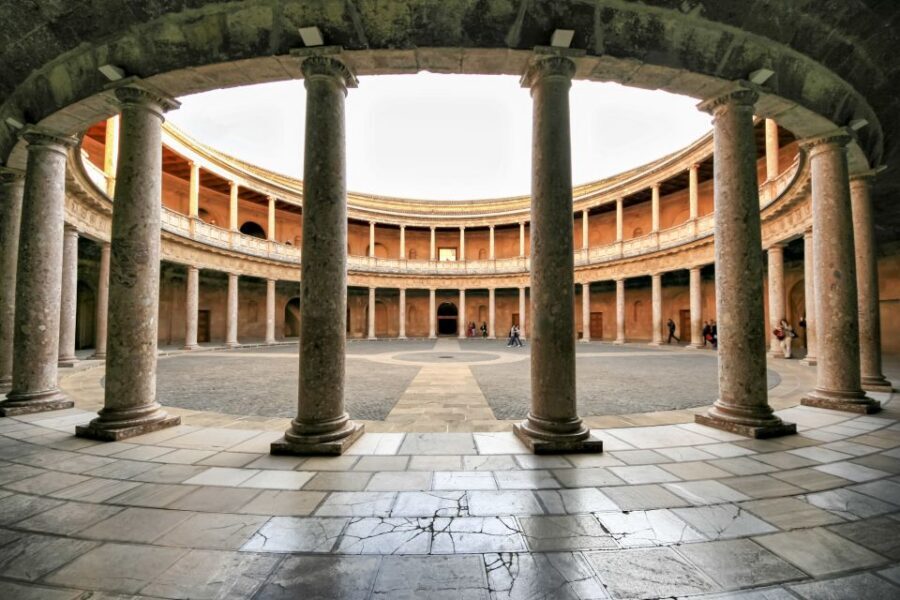
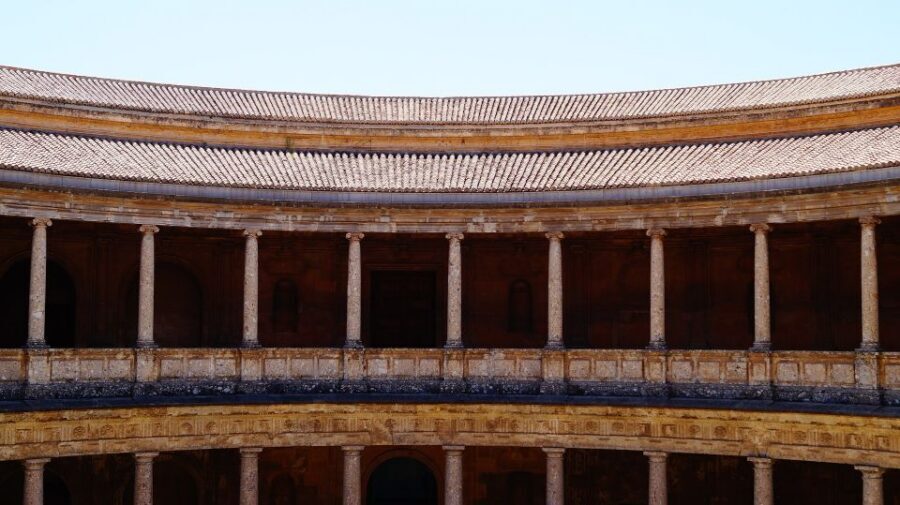
Then there’s Carlos V Palace, a fascinating contrast inside the same complex. This is the segment that often makes first-time visitors pause, because it’s not what you expect if your mental image is purely Moorish artistry.
You’ll likely view it as a “different chapter” of Alhambra’s story. The inclusion of Carlos V Palace in this tour is a big plus for anyone who wants the full context: the Alhambra didn’t freeze in time. Over centuries, new power and new tastes left their mark inside the same boundaries.
The guide’s explanations are key here. Without them, you can end up treating Carlos V as an odd add-on. With a good guide, it becomes a bridge: you understand how later rulers interacted with (and built upon) what was already there.
Nasrid Palaces: where you need a guide to slow you down
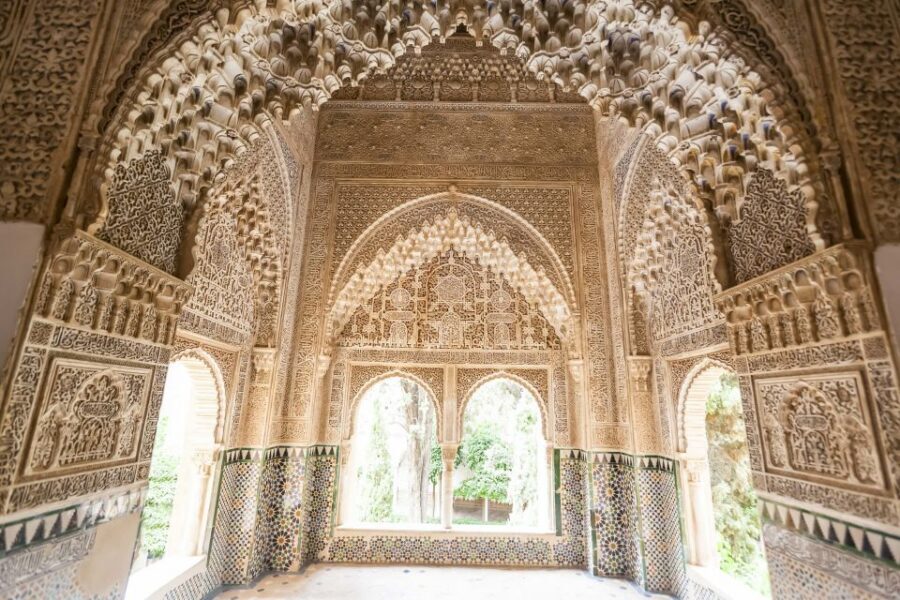
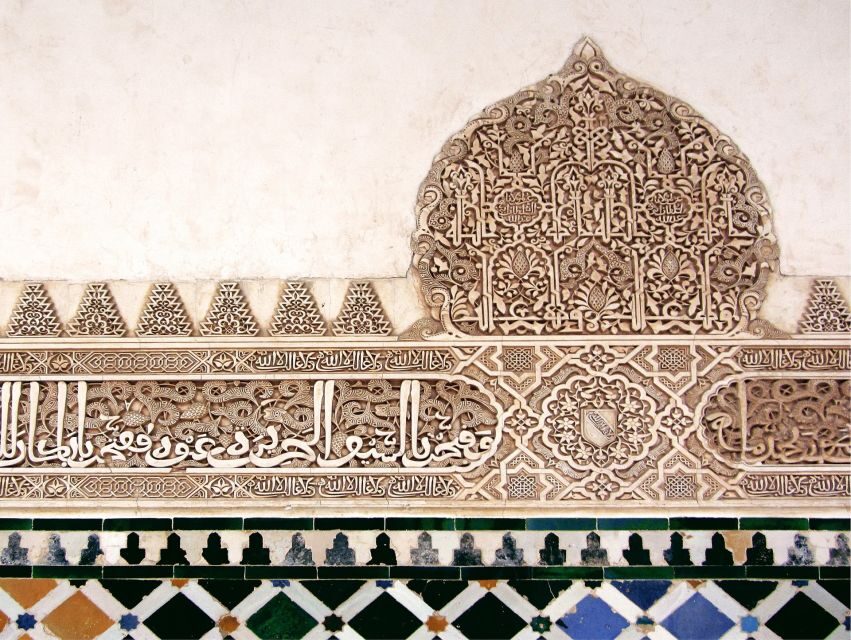
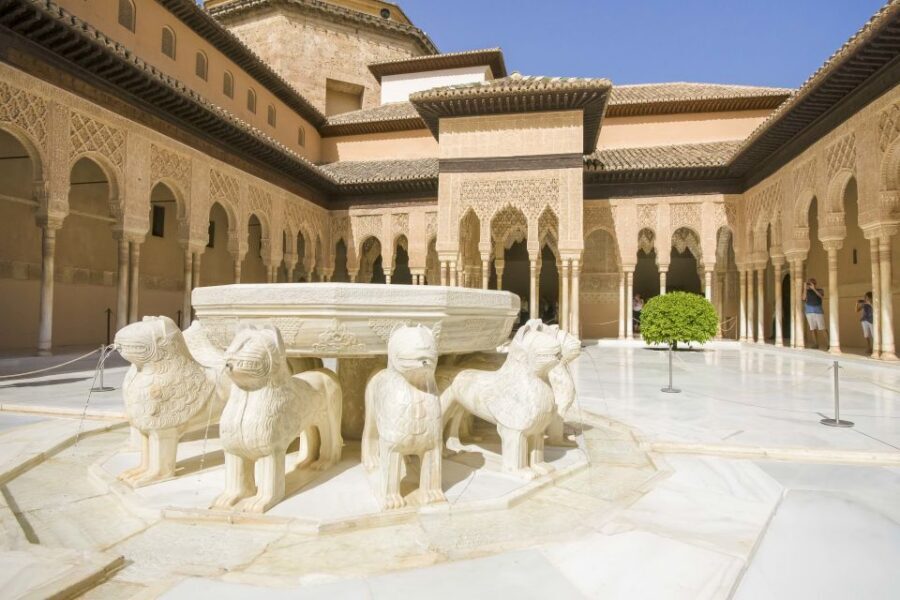
The Nasrid Palaces are the famous part for a reason. This is where the Alhambra’s identity feels strongest, and it’s also where an unguided visit can become overwhelming. The place is full of details, symbols, and design choices that don’t always click instantly when you’re reading off plaques at speed.
A strong guide turns the Nasrid Palaces into a readable experience. You’ll learn how to spot the logic behind the patterns and the meaning behind the spaces. You’ll also get help noticing “hidden corners”—places you might miss if you’re just trying to capture photos and move on.
This is where the guide’s personality can have a noticeable effect. One guide named Rocio was described as friendly and entertaining, with lots of information delivered at a relaxed pace. That kind of pacing is exactly what you want in the palaces, where rushing makes everything blend together.
If your guide is less interactive, as happened in another reported experience, you may find yourself needing to ask questions often. That’s not the end of the world, but if you’re paying for private, you should expect your guide to keep the conversation going in a way that feels natural.
Choosing your tour order and getting the pacing right

One practical advantage: you can choose the order of this tour. That flexibility helps you match the Alhambra to your comfort level.
For example, if you prefer starting with the grand “wow” moments, you might structure your route to reach the palaces at a time when you’re fresh. If you like building understanding from the outside inward, you might begin with the fortress setting in Alcazaba and move toward the calmer gardens and palaces.
There’s also a crowd angle. One experience noted that mornings were not too busy, which makes sense for major sites in general. If you can, an earlier start can mean easier movement and less sensory overload while you’re trying to take in design details.
Price and value: is $412 per person fair for an Alhambra private tour?

Let’s talk money honestly. $412 per person is high, and one published experience called out that the price felt too high for the value. I get that reaction. Alhambra tickets alone aren’t cheap, and a private guided tour adds another layer.
So what can make this price feel more reasonable?
- You’re paying for an official guide for the full 3 hours
- You get skip-the-line access
- You get tickets to the entire complex (not a partial selection)
- Private means you can interact, ask questions, and adjust pace
If the guide is excellent—clear explanations, good rhythm, and a sense of engagement—then the cost can feel like paying for comprehension, not just movement. If the guide interaction is flat, you’ll feel the price more, because a private tour is supposed to feel like a tailored experience.
My advice: treat this as a value purchase when you care about context. If you want selfies and a fast checklist, you’ll probably feel the price sting. If you want to understand why the Nasrid spaces look the way they do, why the Alcazaba matters, and how Carlos V fits into the story, then a guided private format can actually be cheaper than it seems.
Rules that affect your entry day (ID and bags)
This is the kind of site where small admin details can cause big problems if you ignore them.
You should bring a passport or ID card. Also, it’s mandatory to send the passport/ID details of each participant—number, names, surname, and nationality—because tickets are tied to identification. If you don’t provide the info in time, the operator states they can’t guarantee entrance.
Also note what’s not allowed: luggage or large bags. Plan to travel light. Even if you’re only there for a short walk, Alhambra day management is strict enough that bulky items can slow you down.
Who this tour is best for (and who should choose something else)
This tour is a strong fit if you:
- Want full complex coverage in about 3 hours
- Care about architecture and historical context
- Prefer asking questions and not getting swept along
- Appreciate skip-the-line entry
It’s not a good fit if you have mobility impairments. The activity is listed as not suitable for people with mobility impairments.
If you’re traveling solo or as a small group and you want the site explained clearly while you move between Alcazaba, Generalife, Carlos V, and the Nasrid Palaces, this private plan is exactly what you’re aiming for.
Should you book this Alhambra private tour?
I’d book it if you’re trying to make your first Granada trip count and you want the Alhambra explained as a full, evolving story. The combination of official guide expertise, skip-the-line entry, and tickets for the entire complex is a real advantage—especially for a tight 3-hour visit.
Skip the idea only if you’re aiming for a quick walk with minimal learning, or if your budget is strict enough that $412 per person would feel like regret. Also, if you’re the type who needs perfect communication around meeting time, I’d recommend confirming your start hour before you leave, given that one reported case involved a guide not arriving on time.
In short: this tour can be a smart, high-impact choice. Just do one thing to protect your investment: make sure you’re traveling light with your ID ready, and arrive on time at the Access Pavilion for the orange umbrella meet-up.
FAQ
How long is the Alhambra private tour?
The duration is 3 hours. Starting times depend on availability.
Is this a private tour?
Yes. It’s a private group tour.
Which languages are available?
The live guide is available in English, Spanish, or French.
What parts of the Alhambra complex are included?
Tickets cover the complete complex, including the Nasrid Palaces, Generalife, Alcazaba, and Carlos V Palace.
Do I need to bring my passport or ID?
Yes. You must bring a passport or ID card, and the tour requires identification details to issue the tickets.
How do skip-the-line tickets work here?
This tour includes skip-the-line access, so you don’t have to queue for tickets in the usual way.
Where do I meet the guide?
Meet at the Alhambra Access Pavilion. Look for an orange umbrella, and your guide will be standing by a poster that says Guides.
Is transportation included?
No. Transportation, food, and drinks are not included.
What identification info do I have to send before the tour?
It’s mandatory to send the passport or ID number, names, surnames, and nationality for each participant to take the tickets.
Is this tour suitable for people with mobility impairments?
No. It’s listed as not suitable for people with mobility impairments.