REVIEW · GRANADA
Seville Tour with Alcazar, Cathedral and Giralda from Granada
Book on Viator →Operated by GRANAVISION - Movviendo Tourism Group · Bookable on Viator
Big sights, early start, smooth pacing. This Granada-to-Seville day trip hits the city’s top Islamic-to-Christian landmarks with a professional guide, then gives you breathing room for squares, photos, and tapas. I especially love how Seville Cathedral and the Real Alcázar are built into the day with entrance fees included, so you spend less time worrying and more time looking closely. One possible drawback: the pace can feel like monument-to-monument, and a couple stops may run longer than you’d like if you’re hoping for extra free time around the neighborhoods.
I also like the practical setup: pickup in an air-conditioned minivan, plus bottled water and single-use headsets so you can actually follow the guide’s stories. The group stays small (up to 20 people), and I’ve seen guides such as Susanna, Sylvia, and Paloma lead with clear, site-specific explanations. Still, it’s a long day—about 12 hours total—so pack comfortable shoes and be ready for a lot of walking.
In This Review
- Key Highlights You’ll Feel Right Away
- A One-Day Seville Plan From Granada (How It Works)
- Entering Seville Cathedral and Getting Your Bearings Fast
- Giralda: The Tower With Two Religions in the Same Shape
- Real Alcázar: Where Moorish Design Feels Like It’s Still Moving
- Old Seville Streets and the Medieval Jewish Quarter Charm
- Plaza de España: Short Time, Big Visual Payoff
- Museum of Fine Arts and the Best Kind of Pause
- Practicalities That Affect Your Day: Timing, Hearing, and Walking
- Food Costs: What You’ll Pay Extra and How to Handle It
- Price and Value: Is $252.33 Worth It?
- Who This Tour Fits Best (and Who Might Feel Rushed)
- The Booking Decision: Should You Choose This Seville Day Trip?
- FAQ
- How long is the Seville tour from Granada?
- What time does the tour start?
- What’s included in the ticket price?
- Is the tour in English?
- How many people are in the group?
- What about food and drinks?
- What if the trip is cancelled due to weather?
Key Highlights You’ll Feel Right Away
- Cathedral + Giralda: UNESCO-listed, with the Giralda’s Muslim origins and Christian-era top
- Real Alcázar included: Moorish palace detail and court gardens, with admission handled for you
- Small-group format: up to 20 people, guided, with headsets to keep up
- Plaza de España stop: a short but iconic visit at a landmark Seville treats like a stage set
- Old Seville wandering time: including the medieval Jewish quarter streets and painted-house charm
- Lunch is on your own: you’ll likely want to plan what you’ll eat before you get hungry
A One-Day Seville Plan From Granada (How It Works)
This is built as a true day trip: you start around 7:30 am from Granada, ride in a comfortable vehicle to Seville, tour the major monuments with a guide, then return to Granada at the end of the excursion. Plan on roughly 12 hours total in your travel day, and treat it like a focused hits tour rather than a slow, neighborhood-by-neighborhood stroll.
The value angle here is that you’re not just buying transport. You’re paying for a guided route that includes key admissions, bottled water, and a way to hear the guide clearly. The included headsets matter more than you’d think, especially in busy courtyards and inside large, echoing spaces where voices can get swallowed.
Because the day is structured around specific timed stops, you’ll want to move quickly at each location. If you’re the type who likes to linger for an extra hour on every corner, you’ll feel some time pressure. A couple guides I saw mentioned in feedback—like Susanna or Sylvia—were praised for being professional and knowledgeable, but even the best guide can’t change the overall day schedule.
You can also read our reviews of more tours and experiences in Granada.
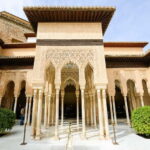
Entering Seville Cathedral and Getting Your Bearings Fast
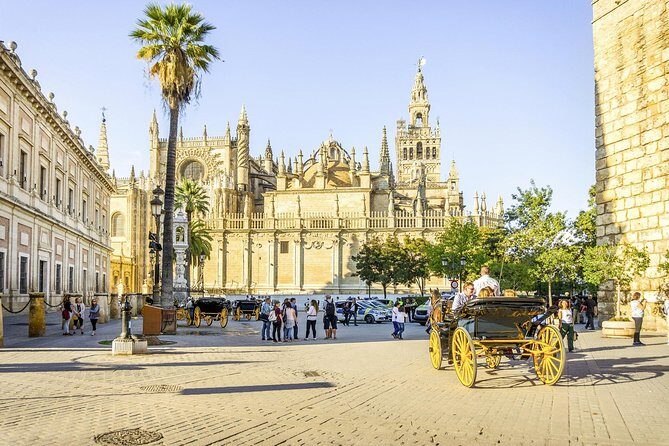
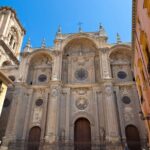
Your first big stop is Catedral de Sevilla (Seville Cathedral), the massive Gothic church that’s part of the UNESCO World Heritage listing from 1987. It’s recognized as the third-largest church in the world (size details can vary depending on how measurements are defined), and it’s the largest Gothic church. You won’t just see it from outside either—you’ll get real time inside.
If you like architecture, this stop is a strong anchor for the entire day. The façade carvings are detailed, but the interior scale is what lands. Even without turning it into a math problem, the sheer size makes you slow down and look up.
You’ll have about 40 minutes at this stop, with admission included. That’s enough time to understand what you’re seeing if your guide helps you pick priorities—like where to stand for the biggest visual impact and what to notice in the Gothic structure. If you’re the kind of person who wants to read every plaque and trace every chapel, you may feel a little rushed.
Practical tip: wear shoes that work on uneven stone. Seville isn’t a flat-city stroll, and your schedule stacks a lot of walking.
Giralda: The Tower With Two Religions in the Same Shape
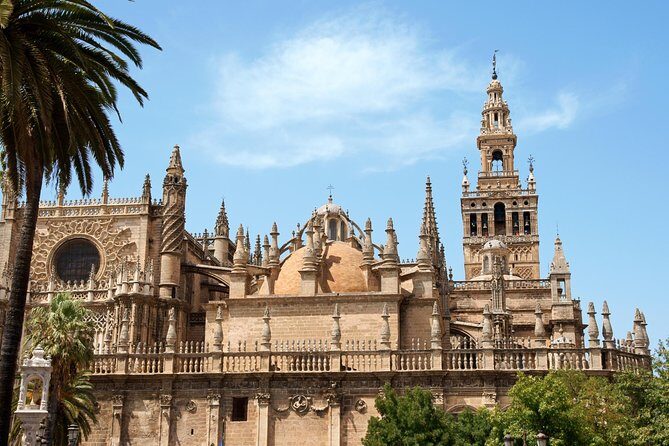
Next comes Torre Giralda, Seville’s bell tower. The tower began in the Muslim period, inspired by the Koutoubia Mosque in Marrakech. The upper portion was completed later during the Christian period, so you’re looking at one vertical story told across eras.
There’s also a legend tied to why the tower survived. The story goes that after the Muslims were defeated, they asked the tower not be demolished so it wouldn’t fall into Christian hands as a political victory. Another part of the legend connects it to Alfonso X keeping it as part of the city’s historical identity.
You’ll get about 30 minutes here with admission included. This is shorter than the Cathedral, so it’s smart to treat it as a viewpoint-and-context stop: get your photos, listen to the explanation, then move on before you lose time for the palace.
If you’re expecting the Giralda to feel like a single “museum room,” you might be surprised. The power is in how the tower’s form shows the city’s layered past.
Real Alcázar: Where Moorish Design Feels Like It’s Still Moving
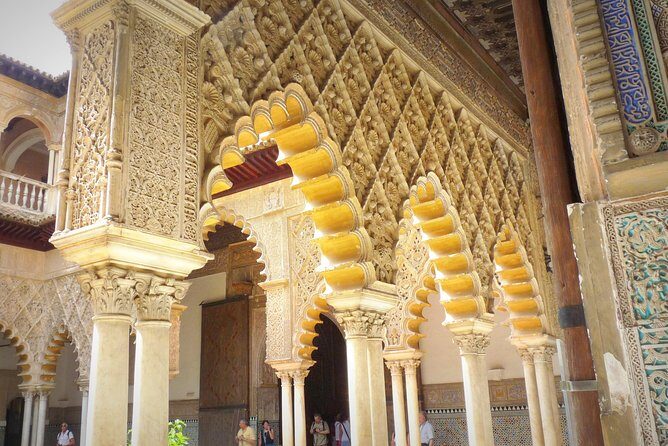
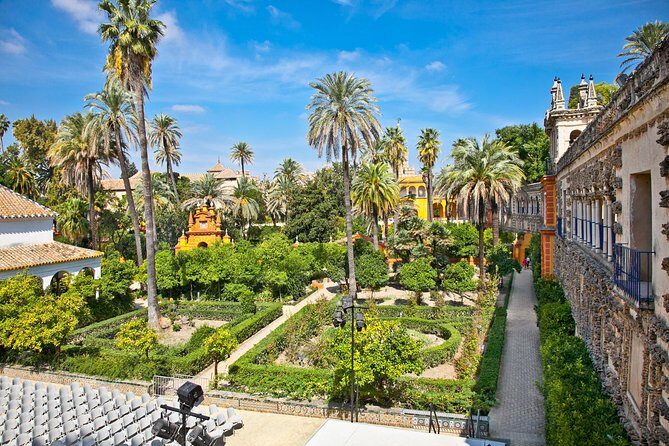
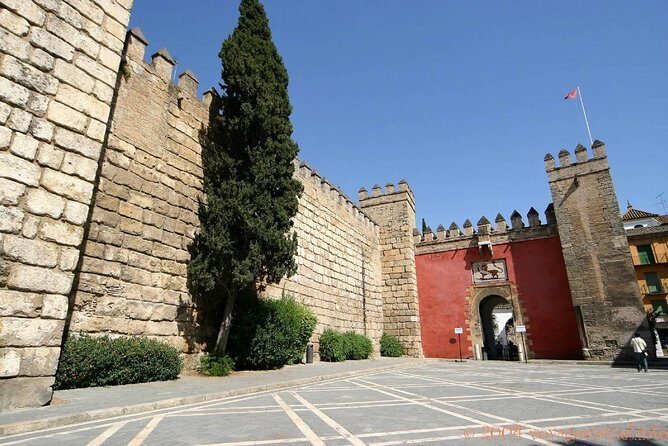
The centerpiece stop is the Real Alcázar de Sevilla, the Royal Alcázar Palace complex. This place works because it doesn’t stay in one style. It traces the shift from early medieval power structures to Islamic rule, then into Christian court use—without pretending the earlier influence vanished.
What I like is that you’re not walking into a vague “palace” experience. You’re stepping into a known political timeline. The palace complex was founded in the early Middle Ages on the site of the old Roman city of Hispalis (later renamed Ixbilia). A key moment described in the palace background is the early 10th century: in 913, Abdurrahman III ordered new government premises, called Dar al-Imara, on the southern flank of the city.
Practically, this stop gives you about 1 hour with admission included. That time can be exactly right if your guide helps you focus on the details that make the design feel alive—arches, courtyard layout, and the way light changes inside. It can also feel a touch long if you’re not into palace interiors and prefer churches and streets instead. One piece of feedback pointed out that the palace portion ran long for their preferences, while the Cathedral felt like the better fit.
My advice: if you’re torn between palaces and churches, set your own mental goal at the Alcázar. Decide what you want to photograph or understand first, so the hour stays satisfying even if the route feels brisk.
Old Seville Streets and the Medieval Jewish Quarter Charm
One of the best parts of a guided day trip is when it stops being only monuments and starts being streets. During the tour, you’ll wander winding old streets, including time in the medieval Jewish quarter area. This is where Seville’s character comes through in the small things: cobblestones underfoot, bright painted houses, and the tight, human scale of older lanes.
Even if the official timed stops are the big-ticket items, this street time is what helps your brain map the city. It’s also where you can breathe. Seville tends to reward slow looking, and you’ll feel that here when you’re not trapped inside a single architectural interior.
You’ll also pass through or spend time near leafy squares and shaded areas that calm the pace. One review vibe was essentially: the day helped people understand the city and region, not just tick off a list.
If you’re hoping for lots of free time to shop or wander far away from the main route, this may not be your best match. The structure keeps you mostly close to the main sights.



Plaza de España: Short Time, Big Visual Payoff
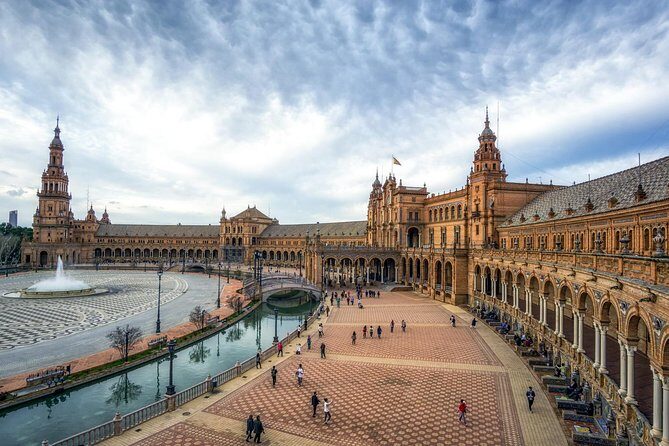
Plaza de España is a semi-circular, brick landmark in Renaissance/neo-Moorish style with two towers at either end that act like city beacons. In front of the façade, there’s a 500-metre canal crossed by four bridges, with a chance to rent small boats to row on the waterway. It’s also known as the Venice of Seville, and you’ll see it plays a starring role in horse-and-carriage routes.
In the tour plan, Plaza de España is a 15-minute stop and admission is free. That short window means you’re not doing a deep exploration. Instead, you’re checking the landmark off with the right perspective: the curve, the towers, and the canal in one glance.
Is it enough time? For most people, yes—because the plaza is designed for visuals from multiple angles. If you love photography, you’ll get plenty of memorable shots quickly. If you want to sit in the plaza and slowly watch life pass, you might wish you had more minutes (and you can always come back later).
Museum of Fine Arts and the Best Kind of Pause

After the monument-heavy blocks, the day includes a stop at the Museum of Fine Arts and time to absorb the quieter pace of shaded squares. The museum addition can be a nice counterweight if you’re feeling “architecture overload” by late morning.
The schedule doesn’t promise a long, reading-heavy museum experience, so don’t expect a full art-history lesson. What it offers instead is a chance to switch gears from stone and towers to exhibitions and interior calm.
One smart way to use this portion: walk in with one simple intention. Pick one exhibit area to see more carefully instead of trying to see everything.
If you’re the type who needs a clear break for your feet, this is also a good moment to reset before lunch and your final sightseeing.
Practicalities That Affect Your Day: Timing, Hearing, and Walking

The tour is set up with single-use headsets and bottled water, which helps a lot on a day where you’re switching between outdoor brightness and indoor shadow. The vehicle is air-conditioned, and the drive between Granada and Seville takes about 3 hours one way, based on the day’s pacing.
You should also note that arrival time can affect how much of the morning you get inside each attraction. In one experience feedback, the group expected to start around 11am but arrived closer to 12pm, and that cut into the day. That’s not something you can control, but you can protect yourself by planning your expectations: you’re buying the tour’s route, not a guarantee of perfect clockwork.
The group size is capped at 20, which is a comfort factor. Smaller groups usually mean fewer people bottlenecking at doorways and faster movement through key checkpoints.
On top of that, some departures may feel more personalized. One account described a private-transfer style day where their party was the only group, and the tour lasted around 2.5 hours with free time for lunch and extra sightseeing. That’s not something to assume, but it shows how the experience can vary depending on who’s booked.
Food Costs: What You’ll Pay Extra and How to Handle It
Food and drinks are not included. You’ll have time to dine in traditional tapas restaurants and sip cañas (own expense) during the day. This is a classic Seville move, and it’s exactly the kind of midday pause that makes a long tour worth it.
Because you’re on your own for lunch, plan in a way that reduces stress. Decide ahead of time whether you want a tapas crawl or one solid sit-down meal. When the monuments end, you’ll want energy, and Seville’s heat can sneak up on you even if you started early.
If you’re watching your budget, remember that the tour price includes major admissions, so you’re already getting value on the big-ticket sights. The missing piece is lunch, snacks, and drinks.
Price and Value: Is $252.33 Worth It?
At $252.33 per person for a day trip, the question isn’t just cost. It’s what you’re getting that you’d otherwise have to arrange yourself. Here, you’re paying for:
- Hotel pickup and drop-off (selected hotels)
- A professional guide
- An air-conditioned vehicle
- Bottled water
- Single-use headsets
- Entrance tickets included for the main sights
Entrance fees included matters because these are not low-cost stops. You’re also saving time by not coordinating tickets and entry rhythms across separate locations.
That said, the value depends on your expectation of guidance quality and amount of city touring. One piece of feedback pointed out that the overall city tour felt light for the price, with the day focusing on only two locations more than they expected. Another comment said the palace time ran long for their tastes. Those are the risk factors: if you’re hoping for a broad city overview and lots of extra street time, you might feel the schedule is tighter than you want.
My rule of thumb: if your priority is the Cathedral/Giralda and the Alcázar, this price can be fair because you’re bundling transport + guidance + admissions. If you mainly want neighborhoods, cafés, and long wandering time, you may prefer a different format.
Who This Tour Fits Best (and Who Might Feel Rushed)
This day trip suits you if you:
- Want a guided route through Seville’s most recognizable landmarks
- Prefer not dealing with separate ticketing and entry logistics
- Like architectural storytelling, especially the Islamic-to-Christian layers
- Appreciate small-group pacing (max 20) and clear guide audio
It may feel less satisfying if you:
- Want lots of free time to explore beyond the main monuments
- Get tired when interiors are scheduled back-to-back
- Hope for a long, open-ended city tour where you can linger anywhere you want
In terms of general participation, the tour notes that most people can participate, and service animals are allowed. If you’re sensitive to long walking days, wear shoes with support and consider bringing any personal comfort items you rely on.
The Booking Decision: Should You Choose This Seville Day Trip?
If your goal is to see Seville’s must-do sights in one efficient day, I’d consider booking. The combination of guided Cathedral/Giralda and Real Alcázar with entrance fees handled is the core strength, and the small-group size plus headsets make the experience easier to enjoy.
My one caution is schedule sensitivity. Since arrival timing can shift, and some feedback included confusion around pickup confirmation, don’t assume the pickup details will be perfect without checking. If you’re traveling on a tight plan, contact the provider early and verify your pickup point and time so you’re not left waiting in a lobby.
If you come to Seville with the right expectations—monuments first, streets second, lunch on your own—you’ll likely find this day trip delivers strong value without turning into a travel-day headache.
FAQ
How long is the Seville tour from Granada?
The tour runs for about 12 hours (approx.), including the drive from Granada and the sightseeing blocks in Seville.
What time does the tour start?
The start time is 7:30 am.
What’s included in the ticket price?
Included features are hotel pickup and drop-off (selected hotels), a professional guide, an air-conditioned vehicle, bottled water, single-use headsets, and entrance tickets for the main monument stops.
Is the tour in English?
Yes, the tour is offered in English.
How many people are in the group?
The tour has a maximum of 20 travelers.
What about food and drinks?
Food and drinks are not included unless specified. You’ll have time to eat on your own during the day.
What if the trip is cancelled due to weather?
If it’s cancelled due to poor weather, you’ll be offered a different date or a full refund.