REVIEW · ALHAMBRA TOURS
Alhambra Private Tour and Skip the Line Ticket and Official Guide
Book on Viator →Operated by VisitaGranada · Bookable on Viator
Alhambra feels huge—this tour helps you process it. You get skip-the-line access plus a professional guide, so you spend your time inside the palaces and gardens instead of juggling crowds. I also love the private setup for pacing, questions, and photo stops, and the route is structured to hit the key spaces without rushing. One drawback to plan around: you’ll walk and climb, and the site is long with steps.
If you’re choosing between winging it or paying for guidance, this one is built for the “I want it explained” traveler. It’s a solid fit for first-timers and anyone who wants the Alhambra’s story connected from the fortress areas to the Nasrid palaces and the Generalife gardens.
In This Review
- Key things I’d bank on before you go
- Why skip-the-line really changes your Alhambra day
- Price and logistics: what you’re paying for (and what you’re not)
- Meeting point and the original ID rule that matters
- The pace: moderate fitness, long walking, and steps
- Stop 1: The Alhambra complex and the Nasrid-to-later history story
- Stop 2: Nasrid Palaces and Dar al-Mamlaka rooms
- Stop 3: Generalife Gardens—recreation and agriculture
- Short stops that add depth: Palacio El Partal and Alcazaba
- Palacio El Partal (terraces and layers)
- Alcazaba (the defensive story)
- Why the guide can make or break the visit
- Best timing: crowds and the sunset factor
- What to bring and how to get the most out of 3 to 3.5 hours
- Who this tour fits best (and who should consider another option)
- Should you book the Alhambra Private Tour with skip-the-line tickets?
- FAQ
- How long is the Alhambra private tour?
- Is the tour private or shared?
- Do I get skip-the-line access?
- What’s included in the tour price?
- What are the main areas you’ll visit?
- Where do I meet the guide?
- Is hotel pickup or transportation included?
- Do I need an original ID?
- Is food included?
Key things I’d bank on before you go

- Skip-the-line Alhambra tickets so your visit starts without the usual queue stress
- Nasrid Palaces and Dar al-Mamlaka focus, with a guide translating what you’re seeing
- Generalife Gardens included, including its historic recreational and agricultural role
- Alcazaba and defensive story, not just pretty walls and views
- Private party only for better timing, questions, and crowd management
- Guides like Chema, Cristian, Antonio, and Mariola have earned strong praise for clarity and enthusiasm
Why skip-the-line really changes your Alhambra day
The Alhambra is one of Europe’s most visited monuments, and that matters. Without pre-arranged entry, you can end up spending the best part of daylight standing around. With this experience, your ticket is tied to guaranteed skip-the-line access, which is what turns a good plan into a great one.
I also like how the tour is designed around understanding, not just checking boxes. You don’t just get dropped into rooms; you get a professional guide who connects the architecture to the people and power that shaped Moorish Spain—then bridges it to what came later. That shift is important because the Alhambra can look confusing if you’re reading it like a museum instead of a living record of changing rulers.
The private format helps too. You can ask questions at the moment something catches your eye, and you don’t have to keep pace with a large group’s exact timing.
You can also read our reviews of more tours and experiences in Granada



Price and logistics: what you’re paying for (and what you’re not)
At $337.15 per person, this is not a budget tour. But the price isn’t only the guide—it’s also the included Alhambra admission with skip-the-line access, plus private time with an English-speaking guide for about 3 to 3.5 hours (around 3 hours 20 minutes).
Here’s what that means for value. If you were planning to visit during peak hours, the paid part starts to feel more reasonable because time is expensive in Granada. You’re buying the ability to move through the site with a plan, and to spend more minutes looking closely instead of waiting.
What’s not included is also clear:
- Food and drinks
- Hotel pickup/drop-off
- Transportation to and from the sites
So you’ll need to handle your own arrival and any water/snacks you want during the walk.
Meeting point and the original ID rule that matters

You meet at P.º del Generalife, 1F, Centro, 18009 Granada. The tour ends back at the same meeting point, which makes logistics easier when your day is already packed.
One detail I’d treat seriously: you must present the original ID used when you made the reservation. Staff don’t allow access without it. This is the kind of rule that can ruin an otherwise perfect visit if you arrive with a mismatch or a digital copy only.
If you’re traveling from elsewhere in Spain or flying in same-day, double-check that your ID matches the reservation, and bring the original document in good shape.
The pace: moderate fitness, long walking, and steps
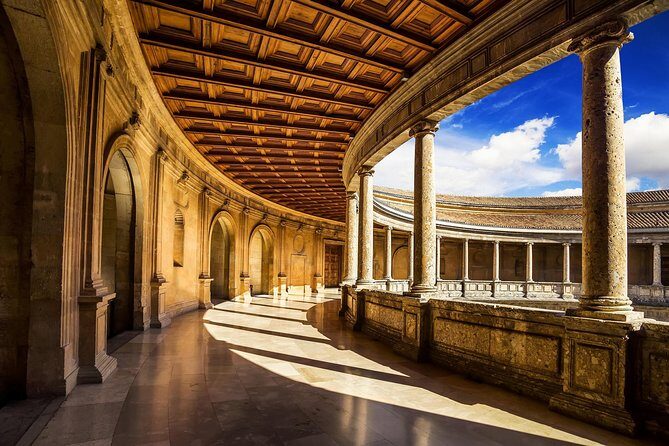
This tour lists moderate physical fitness. That’s accurate for the Alhambra. The layout includes hills, long distances, and areas where you’re climbing or descending.
A helpful clue from guides’ behavior: one guide even adjusted the route conversation around stair effort (the difference between taking stairs for a view versus going with an easier path). That tells me you should be ready for stairs and for some routes that feel more vertical than you’d expect.
If you’re sensitive about mobility, build in a buffer. Wear shoes made for walking, and plan to take breaks. Private touring can help because you can ask for slower pacing, but you still have to move through a real historic site.
Stop 1: The Alhambra complex and the Nasrid-to-later history story
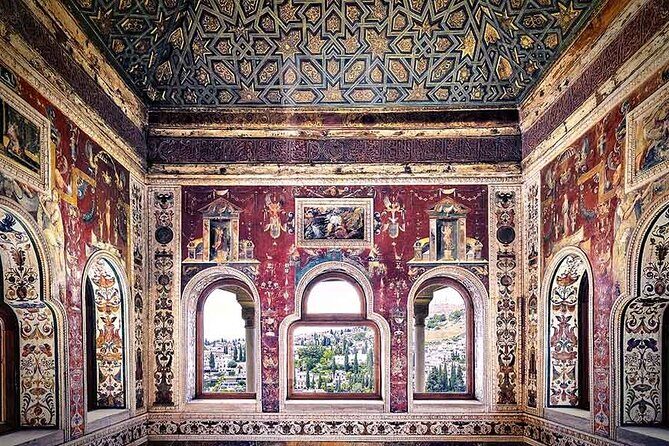
Your first big time block is inside the Alhambra complex, where the monuments feel layered—Nasrid dynasty craftsmanship at the center, plus the later chapters that followed. You’re guided through the spaces that people associate with the Alhambra’s meaning: the gardens, the palaces, and the fortress-like areas that explain how power was displayed in stone.
A lot of the “wow” is visual, of course. But the guide’s job is to help you read the place. You’ll hear what the walls and areas are saying about the Nasrid dynasty, and you’ll also get the broader historical connection—how things later changed under the Catholic Kings and Charles V.
What you’ll likely enjoy most here
- The sense that everything links: fortress areas, palace life, and garden symbolism
- The chance to get photo pointers rather than aimlessly wandering
Possible trade-off
- If you want extremely technical architectural analysis at every turn, you might want to be ready to ask more pointed questions. Some people are happy with a story-first approach; others want plant details, building technique, and deeper structure talk.
You can also read our reviews of more guided tours in Granada






Stop 2: Nasrid Palaces and Dar al-Mamlaka rooms
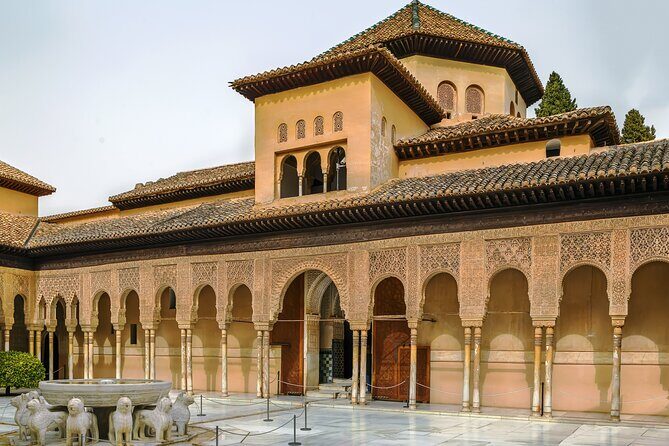
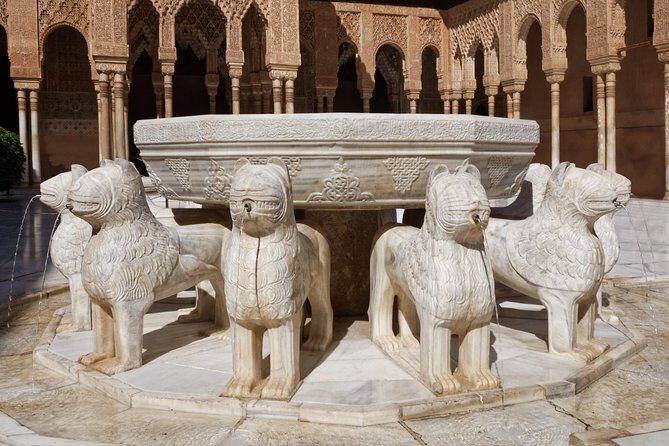
The Nasrid Palaces (including what’s known today as Dar al-Mamlaka, the royal palace sphere) are the heart of the experience. This is where you’ll spend about 1 hour 15 minutes and where your guide’s interpretation can make a huge difference.
The tour frames each palace area with the idea of who commissioned it and what that meant politically and culturally. That’s helpful because, otherwise, you can feel like you’re just seeing room after room with stunning design but not enough context to keep it straight.
Look for how the spaces reflect court life and authority—then think about the surrounding gardens and fortress areas that create the “whole picture” feeling of the Alhambra.
Stop 3: Generalife Gardens—recreation and agriculture
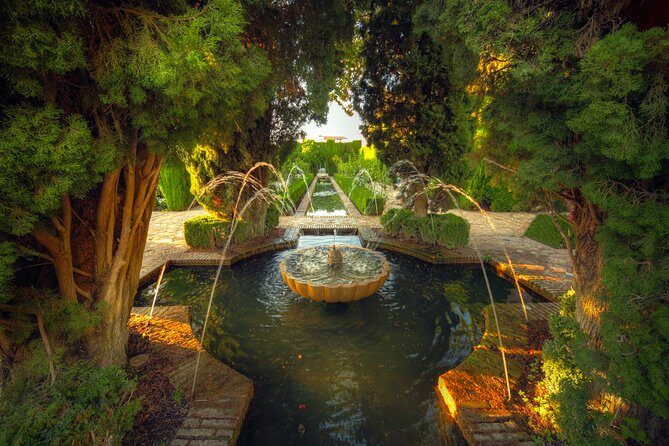
Next comes Generalife, included for about 1 hour. This isn’t just a pretty walk outside the main palace walls. The Generalife is described as a recreational building for Nasrid sultans and also tied to agriculture.
That double role is a big part of why Generalife works in a guided visit. When you hear how the gardens functioned—both pleasure and production—it stops being scenery and becomes part of how the site operated.
If you like places where gardens are tied to history (not just decoration), you’ll probably enjoy this section the most.
Short stops that add depth: Palacio El Partal and Alcazaba
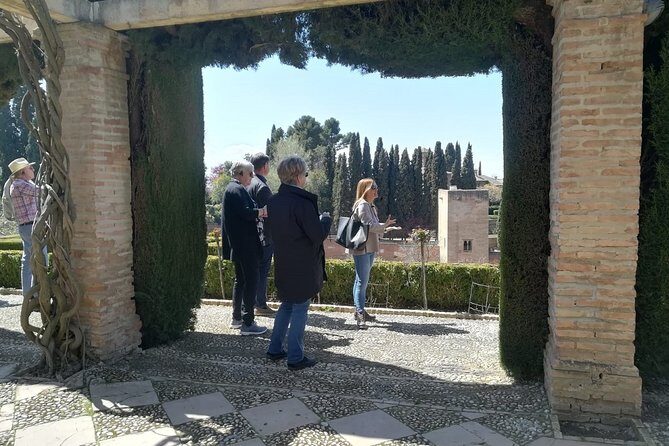
Two smaller but meaningful segments round out the tour.
Palacio El Partal (terraces and layers)
You’ll also visit Palacio El Partal for about 10 minutes. It’s described as a terraced area with lots of change through the 20th century, including an integration of archaeological structures. Even if time is brief, this stop helps connect the palace world with the idea that the site has been studied, modified, and revealed over time.
Alcazaba (the defensive story)
Then there’s the Alcazaba, about 30 minutes. This area is the military side: built for defense, including walls and towers, plus a residential component for military life. If you’ve ever wondered why a royal compound needed such hardened fortification, this part answers that.
This is also one of those places where your guide can shift how you see the Alhambra—from “royal beauty” to “power under pressure,” all in the same day.
Why the guide can make or break the visit
This experience leans hard on the guide. And the praise is consistent.
- Chema is noted for covering the entire Alhambra, sharing history, legends, and interesting stories, and pointing out the best picture spots.
- Christian is described as patient and enthusiastic, with great question support even when route choices involved serious steps.
- Cristian is praised for guiding through crowded spaces well and for discussing myths, though one review suggests people with an architectural or historian’s angle might want more technical detail and could feel a small language gap.
- Antonio stands out for deep knowledge paired with kindness toward kids and senior family members.
- Mariola is highlighted for strong knowledge of Alhambra, Spanish history, and culture, and for answering everything from casual questions to very specific ones.
For you, that means the tour won’t just be a script. In a private format, your guide can adapt to what you care about—history stories, architectural cues, legends, or practical navigation through the site.
Best timing: crowds and the sunset factor
You’re spending a good chunk of time walking between key areas, so timing matters. One smart suggestion from a past experience: consider booking the 16:00 or later time slot if you want crowds to feel more manageable and if you’d like the chance of sunset during your visit.
Even without treating sunset like a must-see, late-day light can make the Alhambra look softer and easier to photograph. If your schedule allows, it’s a worthwhile preference.
What to bring and how to get the most out of 3 to 3.5 hours
You’ll be moving through gardens and palaces, plus a fortress zone. The tour includes tickets and a guide, so your main job is to show up ready to walk.
Practical ideas:
- Wear comfortable shoes with grip (Alhambra paths can be uneven)
- Bring water (food/drinks aren’t included)
- Bring sunscreen or a hat if you’re going in warmer months
- Plan to pause—don’t treat this as a race
Because it’s private, you can tailor the pace. But it’s still the Alhambra—so set expectations that the day has a natural rhythm: walk, stop, listen, look closely, then move again.
Who this tour fits best (and who should consider another option)
This is a great match if:
- You want official-guided context for what you’re seeing
- You’d rather avoid waiting and want skip-the-line entry
- You travel as a small group and want private flexibility
- You care about the story connecting Nasrid art, the gardens, and later historical shifts
You might think twice if:
- You want very technical architectural analysis at a specialist level for every room and plant detail.
- You’re expecting a “no steps at all” kind of experience. The site is physical, and route choices may include significant stair climbs.
Should you book the Alhambra Private Tour with skip-the-line tickets?
If you’re planning your one big Alhambra day and you don’t want it derailed by lines, this is an easy yes. The combination of private guiding, skip-the-line access, and a route that covers the key areas—Alhambra complex, Nasrid Palaces, Generalife, plus Alcazaba—makes it feel efficient without being rushed.
Book it if you like your travel with context. The Alhambra can be overwhelming if you only look. With a good guide, it becomes legible: power, design, daily court life, and the garden logic all line up in your head.
Just make sure you:
- Bring the original ID tied to your reservation
- Choose footwear for walking and climbing
- Pick a late-day slot (around 16:00+) if you want a better shot at calmer crowds and sunset light
FAQ
How long is the Alhambra private tour?
It runs about 3 to 3 hours 30 minutes, with the Alhambra time around 3 hours 20 minutes in the overall flow.
Is the tour private or shared?
It’s private. Only your group participates.
Do I get skip-the-line access?
Yes. The tickets included are guaranteed to skip the long lines.
What’s included in the tour price?
A professional guide, a private tour, and Alhambra tickets with skip-the-line access.
What are the main areas you’ll visit?
You’ll see the Alhambra complex, the Nasrid Palaces, Generalife, Palacio El Partal, and the Alcazaba.
Where do I meet the guide?
The meeting point is P.º del Generalife, 1F, Centro, 18009 Granada, Spain.
Is hotel pickup or transportation included?
No. Hotel pickup and drop-off and transportation to/from attractions are not included.
Do I need an original ID?
Yes. Staff don’t allow monument access without the original ID that was provided when you reserved.
Is food included?
No. Food and drinks are not included.