REVIEW · 3-HOUR EXPERIENCES
Granada: 3-Hour Alhambra and Generalife Gardens Guided Tour
Book on GetYourGuide →Operated by GRANADA ONLINE · Bookable on GetYourGuide
Marble, tiles, and palace secrets in three hours. The Alhambra and Generalife are UNESCO World Heritage sites for a reason: you’re walking through a palace-and-fortress complex shaped by the Nasrid dynasty and the Moorish world. This 3-hour guided format helps you see the top spaces without turning your day into a self-guided scavenger hunt.
I love how the tour pairs big, obvious sights with the stories that make them make sense. You’ll get guided stops that hit the Court of the Lions and the Hall of the Ambassadors, then you’ll connect the design to the Moorish past from your guide.
One consideration: your exact entry time for the Nasrid Palaces can shift because capacity is limited, and you should not plan other activities the same day since changes aren’t something you can count on.
In This Review
- Quick hits before you go
- Why the Alhambra in 3 hours works (and who it’s best for)
- Meeting point: the ticket office plaza and the blue-dot guide sign
- Alhambra Palace complex: Mexuar, Comares, Leones, then the Lions
- What to watch for as you move
- Court of the Lions and blue-yellow tilework you can actually interpret
- Nasrid Palaces rooms: Comares and the Hall of the Ambassadors
- Generalife Gardens: your payoff after the palace rooms
- Audio headset plus bilingual guide: fewer lost details, less neck strain
- Timing reality: capacity limits and why you shouldn’t stack plans
- Price and value: $88 for tickets, guide, and audio
- What to bring (and what to avoid) for a smoother Alhambra visit
- So, should you book this Alhambra and Generalife guided tour?
- FAQ
- How long is the Alhambra and Generalife guided tour?
- What is included in the price?
- Do I skip the ticket line?
- Where do I meet the guide?
- What languages are available?
- What should I bring on the day of the tour?
- Are large bags or luggage allowed?
- Can my Alhambra entry time change after I book?
- What is the cancellation policy?
Quick hits before you go

- Skip-the-line entry plus a timed Alhambra slot means less waiting and more looking
- Audio system keeps you from craning your neck or losing the guide in a crowd
- Court of the Lions: marble columns, tilework, and engineering details made explainable
- Nasrid Palaces route: Mexuar, Comares, Leones, then the Generalife finish
- Guides with personality (Carlos, José, Veronica, Yolanda/Jolanda are repeatedly praised) who translate symbolism into plain talk
Why the Alhambra in 3 hours works (and who it’s best for)

The Alhambra is huge on purpose. It has palace rooms, fortress walls, gardens, and courtyards, all built to control views, movement, and privacy. Doing it in 3 hours with a guide isn’t about rushing. It’s about choosing a route that hits the spaces most people come for: the Nasrid Palaces plus the Generalife gardens.
At $88 per person, you’re paying for more than access. You’re paying for tickets to the palace complex (Nasrid Palaces and Generalife Gardens), plus a professional bilingual guide and an audio headset system so you can actually hear what you paid for. If you hate museums where you stare at signs hoping something clicks, this kind of guided walkthrough is a strong fit.
This is also a great option if you’re traveling with one “must-see” and a limited time window. Granada gives you a thousand things to do, but the Alhambra is the one that sells out fast. A timed guided tour is an efficient way to lock in that day’s biggest win.
You can also read our reviews of more guided tours in Granada



Meeting point: the ticket office plaza and the blue-dot guide sign

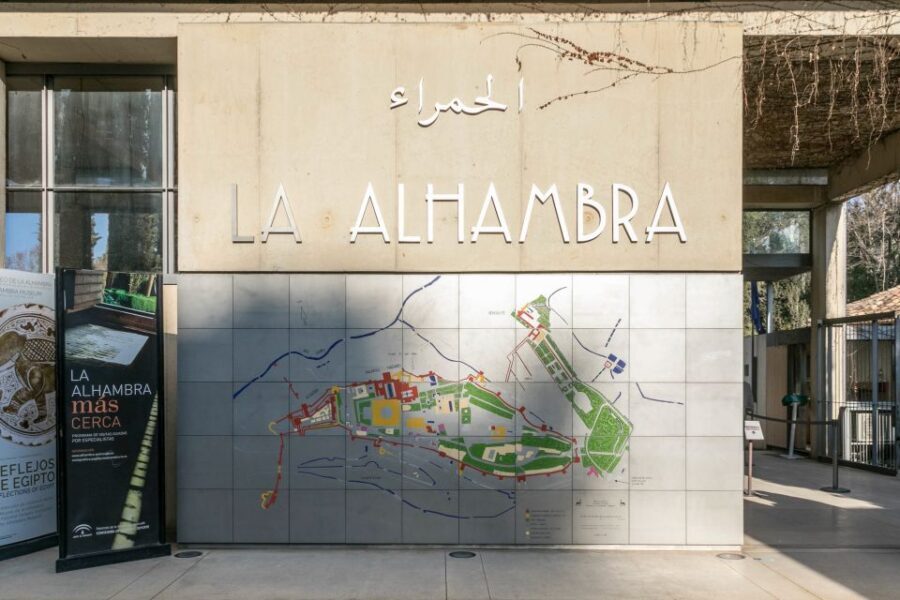
Start here and you’ll waste less time at the gates. The meeting point is in the square of the monument’s ticket offices. Look for the small sign with a blue dot indicating guides.
When you arrive, give yourself breathing room. The area around Alhambra ticketing can feel chaotic at first glance—lots of people, multiple lines, and signage that doesn’t help much if you’re standing still. If you show up a bit early, you can find the group without stress, get your headset sorted, and settle your day into motion.
Alhambra Palace complex: Mexuar, Comares, Leones, then the Lions
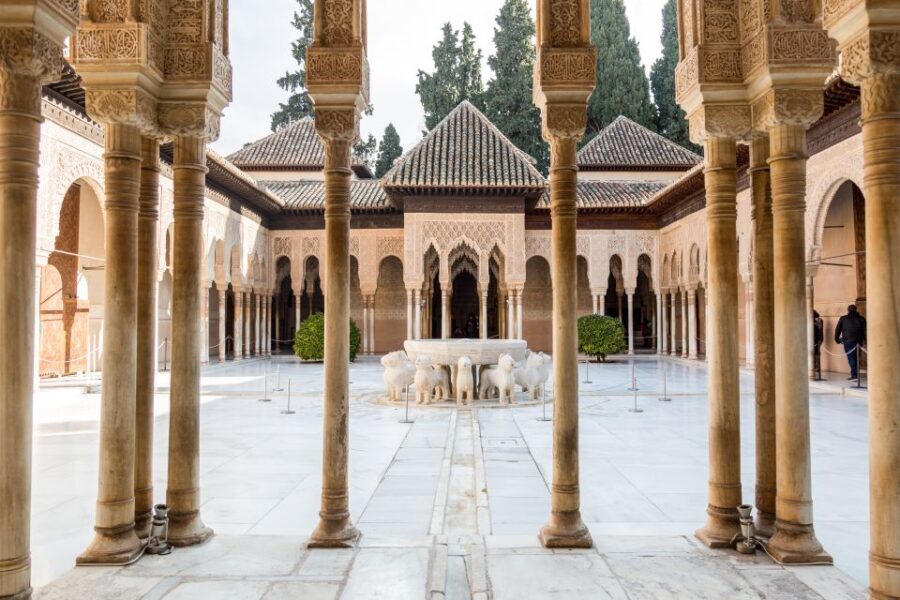
Your tour route is designed like a guided “through the palace” story. You start inside the Alhambra palace complex and move through key Nasrid areas, with a guide explaining what you’re seeing and why it mattered to the sultans who lived there.
You’ll visit the Mexuar, Comares, and Leones areas as you go. The names are your roadmap for how the complex is organized: court-like spaces, ceremonial rooms, and the iconic residential centerpiece. The guide’s role is to turn each stop from a photo opportunity into a better-understood place.
You’ll also get the big-name interiors that make people stop mid-walk. The Court of the Lions is the standout marble-and-tile moment. And you’ll see the Hall of the Ambassadors, a major ceremonial space known for its ornamental approach and the way the room communicates power and courtly life.
What to watch for as you move
- How the guide connects art to function. A palace isn’t just pretty. It’s designed.
- The pace between rooms. You’re doing a lot of walking, but the plan aims to keep you moving while still pausing at the points that matter.
One drawback to acknowledge: some smaller rooms can feel crowded, especially when you’re shoulder to shoulder in places that were never meant for modern visitor flow. Your best defense is timing (go early or later if you can) and taking those indoor spaces as quick “focus stops” rather than long lounge sessions.
Court of the Lions and blue-yellow tilework you can actually interpret

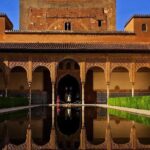
The Court of the Lions is famous for a reason: it’s visually striking, yes, but it’s also a masterclass in details that feel intentional at every level. You walk between marble columns and see the court’s distinctive decorative language.
The tour description calls out the iconic Muslim decor of blue and yellow tiles. On your own, those details can look like decoration only. With a guide, you’re more likely to catch how the design reinforces meaning—how patterns repeat, how surfaces draw your eye, and how architecture creates a feeling of ordered calm.
I like that the guide doesn’t treat it like a “stand here and take a picture” moment. You get context about the Moorish past and the Nasrid way of thinking, which helps you notice more than you’d notice alone. If you’ve ever walked out of a palace feeling like you admired it but didn’t understand it, this is the kind of tour that fixes that.
Also, the guide’s humor can matter more than you’d think. A funny, clear explanation gives your brain somewhere to park facts. Then the architecture becomes easier to remember.
You can also read our reviews of more tours and experiences in Granada






Nasrid Palaces rooms: Comares and the Hall of the Ambassadors
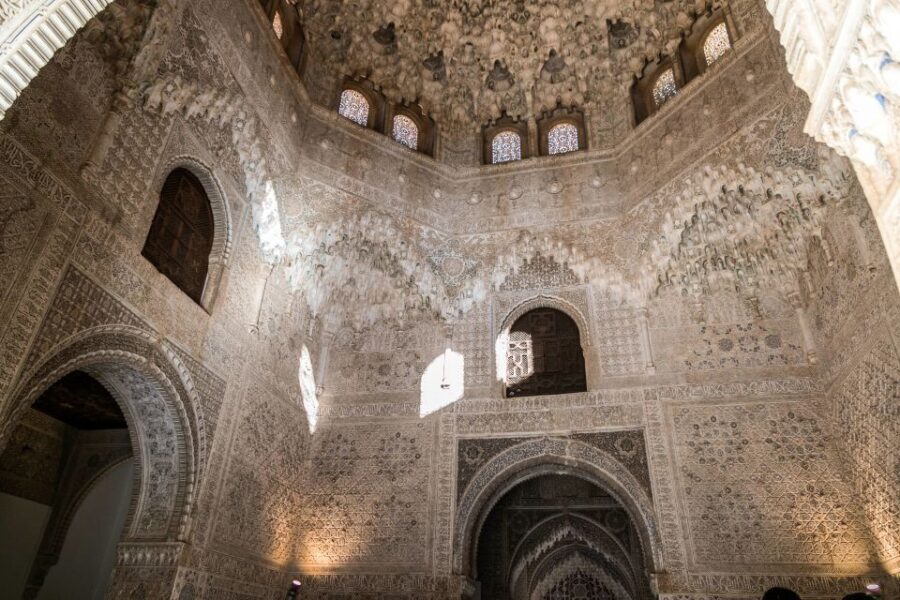
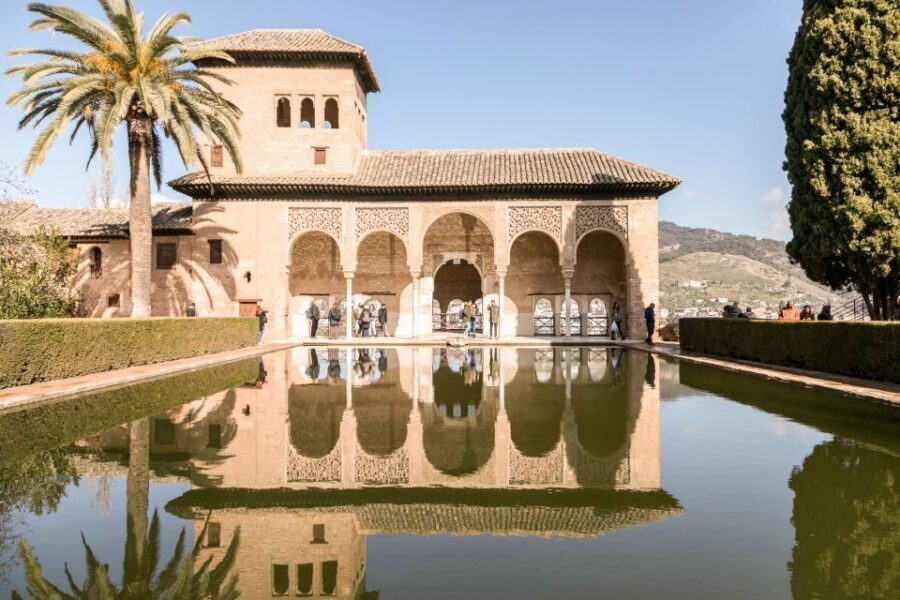
From the court, the tour continues through the Nasrid palaces. The Comares area leads you toward the more ceremonial spaces, where decoration is used differently than in residential areas. This is where you start to see how the palace communicates rank and ritual.
Seeing the Hall of the Ambassadors is a big deal because it’s built to impress. You’ll be surrounded by elaborate Islamic art and architecture, and your guide helps connect what you’re seeing to how the court functioned—who used these spaces, what kind of events happened here, and how power was staged through design.
In plain terms: this section turns the Alhambra from a pretty set of rooms into a system. And once you see it as a system, the place stops feeling random.
Generalife Gardens: your payoff after the palace rooms
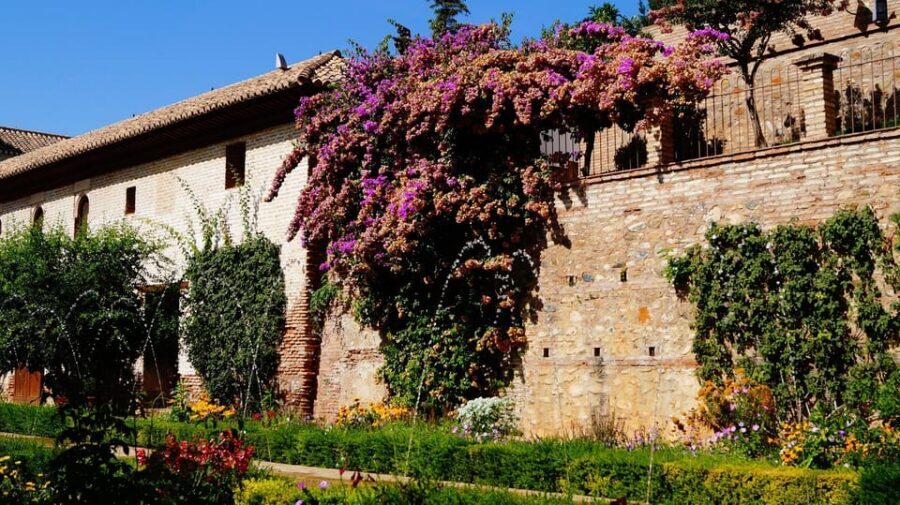
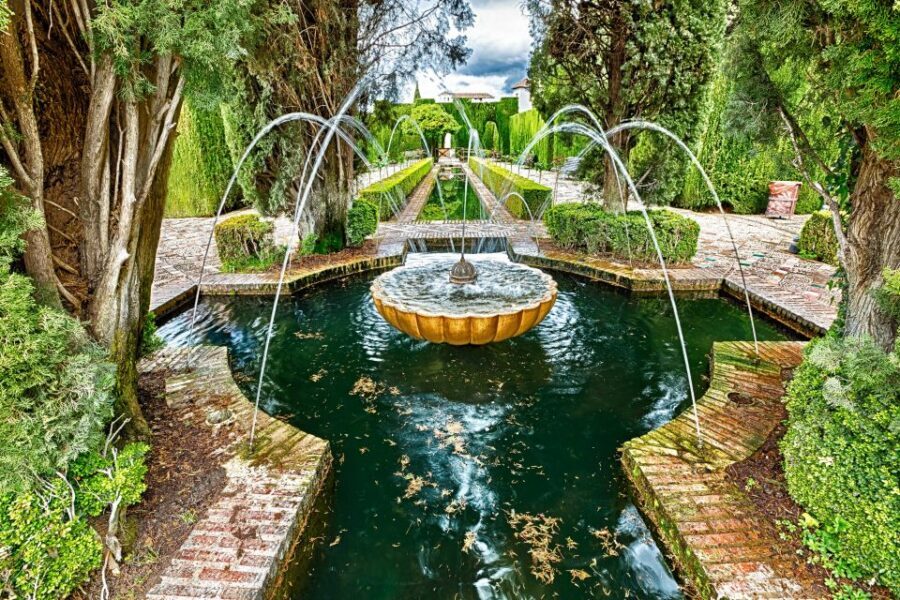
You finish at the Generalife, the summer palace and gardens of the Arab sultans. This is a different mood than the Nasrid rooms. The palace interiors can feel dense and detailed. The gardens give you breathing space, and the change of pace often feels like the reward for making it through the rooms.
Generalife is where you slow down a little, absorb the views, and let the architecture’s setting sink in. The gardens also give you a natural rhythm: walk, pause, look back, and reorient to Granada’s broader terrain.
If you want a practical tip: bring water and expect uneven walking. Even with a guided pace, you’re still on historic grounds, and your comfort will shape how much you enjoy the last part.
Audio headset plus bilingual guide: fewer lost details, less neck strain
This tour includes an audio system, which is a big quality-of-life improvement for the Alhambra. With the headset, you’re not forced to stay glued to the guide’s shoulder just to hear. That means you can actually look at what’s in front of you while still catching the explanations.
The tour also runs with live guides in Spanish, English, and French. Guides such as Carlos, José, Veronica, and Yolanda/Jolanda are repeatedly praised for their ability to keep the information clear and the group comfortable. The best thing about strong guiding here is pacing: you’ll get enough time to photograph and ask questions without turning the tour into a long detour.
And yes, there’s a lot to see. The audio system helps you leave with the feeling that you got it, not just that you survived it.
Timing reality: capacity limits and why you shouldn’t stack plans
Here’s the part that can make or break your day. The Nasrid Palaces have limited capacity, so the time you choose is provisional. The Alhambra assigns exact entry times, and that assigned time can even be confirmed as late as the day before. You’ll be notified via email or WhatsApp.
That matters because the Alhambra does not allow changes or refunds, and you should avoid scheduling other activities or travel on the same day. Think of your tour slot like a keystone appointment. If you plan too tightly around it, you’ll feel stressed if the assigned entry time shifts.
For crowd management, your time slot matters too. If you’re aiming for more breathing room inside smaller rooms, consider choosing a slot that avoids peak patterns when possible. The tour can’t control crowd density, but smart timing can reduce the squeeze.
Price and value: $88 for tickets, guide, and audio
At $88 per person for a 3-hour tour, the headline price is only half the story. The value is what’s included:
- Tickets for the Alhambra Palace complex (Nasrid Palaces and Generalife Gardens)
- A professional bilingual guide
- An audio system so you can hear clearly
You’re also getting the benefit of skipping the ticket line, which is more valuable than it sounds in a sold-out site. In high-demand places, waiting can eat the best light of your photos and the best energy of your brain.
Is it the cheapest way into the Alhambra? Probably not. But you’re paying for access plus guided interpretation. That’s the difference between seeing the Alhambra and understanding it enough to remember it later.
What to bring (and what to avoid) for a smoother Alhambra visit
You don’t need much, but you do need the essentials.
Bring:
- Passport or ID card (tickets are nominative)
- Reusable water bottle
Not allowed:
- Smoking
- Luggage or large bags
If you’re used to carrying a tote full of backups, this is your moment to travel light. Also, remember that tickets are nominative: you must provide full name, date of birth, and ID details for all participants when booking. On tour day, bring the original ID or passport.
For comfort, wear shoes you trust. There’s walking involved, and you’ll be spending time on historic ground.
So, should you book this Alhambra and Generalife guided tour?
I think you should book it if you want the Alhambra’s top highlights—Court of the Lions, Hall of the Ambassadors, and Generalife—with context that helps you actually appreciate what you’re looking at. The audio headset plus a strong route through the Nasrid Palaces is a real practical win, especially if you’re visiting for the first time.
I’d hesitate if you’re the type who can’t handle timed-entry constraints. The Nasrid Palaces capacity rules mean your exact slot may be assigned and can require you to stay flexible on the day. If your schedule is locked down with other plans you can’t move, this tour will stress you out.
If you’re deciding today: book it when you can give it breathing room. Then focus on one goal—learning to see the Alhambra, not just getting inside it.
FAQ
How long is the Alhambra and Generalife guided tour?
The tour lasts 3 hours.
What is included in the price?
The tour includes Alhambra Palace complex tickets (Nasrid Palaces and Generalife Gardens), an audio system, and a professional bilingual guide.
Do I skip the ticket line?
Yes. This tour includes skip-the-ticket-line entry.
Where do I meet the guide?
Meet your guide at the guide meeting point in the ticket office plaza, in the square of the monument’s ticket offices. There is a small sign with a blue dot indicating guides.
What languages are available?
The live tour guide is available in Spanish, English, and French.
What should I bring on the day of the tour?
Bring a passport or ID card and a reusable water bottle.
Are large bags or luggage allowed?
No. Luggage or large bags are not allowed.
Can my Alhambra entry time change after I book?
Yes. The time you select is provisional, because the Nasrid Palaces have limited capacity and the Alhambra assigns exact times. You may be notified by email or WhatsApp, and you should avoid scheduling other activities that depend on the plan staying fixed. The Alhambra does not allow changes or refunds.
What is the cancellation policy?
You can cancel up to 24 hours in advance for a 50% refund.