REVIEW · 3-HOUR EXPERIENCES
Granada: 3-Hour Cathedral and Royal Chapel Tour
Book on GetYourGuide →Operated by Granada Tours a Pie · Bookable on GetYourGuide
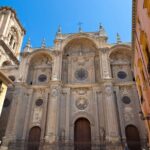
Cathedrals in Granada teach you how power changed. This 3-hour walking tour links the Christian sites inside the old city with the area’s Islamic-era echoes, so the buildings feel like chapters, not just stops. Encarnación Cathedral is the big anchor, and the Royal Chapel is the emotional payoff.
I especially like that you get inside with a guide who explains what you’re actually looking at, not just where to stand for photos. I also like the add-ons beyond the main monuments: the walk through the Alcaicería area and a stop at La Madraza, Granada’s first university tied to Yusuf I. One consideration: the tour is packed, so if you want long, quiet time inside every chapel, three hours can feel a bit brisk.
In This Review
- Quick hit highlights before you go
- The best reason to pick this tour: you’ll connect the monuments
- Meeting at Plaza Bib Rambla with an orange-umbrella guide
- Inside Encarnación Cathedral: how to see it instead of just pass through
- Royal Chapel: where the story gets personal fast
- The Alcaicería streets walk: old Granada outside the cathedral doors
- La Madraza and Yusuf I: Granada’s first university shows up in the middle of your Christian route
- How the 3 hours actually work for your day
- Value and pricing: $45 makes more sense once you factor in tickets + skip-the-line
- Who this tour suits best (and who should reconsider)
- Guide style is part of the product
- Should you book this Granada Cathedral and Royal Chapel tour?
- FAQ
- How long is the Granada Cathedral and Royal Chapel tour?
- Where do we meet the guide?
- What’s included in the price?
- Does the tour skip the ticket line?
- What languages are available?
- Is there free cancellation?
- Can I reserve now and pay later?
- Which places does the tour cover besides the cathedral and royal chapel?
Quick hit highlights before you go
- Skip-the-ticket-line entry helps you spend more time looking and less time waiting
- Encarnación Cathedral access gives you guided context for the building’s key art and symbolism
- Royal Chapel viewing is the centerpiece for learning how faith and royal power intersect
- Alcaicería street walk keeps the tour grounded in everyday old Granada, not just museum time
- La Madraza stop (Yusuf I) connects the Christian monuments to Granada’s earlier intellectual legacy
- Story-first guiding shows up again and again, with past guides such as Laura, Cynthia, Estela Perez, and Rocio praised for clear, engaging explanations
The best reason to pick this tour: you’ll connect the monuments
Granada can feel like a split screen: one side is the cathedral-and-chapel world you expect in Spain, and the other side is the older city layers beneath it. This tour makes that connection in a practical way. You’re not just checking boxes inside big churches. You’re walking through the old center so the story keeps moving.
That matters because cathedral art and chapel design can look like “lots of stuff” until someone gives you the thread. The guide’s job here is to give you that thread—what each space meant, who it served, and why it ended up where it did.
You can also read our reviews of more tours and experiences in Granada
Meeting at Plaza Bib Rambla with an orange-umbrella guide
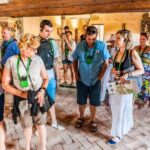
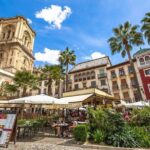
You’ll meet at Plaza Bib Rambla, one of the easiest starting points in the center. The guide waits with an orange umbrella, which is genuinely helpful because Granada’s streets can braid into each other quickly—especially if you’re carrying luggage, shopping bags, or you’re running late.
Plan to arrive a few minutes early. Not because you’ll get scolded—just because it’s easier to settle your bearings. Once you’re in the flow, the tour rhythm is steady: walk, stop, look, learn, then move on.
Inside Encarnación Cathedral: how to see it instead of just pass through
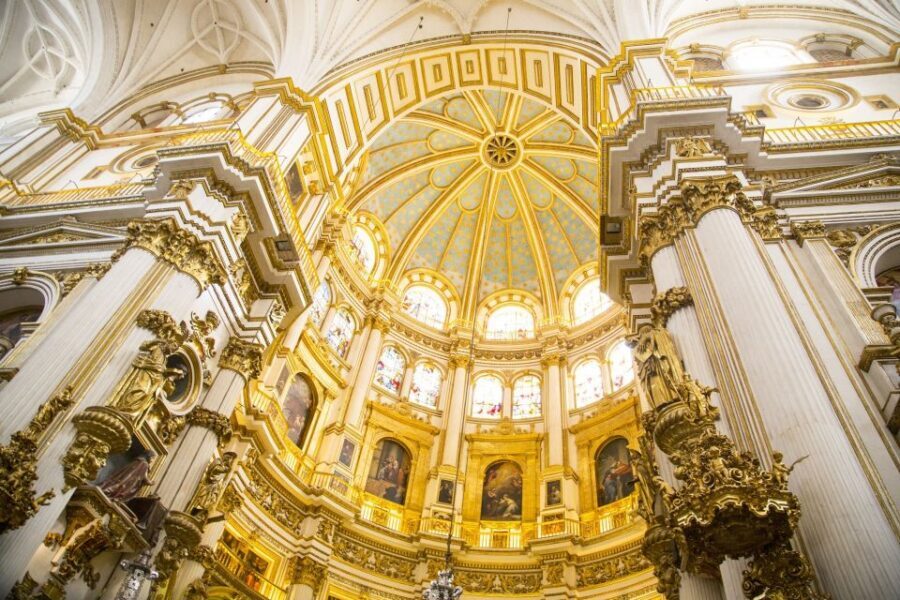
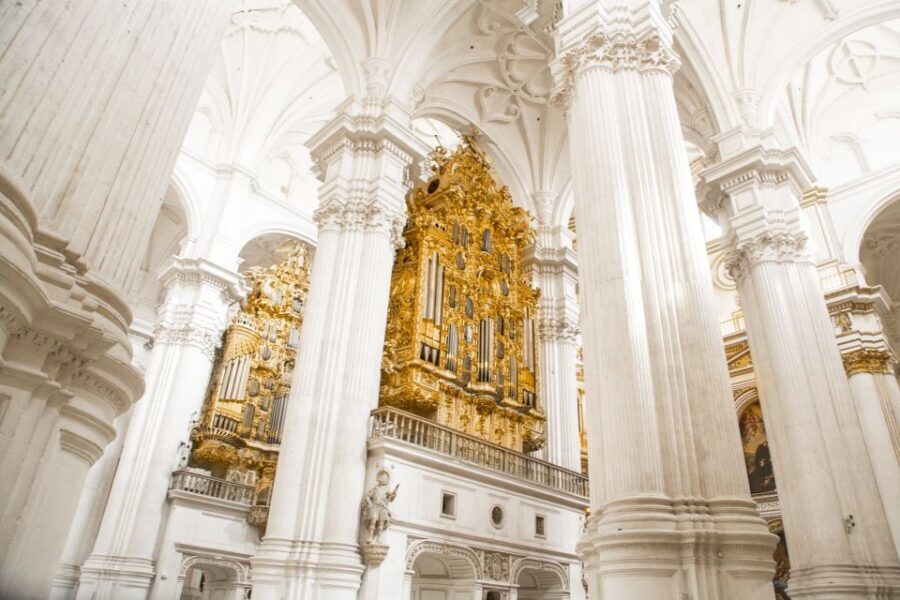
The tour’s first major entry is Encarnación Cathedral. This is the kind of monument that can overwhelm you if you treat it like a quick stop. It’s big, it’s detailed, and without context your eyes don’t know where to land.
The value of the guided approach is that you’re not only inside—you’re prepared for what you’ll notice. The guide’s explanations help you track the building’s Christian history and interpret the cues you might otherwise miss, like how artworks and chapel spaces contribute to the overall message of the place.
A practical tip: treat the cathedral like an orientation exercise. If you spend your first minutes trying to take in everything, you’ll feel behind for the rest of your visit. Instead, look for what the guide points out first, then use that as your base map. Your photos will even improve, because you’ll be aiming at the meaningful details, not random corners.
Royal Chapel: where the story gets personal fast
The Royal Chapel is the part that tends to land harder. The cathedral sets the stage. The royal chapel is where you feel the weight of ceremony, authority, and belief—often all at once.
This tour helps you connect the chapel’s role to Granada’s broader history. Even if you know little about Spanish monarchy or religious art, you’ll get a clear framework for why this space exists and why it was designed to matter. That’s the sweet spot: you walk in with questions forming in your head, and you leave with answers that make the art and layout click.
One more reason this stop works well in a guided format: the chapel is packed with visual information, but it’s not a “wander and figure it out” kind of site. A good guide keeps you moving through the important points at a pace that fits the 3-hour structure.
The Alcaicería streets walk: old Granada outside the cathedral doors
After the major indoor time, you transition into the Alcaicería streets. This is a smart move because it resets your senses. Inside monuments, your brain is processing architecture and symbols. Outside, you’re processing city texture: narrow lanes, historic commercial character, and the sense that Granada’s past wasn’t only sacred—it was also practical.
You’ll get a walking experience that helps you situate what you saw indoors. The tour uses the street walk to connect the monuments to everyday old-city life, which makes the whole visit feel less like a museum circuit and more like being in the original setting.
If you like street-level history—places where you can imagine trade, daily routes, and local routines—this portion is a good fit. If you hate walking, you’ll want to keep an eye on your pace and shoe choice, because this is still a walking tour even when it’s not “museum-walking.”



La Madraza and Yusuf I: Granada’s first university shows up in the middle of your Christian route
One of the most interesting elements is the stop at La Madraza, described as the first university created by Yusuf I. This is where the tour earns its theme: Granada isn’t just Christian history placed on top of older eras. It’s also Islamic-era intellectual heritage, still visible in the city’s footprint.
Even if your main goal is cathedral and royal chapel, this stop changes how you read Granada. You start noticing that the city’s “identity” is layered. The monuments you just toured don’t float in isolation—they sit inside a long timeline of institutions, learning, and political influence.
In a practical sense, La Madraza also gives you a breather from indoor artistry. It’s a different kind of learning: historical, cultural, and architectural. You’ll come away with a better sense of why Granada’s story feels so mixed and complicated—in the best way.
How the 3 hours actually work for your day
Three hours is a sweet spot for the people who want structure without losing the day. You’re getting multiple ticketed entries and a street walk, but you’re not stuck for half a day.
Still, it’s a concentrated plan. I’d treat this as your “main history block” for Granada. If you stack it with a long hike, a late-night tapas crawl, or another far-flung neighborhood visit, you’ll likely feel rushed.
A small but useful way to set expectations: if you’re the type who likes to stop and study every detail for 10 minutes, you’ll need to choose what matters most. Use the guide’s points as your “must-not-miss” list. Then, if there’s time at the end, you can circle back for a slower look.
Value and pricing: $45 makes more sense once you factor in tickets + skip-the-line
At $45 per person for a 3-hour guided walking tour, the price sounds straightforward—until you tally what’s included. You’re not just paying for a talk. You’re getting cathedral and royal chapel tickets plus skip-the-ticket-line entry and a live guide.
That combination is the real value. In Spain, lines at major church sites can eat time and energy. Here, the skip-the-line element helps you keep the tour’s learning momentum. And because the guide explains what you’re seeing, you’re less likely to feel like you “paid to stand in the same room.”
So for budget planning, think less about the label price and more about how much time you’re saving and how much interpretation you’re getting. This is a good option when you want a structured, story-led visit without having to research every artwork in advance.
Who this tour suits best (and who should reconsider)
This is a strong match if you:
- Want a guided, story-based visit to Encarnación Cathedral and the Royal Chapel
- Like understanding meaning, not just admiring size
- Appreciate street history, especially around older market areas like the Alcaicería
- Prefer a route that ties Christian monuments to the broader Granada timeline, including Yusuf I and La Madraza
- Want a manageable time commitment—3 hours—while still feeling like you saw the key highlights
I’d reconsider if you:
- Need lots of solo time inside churches to absorb at your own pace
- Hate walking tours and want zero street walking
- Are expecting a purely museum-style experience with extended time per room
Guide style is part of the product
One reason this tour holds up so well is the way guides are described. Multiple past guides’ names show up with the same theme: storytelling that makes the monuments easier to understand. People also highlight that the explanations are clear enough to follow, even when the content is detailed.
That’s exactly what you want in this setting. Cathedral and chapel visits can turn into random observation if the guide doesn’t organize the information. Here, the guiding approach seems built for learning in motion: stop, look, understand, then move on.
If you care about comfortable pacing, warmth, and the ability to answer questions, this tour format is likely to treat you well.
Should you book this Granada Cathedral and Royal Chapel tour?
I’d book it if you want a high-impact history walk that connects sacred Granada to the city’s older intellectual roots in a single outing. With skip-the-ticket-line, included admission, and a guide-focused on making the art and architecture make sense, it’s a solid value for $45.
Skip it only if you want lots of unguided time or you’re easily overloaded by churches and visual details. For most people, though, this is a smart way to see the best-known religious sites—and come away with a clearer picture of how Granada’s story got written.
FAQ
How long is the Granada Cathedral and Royal Chapel tour?
The tour lasts 3 hours.
Where do we meet the guide?
Meet at Plaza Bib Rambla, and the guide waits with an orange umbrella.
What’s included in the price?
The tour includes tickets for the Cathedral and tickets for the Royal Chapel, plus a live guide.
Does the tour skip the ticket line?
Yes, it includes skip-the-ticket-line entry.
What languages are available?
The live guide offers tours in Spanish and English.
Is there free cancellation?
Yes. You can cancel up to 24 hours in advance for a full refund.
Can I reserve now and pay later?
Yes. It offers reserve now & pay later, so you can book your spot and pay nothing today.
Which places does the tour cover besides the cathedral and royal chapel?
Besides Encarnación Cathedral and the Royal Chapel, you’ll walk through the Alcaicería streets and pass by La Madraza, the first university of Granada created by Yusuf I.