REVIEW · ALHAMBRA TOURS
Granada: “Alhambra´s Craft Workshop”
Book on GetYourGuide →Operated by Via Experiencias · Bookable on GetYourGuide
Granada turns craft into a souvenir you keep. This Alhambra-inspired workshop is all hands-on, with real techniques and a choice of projects that feel tied to the Nasrid style. I especially like that you get to work with high-quality tools and materials, not just watch someone demonstrate.
One thing to think about: the studio experience is not set up for wheelchair users, and children must be 6+.
Set in central Granada near the cathedral, the class runs for about two hours, and the instruction comes in English, French, or Spanish. People who care about detail often love it because the artisan helps you build a finished piece you can take home.
In This Review
- Key highlights you will actually care about
- Granada’s craft studio near the cathedral (and why location matters)
- Two hours of Alhambra making: how the project choices work
- Which project feels best for different personalities?
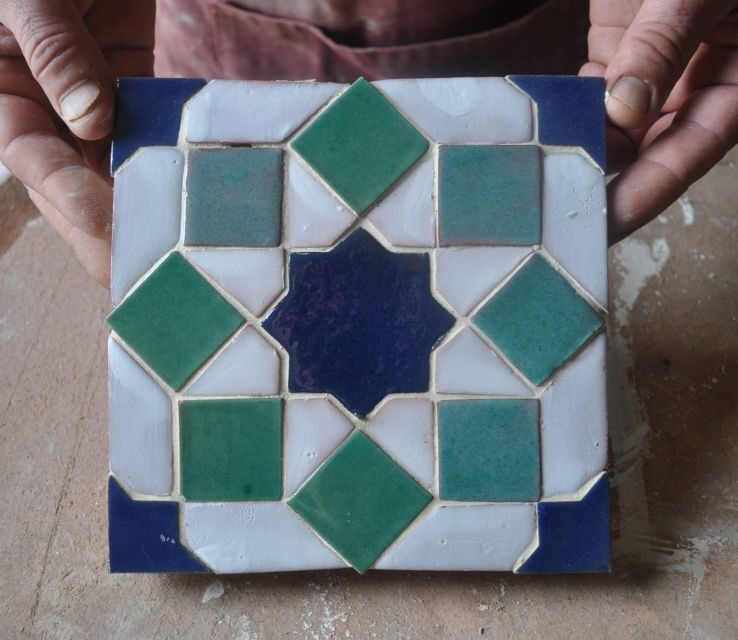
- Mosaic tiled panels: the Alhambra pattern you can hold
- Practical note
- Painting a Nasrid tile: gentle, artsy, and beginner-friendly
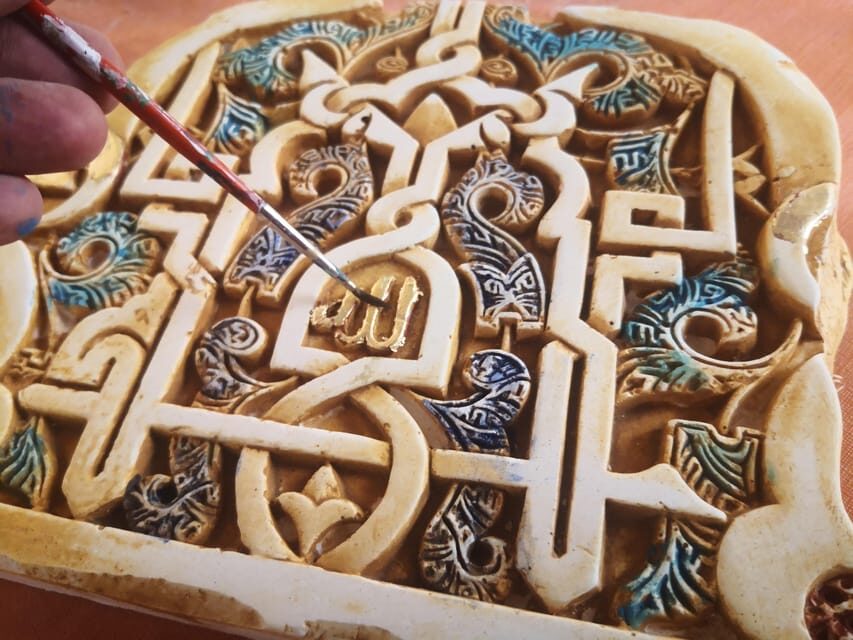
- Polychromatic plasterwork with gold leaf: the showpiece option
- Consideration
- Stucco carving in the direct technique tradition
- Who will enjoy this most?
- Chessboard and marquetry basics: art meets design
- Is it a good fit for beginners?
- What Frédéric and the artisans do that makes the class work
- Price and value: what $69 gets you in the real world
- Timing and how to get a great result in 2 hours
- Who should book this Alhambra craft workshop in Granada
- Families and age fit
- Accessibility reality check
- Should you book this workshop, or skip it?
- FAQ
- FAQ
- How long is Alhambra’s Craft Workshop in Granada?
- Where is the meeting point?
- How much does it cost?
- What can I make during the workshop?
- Are materials and tools included?
- What languages does the instructor speak?
- Is this workshop suitable for children?
- Is it wheelchair accessible?
- Is there an extra charge for the chessboard?
Key highlights you will actually care about
- Choose from multiple Alhambra-style crafts instead of doing just one activity
- Work with quality tools and materials that make your results look intentional
- Learn pro techniques for Arab decoration and Andalusian craftsmanship
- Create a take-home piece you can display or gift without hunting for souvenirs
- A relaxed, patient teaching style that keeps the pace friendly for beginners
Granada’s craft studio near the cathedral (and why location matters)
The workshop meets at C. Horno de Haza, 29, in the center of Granada. You are also close to the cathedral area, so it fits neatly into a day that already includes walking and sightseeing. That matters because you do not want a workshop that forces long transfers right after a museum visit or a meal.
You’ll meet your craftsman inside the art-school studio, and the class is taught in English, French, and Spanish. The vibe is less like a lecture and more like a workshop where you can ask questions and keep moving.
You can also read our reviews of more tours and experiences in Granada


Two hours of Alhambra making: how the project choices work
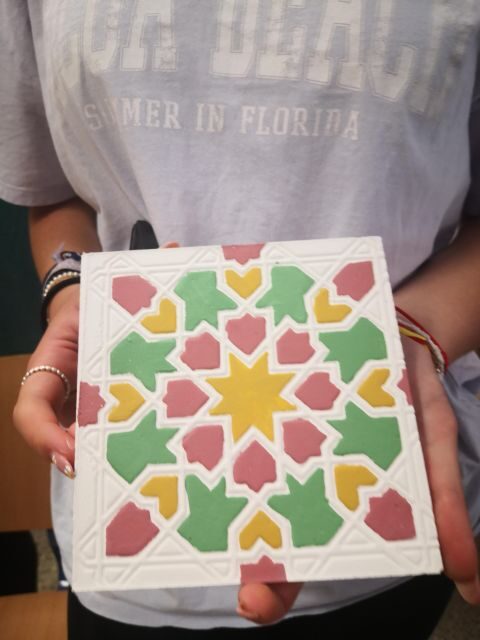
This is a 2-hour session where you create your own Alhambra-inspired souvenir with guidance from an artisan specializing in Hispanic-Muslim craftsmanship. The provider gives you access to tools, materials, and a set of options so you can pick what you want to make on the day.
The available choices include several styles, such as:
- a mosaic tiled panel
- painting a Nasrid tile
- polychromatic plasterwork with gold leaf
- a stucco piece based on direct carving techniques used in al-Andalus
- building a chessboard and learning basic granadian marquetry
You also get secrets and tricks of the pros, plus time to finish a piece you can take home. If you like variety, this is one of the best parts. You are not stuck doing the same project as the person next to you.
Which project feels best for different personalities?
If you like precise, pattern-focused work, you will likely enjoy the mosaic or tile options. If you want a more decorative, “showpiece” feel, the plasterwork with gold leaf can be a great pick. If you enjoy design and structure, the chessboard and marquetry basics bring a different kind of satisfaction.
Mosaic tiled panels: the Alhambra pattern you can hold
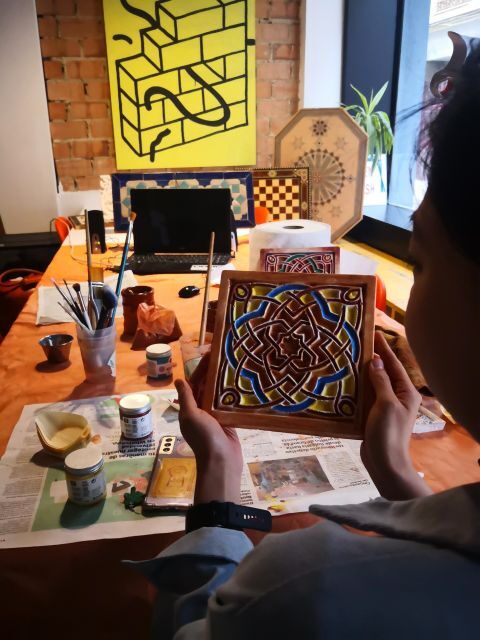
A mosaic tiled panel is one of those crafts where small decisions add up. You will work with Arab decoration basics and learn how the pattern is built, rather than just copying a picture.
What I like about mosaic-style projects in general is that they force you to slow down for a moment. You stop thinking about the next stop on your itinerary, and you focus on alignment, spacing, and consistency. That kind of attention is exactly what makes the final souvenir feel authentic instead of “generic handmade.”
Practical note
Mosaics can be detailed, so your best strategy is to choose this option only if you are comfortable taking your time with careful placement. If you want a fast, forgiving craft, you might prefer a simpler tile or a plaster piece—depending on what is available when you arrive.




Painting a Nasrid tile: gentle, artsy, and beginner-friendly
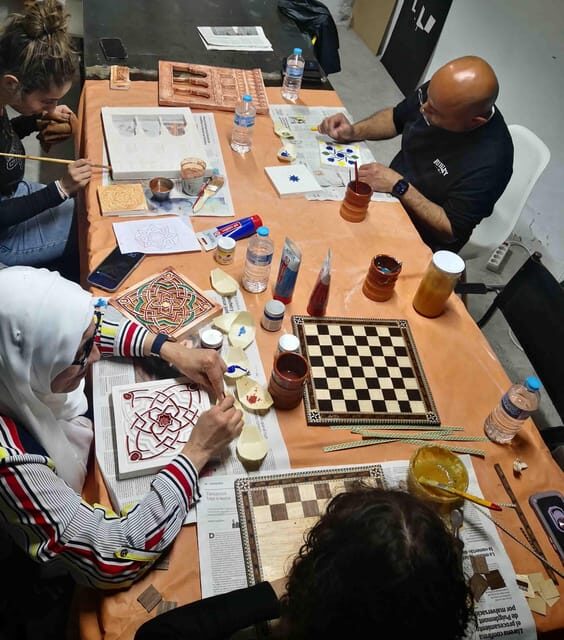
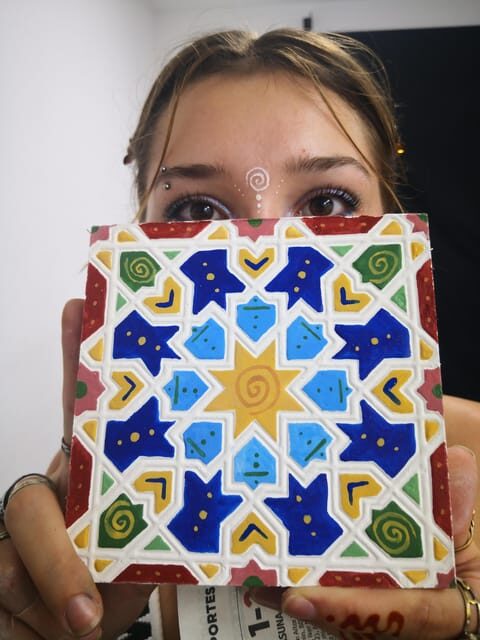
A painted Nasrid tile lets you channel a key Alhambra look: decorative design with strong visual structure. This option fits well if you want color and pattern, but you do not want the build-up steps of mosaics or carving.
You’ll learn basics of Arab decoration and apply them with the materials the studio provides. For many people, painting feels like the most intuitive way to get a satisfying result in just two hours—especially if you are new to this style of art.
If you’re traveling with a creative streak but you also want a clean outcome, a tile is a smart bet. You get something flat enough to transport easily, but still clearly tied to Granada’s signature design language.
Polychromatic plasterwork with gold leaf: the showpiece option
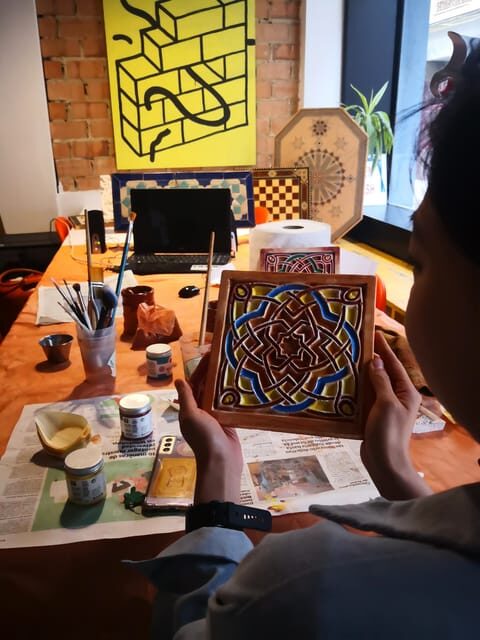
The workshop also offers a project that reproduces the Alhambra look using polychromatic plasterwork and gold leaf. This is the option you pick when you want something that feels ceremonial and decorative.
Gold leaf is also one of those materials where technique matters. Even if you are a beginner, the artisan’s guidance is the difference between something that looks accidental and something that looks intentional. The studio includes the tools and materials, so you are not left trying to improvise with supplies you bought in a store.
Consideration
This type of craft can feel more delicate than flat painting. If you choose it, you’ll want to treat your final piece carefully when you pack it to go home. The class includes “take home your own work of art,” but you still want a safe spot in your luggage.
Stucco carving in the direct technique tradition
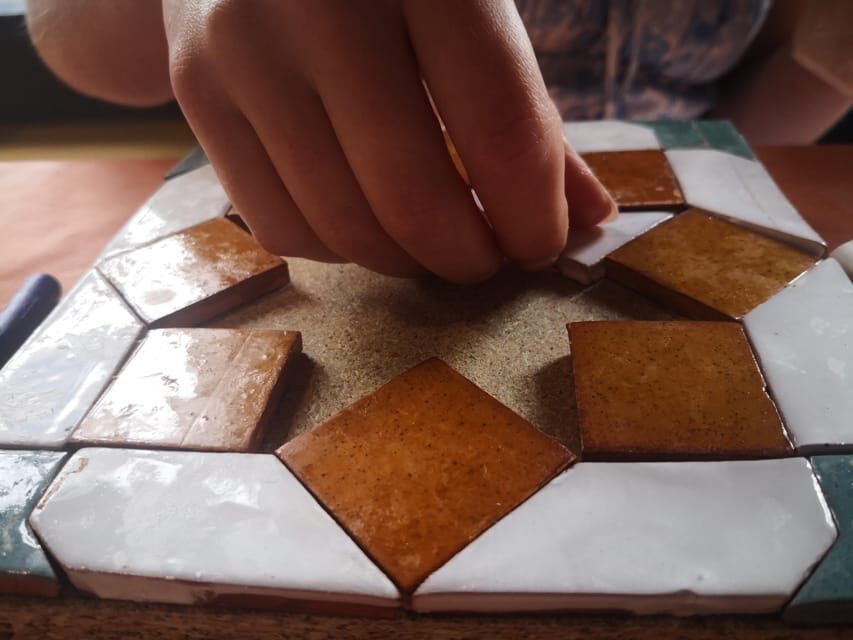
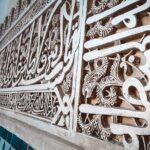
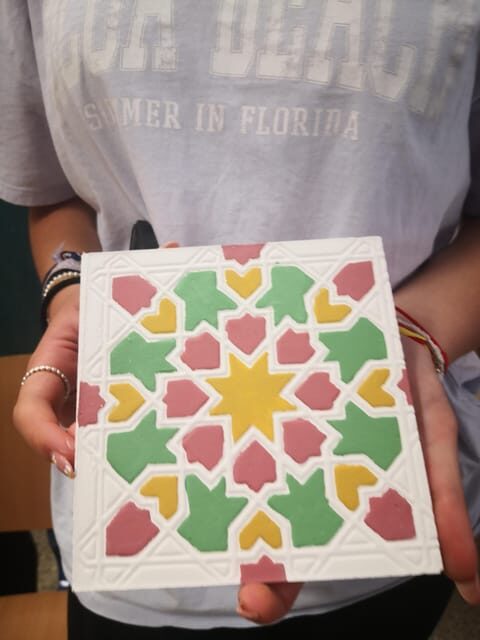
If you are curious about craft that looks carved rather than simply decorated, the stucco option fits well. You will create a stucco piece reproducing the direct carving technique used in al-Andalus, with guidance from the artisan.
This project is a great match if you like tactile work and you want a souvenir with texture you can feel. It also gives you a better appreciation for why Alhambra ornamentation looks the way it does—because you’re making it, not just seeing it behind glass.
Who will enjoy this most?
People who enjoy slower, hands-on making tend to love it. If you want purely visual color, carving might feel more about form and relief. Still, it can be a memorable way to connect with the craft side of Andalusian art.
Chessboard and marquetry basics: art meets design
The workshop’s chessboard option adds a fun twist: you build a chessboard while learning basic concepts of granadian marquetry. Marquetry is all about inlay and design, so this is a good pick if you like planning and structure.
There is also a heads-up to know: the chessboard can be glazed by the craftsmen for an extra charge. That means you have two possible outcomes depending on what you decide during the session.
Is it a good fit for beginners?
Yes, because you’re not expected to arrive with marquetry skills. The class includes the materials and instruction, and the goal is a finished take-home piece within the workshop time.
What Frédéric and the artisans do that makes the class work
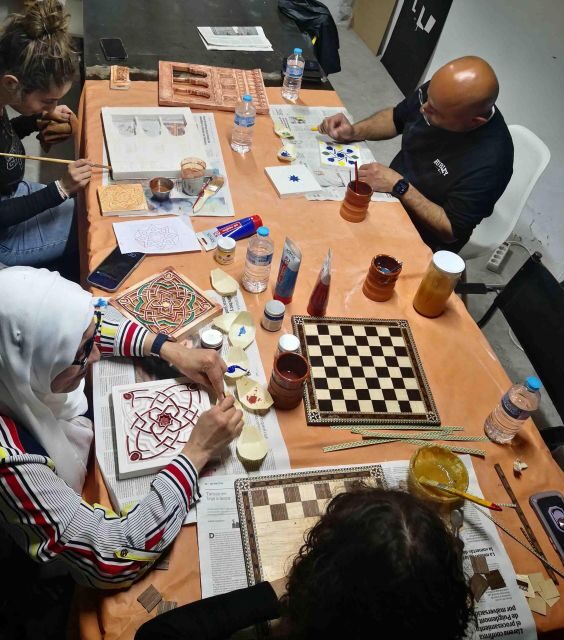
One of the most repeated strengths in the feedback is how approachable the teaching feels. The instructor, often mentioned as Frédéric (Fred/Frederick), is described as kind, patient, and able to explain clearly. That matters a lot in crafts where technique can feel mysterious if the teacher just hands you tools and walks away.
Another nice detail is the tone. People highlight a relaxed atmosphere with laughs and even music from different cultures. That kind of comfort helps when you are learning something new, especially if your brain keeps trying to rush toward the end.
You also get more than steps. The class includes secrets and tricks of the pros, plus a handicraft display. Even if you only make one piece, you can leave with a better idea of how craftsmen think about materials, edges, and finishing.
Price and value: what $69 gets you in the real world
At $69 per person for a 2-hour workshop, the price makes sense when you look at what is included. You are not paying for a talk, and you are not paying just for the right to use a workspace.
You get:
- an artisan instructor specializing in Hispanic-Muslim craftsmanship
- craft art materials and tools
- a selection of multiple project options
- help with the techniques
- a finished piece to take home
In Granada, souvenirs can be expensive, and many are mass-produced. Here, you’re paying for guided practice and the materials that produce a tangible item. If you value the story behind the object, not just the object itself, this is strong value.
What is not included is also clear: there is no hotel pickup or drop-off, and no food or drinks. That means you’ll want to plan your day so you’re not hungry right before class, and so you can comfortably reach C. Horno de Haza, 29 on time.
Timing and how to get a great result in 2 hours
Two hours sounds short, but craft time is real time. The best results come when you treat the session like a workshop, not a quick activity between stops.
A few practical moves:
- Arrive a bit early so you can settle in and focus when the class starts
- Pick the project that matches your energy level: tile for straightforward creativity, mosaic for pattern focus, plasterwork/gold leaf for a showpiece
- Ask questions when you’re unsure. This kind of craft is easier when you get small corrections early
Also, check how you will carry your piece home. The workshop includes taking your work of art home, but you still need to pack carefully so corners, textures, and details survive the trip.
Who should book this Alhambra craft workshop in Granada
I’d book this if you want something interactive that still feels tied to the Alhambra’s design language. It is a nice complement to sightseeing because you leave with a physical connection to the patterns and techniques.
It’s also a good choice if:
- you like art you can make, not just art you look at
- you enjoy calm, structured activities during travel
- you want a souvenir that feels personal
Families and age fit
This is not suitable for children under 6. If you are traveling with kids above that age, the format can work well because the class is hands-on and supportive.
Accessibility reality check
It is not suitable for wheelchair users. If mobility is part of your planning, you’ll want to choose an alternative activity.
Should you book this workshop, or skip it?
Book it if you want a take-home Alhambra-inspired craft and you enjoy learning techniques, even basic ones. The combination of multiple project options, a guided artisan instructor, and included tools/materials makes the $69 feel justified.
Skip it if you want something you can do without focusing on fine motor skills. Also skip if accessibility is a concern for your group, since the workshop is not wheelchair-friendly.
FAQ
FAQ
How long is Alhambra’s Craft Workshop in Granada?
It lasts 2 hours.
Where is the meeting point?
Meet at C. Horno de Haza, 29. You will look for the workshop and go inside.
How much does it cost?
The price is $69 per person.
What can I make during the workshop?
You can choose from options like a mosaic tiled panel, painting a Nasrid tile, polychromatic plasterwork with gold leaf, a stucco piece based on direct carving technique, and building a chessboard with basic granadian marquetry. More options are also available.
Are materials and tools included?
Yes. Craft materials and tools are included, and you take your finished piece home.
What languages does the instructor speak?
The instructor speaks English, French, and Spanish.
Is this workshop suitable for children?
No children under 6 years are suitable.
Is it wheelchair accessible?
No. It is not suitable for wheelchair users.
Is there an extra charge for the chessboard?
Yes. The chessboard can be glazed by the craftsmen for an extra charge.