REVIEW · 2-HOUR EXPERIENCES
2-Hour Guided Tour of Alhambra Gardens and Alcazaba in Granada
Book on Viator →Operated by Visitare Granada · Bookable on Viator
Granada’s best viewpoint is on a fortress wall. In just about 2 hours, this guided Italian route strings together the Alhambra’s gardens and the Alcazaba so you get context fast, not just photos. I especially like how the tour connects what you see—gates, palaces, water features—to why it mattered. One thing to consider: the tour includes Alhambra entry, but it does not include the Nasrid Palaces, which are the big-ticket interiors most people picture.
You’ll start with monumental entrances—Puerta del Vino and Puerta de la Justicia—and then move into major set-pieces like the Renaissance Palace of Carlos V. The second big plus for me is the Generalife portion: you get a walking feel for the summer residence, including the water staircase and garden highlights. The potential drawback is time: it’s a tight loop, so if you want to linger in every room, you’ll have to choose priorities on the day.
In This Review
- Key highlights (what makes this tour worth your time)
- A 2-hour Alhambra and Alcazaba loop in Italian
- Puerta del Vino: the gate that kicks off the whole complex
- Puerta de la Justicia: where the monumental door earns its name
- Palace of Carlos V: the Renaissance presence you shouldn’t skip
- Generalife: summer residence gardens, fountains, and the water staircase
- El Partal and the mirror-pond effect
- Alcazaba fortress: where the views over Albaicín make sense
- Price and value: how to judge €-for-time on this 51.59 USD tour
- Timing, pace, and how to avoid the usual Alhambra stress
- Logistics that matter: meeting point and where you’ll be at the end
- Should you book? Who this tour fits best (and who should choose differently)
- FAQ
- How long is the Alhambra Gardens and Alcazaba tour?
- What language is the guided tour offered in?
- What parts of the Alhambra are included?
- Are the Nasrid Palaces included?
- Where does the tour meet and where does it end?
- What time does the tour start?
- How large is the group?
- Is Alhambra admission included in the price?
- Is it a good option for people using public transportation?
- Are service animals allowed?
Key highlights (what makes this tour worth your time)

- Italian guidance that keeps things clear and focused across gates, palaces, and fortifications
- Generalife gardens + water staircase for a real sense of how the site worked
- Puerta del Vino and Puerta de la Justicia so you understand the Alhambra’s layout from the start
- Palace of Carlos V as the Renaissance interruption you won’t see on every Alhambra itinerary
- El Partal pond reflections and the framing around Torre de las Damas
- Alcazaba fortress views over Albaicín, where the perspective tells the story
A 2-hour Alhambra and Alcazaba loop in Italian
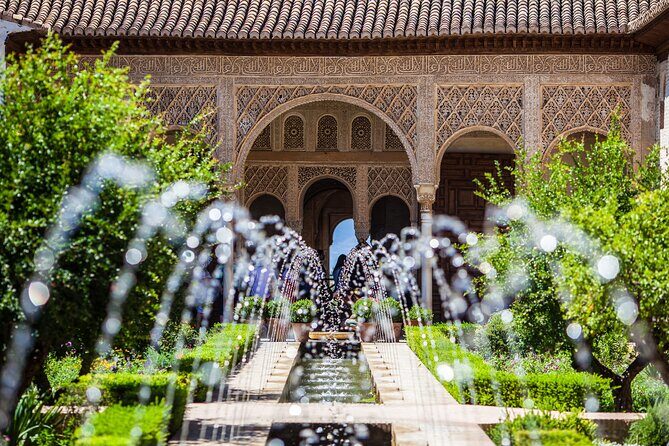
If you’re short on time in Granada, this is the kind of tour that makes the most of it without feeling like a race. It’s guided in Italian and capped at 30 people, so you can actually hear the explanations and keep up as you move between monuments. With a roughly 2-hour pace, you’ll cover the Alhambra’s “major landmarks” rather than try to do everything alone.
The value here comes from structure. Alhambra is a whole world inside walls, and without guidance it’s easy to bounce from sight to sight with limited context. A good guide turns the site into a story you can follow—what’s a gate, what’s a palace, what’s defensive, and why you’re seeing certain views from certain places.
Also, Alhambra entry tickets are included, which matters for budgeting. Just keep in mind the tour is built around palatine areas and the fortress/gardens side, not the interior Nasrid Palaces.
You can also read our reviews of more guided tours in Granada



Puerta del Vino: the gate that kicks off the whole complex

You begin at Puerta del Vino, the main gateway to the Alhambra’s Medina area. A gate sounds simple, but here it’s a clue: it helps you get your bearings fast and understand how people would enter and move inside. It’s one of those moments where the architecture hints at a bigger system—routes, functions, and hierarchy of spaces.
This stop also works well as a warm-up. You’re not thrown immediately into the deepest halls; you start with the way in and the logic of layout. Even if you’re not fluent in the details, you’ll learn what to look for next: monumental doorways, how space transitions from one zone to another, and how the site’s meaning changes as you move.
Expect a short stop—about 5 minutes—so if you like taking extra photos, you’ll want to balance your camera time with listening.
Puerta de la Justicia: where the monumental door earns its name
Next comes Puerta de la Justicia. Among the external doors of the Alhambra wall, this one is described as the most monumental. That word matters: this is a spot where the form of the gate is meant to communicate authority. You’ll get an explanation that helps you read the symbolism, not just admire the stone.
I like this pairing with Puerta del Vino because it creates contrast. One gate sets the entry tone; the next reinforces the Alhambra’s public-facing gravitas. You start noticing that the complex isn’t only beautiful—it’s also designed to impress, control movement, and project power.
This is another quick stop (around 5 minutes), so consider it your “orientation + architecture vocabulary” moment.
Palace of Carlos V: the Renaissance presence you shouldn’t skip
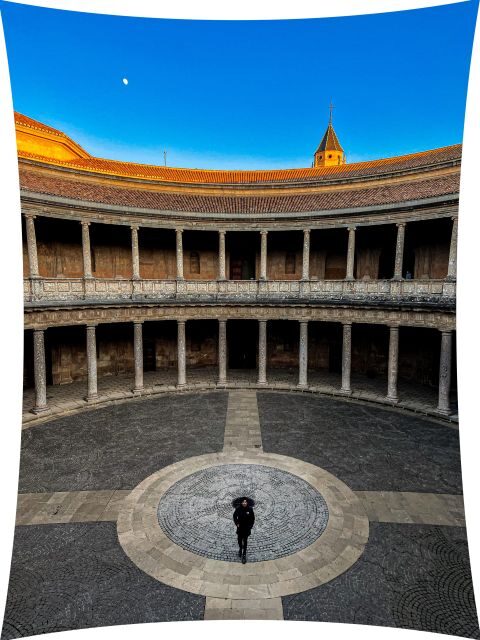
Then the tour shifts gears with the Palace of Carlos V. It’s Renaissance in style, and its construction was ordered by Emperor Charles V to serve as an imperial residence. This is a key stop because it shows how Alhambra history didn’t freeze in one period.
If you only think of the Alhambra as Nasrid, Carlos V can feel like a curveball. But that’s exactly why it’s valuable. It helps you understand the site as layered: earlier power, later rule, and changing tastes—all written into stone.
You’ll get time here (about 15 minutes), enough to appreciate its scale and design without feeling rushed. If you tend to go straight for the headline attractions, this is your reminder that context improves everything you see afterward.
Generalife: summer residence gardens, fountains, and the water staircase
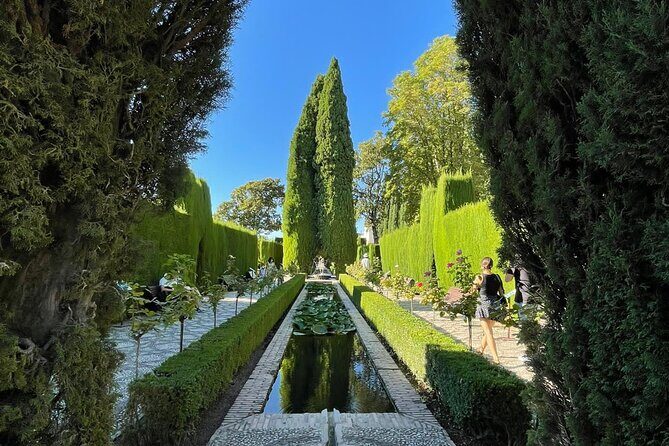
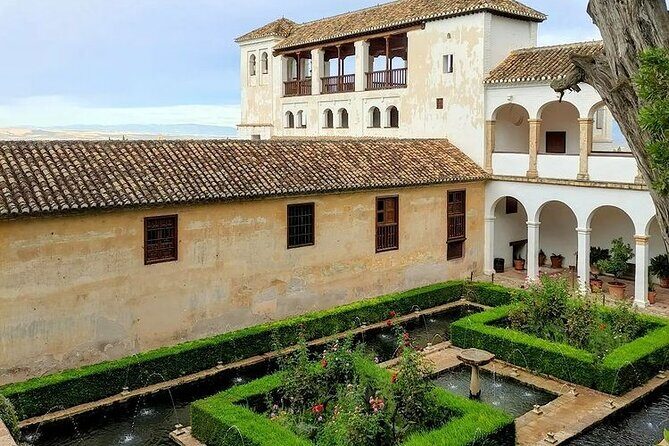
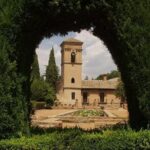
Now you move into the part of the tour that many people remember most: Generalife. This was the sultan’s summer residence, and the vibe is different from the palace zones. It feels more like a carefully planned retreat—gardens, water, and strollable spaces built for pleasure and relief.
You’ll walk through lush garden areas, take in fountain moments, and learn about the water staircase—a feature that isn’t just decorative. In places like Generalife, water is a major design element. It carries sound, coolness, and drama through the gardens, and understanding that makes the whole area feel more intentional.
You also visit the palace area tied into the Generalife experience. You’ll have around 40 minutes here, which is substantial for a 2-hour tour. It’s long enough to slow down, enjoy the walk, and absorb the “summer residence” mood instead of power-walking for photos.
One practical note: garden stops often involve uneven footing. If you’re coming in sensible shoes, you’ll enjoy it more.
You can also read our reviews of more tours and experiences in Granada


El Partal and the mirror-pond effect
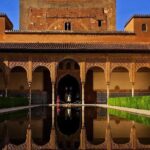
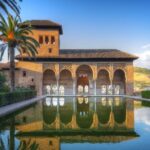
After Generalife, the itinerary continues to Palacio El Partal. The big visual hook is the large central pond, which reflects like a mirror. That reflection isn’t only pretty—it’s part of how the space is composed. The palace, the portico, the pond, and the view line up so your eyes keep bouncing back and forth.
Within this stop, there’s also mention of Torre delle Dame, located within the portico setting. When you see the framing, you start to understand how architecture here choreographs sightlines: it’s not just what’s built, but what’s meant to be seen.
You’ll spend around 15 minutes at El Partal. That’s enough to appreciate the water reflection effect and take in the spatial rhythm, but it’s not enough to sit and sketch for an hour. If you’re the “linger in one spot” type, you’ll probably want to pick your favorite angle and work it.
Alcazaba fortress: where the views over Albaicín make sense
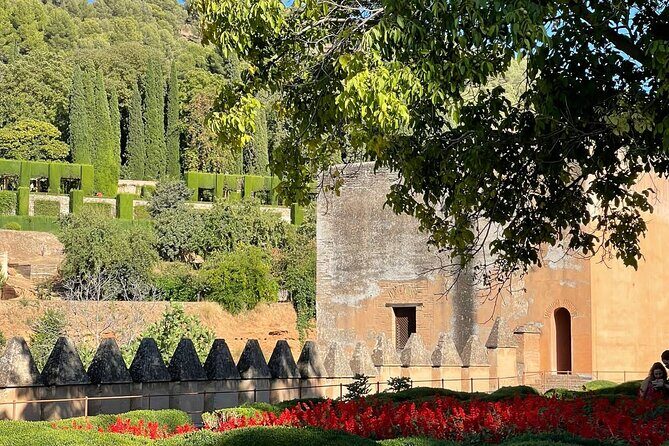
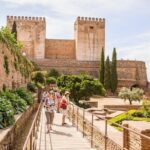
The finale is the Alcazaba, a military fortress. This is where Alhambra shifts from residence to defense, and the feeling changes instantly. You’ll spend about 40 minutes here, which helps because fortress spaces reward moving slowly enough to notice lines of sight and structure.
What you’ll really get is the view. The Alcazaba offers an exclusive perspective of Albaicín. And once you’re up there, it’s easier to understand why fortifications mattered—control of terrain, surveillance, and the advantage of height. The “why” clicks in a way it doesn’t from street level.
You don’t need special climbing skills, but fortress areas can be exposed and can involve stairs. If you’re visiting on a warm day, plan for sun and hydration, and keep an eye on where your group is headed.
Price and value: how to judge €-for-time on this 51.59 USD tour
At $51.59 per person for about 2 hours, the big question is what you’re buying besides a guide’s voice. Here’s the value equation I’d use:
- Alhambra tickets are included. That saves you from shopping separately and reduces the risk of arriving without the right entry.
- You get a tight route across multiple high-value zones: gates, Carlos V, Generalife, El Partal, and Alcazaba.
- The Nasrid Palaces are not included, which is the main subtraction from the “classic Alhambra interior” experience.
So who is this for? It’s best for you if you want the Alhambra’s gardens and the fortress perspective, and you’re okay with skipping the Nasrid Palaces interiors this time. If your dream is mainly the Nasrid interiors—throne rooms and interior ornament—then this can feel like you’re seeing the outside story and the supporting characters.
But if you’re trying to understand the site’s full shape and you want scenic payoff (Generalife + Alcazaba views), the pricing often feels fair.
Timing, pace, and how to avoid the usual Alhambra stress
This tour starts at 1:30 pm and ends back at the meeting point. That matters because Alhambra can be a juggling act with entry times, crowds, and walking distances. A guided group route reduces that mental load.
Group size helps too. With a maximum of 30 travelers, you’re less likely to get stuck at bottlenecks for too long. Still, you should expect the pace to be “move and look,” not “wander and camp.” That’s not a bad thing—it just matches the tour’s 2-hour format.
Also, keep your language needs in mind. The tour is in Italian. If you don’t read/understand Italian, you might still catch visual cues, but the main benefit is the guide’s explanation, so think about your comfort level.
Logistics that matter: meeting point and where you’ll be at the end
You meet at: Alhambra Meeting Point | Tienda de Souvenirs y Alhambra tours, P.º de la Sabica, 1, Local, Centro, 18009 Granada, Spain. The tour returns to the same place.
That simplicity is underrated. When your day includes multiple Granada stops, being able to plan one return point keeps things sane. If you’re pairing this with other attractions later, plan around that loop ending time rather than stacking too many “must-see” events immediately after.
The tour notes also indicate it’s near public transportation and allows service animals. It says most travelers can participate, but the practical reality is that you’ll still be walking around an active historic site.
Should you book? Who this tour fits best (and who should choose differently)
Book this if you want a smart way to see the Alhambra’s gardens + fortress views without losing your whole day. It’s a great choice for first-timers who want to understand the complex’s layout, and for anyone who values scenery and structure over spending hours inside the most famous interior rooms.
Skip or consider alternatives if your priority is the Nasrid Palaces interiors. This tour includes Alhambra tickets, but the Nasrid Palaces are explicitly not included, so you’d still need a separate plan if that’s the heart of your Alhambra dream.
One more reason I’d lean toward booking: the guiding quality seems to be the center of the experience. In the feedback, the Italian guides—especially Gianluca—are praised for making architecture and history understandable, fun, and useful, not just recited. For a short tour, good interpretation is the difference between seeing stone and actually getting it.
FAQ
How long is the Alhambra Gardens and Alcazaba tour?
It lasts about 2 hours.
What language is the guided tour offered in?
The tour is offered in Italian.
What parts of the Alhambra are included?
The tour covers Puerta del Vino, Puerta de la Justicia, the Palace of Carlos V, Generalife, Palacio El Partal, and the Alcazaba. Alhambra tickets are included for these parts.
Are the Nasrid Palaces included?
No. Tickets for the Nasrid Palaces are not included.
Where does the tour meet and where does it end?
It starts at the Alhambra Meeting Point at Tienda de Souvenirs y Alhambra tours on P.º de la Sabica, 1, Granada, and it ends back at the same meeting point.
What time does the tour start?
The start time shown is 1:30 pm.
How large is the group?
The tour has a maximum of 30 travelers.
Is Alhambra admission included in the price?
Yes. Tickets Alhambra are included.
Is it a good option for people using public transportation?
The activity is listed as near public transportation.
Are service animals allowed?
Yes, service animals are allowed.