REVIEW · ALBAICIN & SACROMONTE TOURS
Granada: Albaicin and Sacromonte Evening Walking Tour
Book on GetYourGuide →Operated by Special Plans · Bookable on GetYourGuide
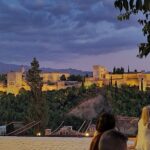
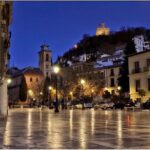
Granada glows after sunset. This 2.5-hour evening walking tour through Albaicín and Sacromonte turns famous Granada monuments into night photographs, with stories you can’t get from a guidebook. You start in the city center, then wind upward through old quarters where lights make the white walls and flowered balconies look almost unreal.
What I love most is the mix of big viewpoint moments and street-level atmosphere. You get a star stop at the San Nicolás viewpoint, timed so you can catch the shift from sunset to city lights. I also like how the walk is paced like a conversation, not a lecture—guides often bring the legends and local culture to life in a way you’ll remember on your next stop.
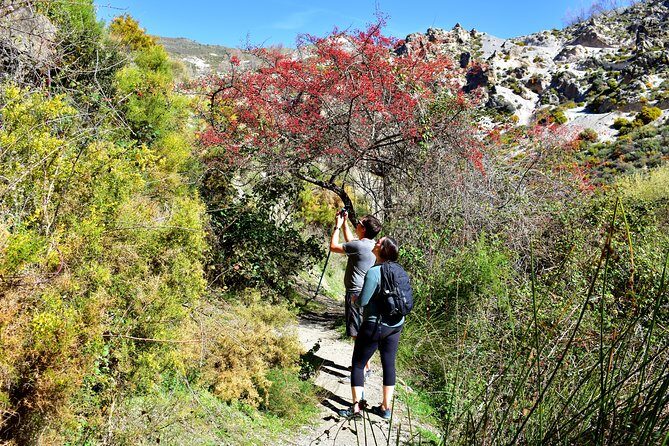
One thing to plan for: this is hilly, uphill walking on uneven streets. It is not wheelchair accessible, and if you’re mobility-limited, the stairs and climbs may wear you out faster than expected.
In This Review
- Key highlights to look for
- Why this Granada night walk works so well
- Where you meet and how the first 10 minutes set the tone
- La Calderería: the old-quarter mood begins immediately
- Plaza San Miguel Bajo: small square, big atmosphere
- Plaza de San Nicolás: the sunset view everyone wants, timed for success
- Arco de las Pesas and Plaza Larga: where the Moorish quarter feels real
- Sacromonte: caves, flamenco roots, and why people lived in mountains
- Cuesta del Chapiz and Paseo de los Tristes: the walk turns poetic
- Carrera del Darro and Plaza Nueva: close with Granada’s classic center
- The guide matters: what to expect from real storytelling
- Price and value: is $18 a good deal?
- Who should book this evening walk (and who should think twice)
- Should you book this Granada evening walk?
- FAQ
- FAQ
- How long is the Granada Albaicín and Sacromonte evening walking tour?
- Where do I meet the guide?
- What languages are the guides available in?
- Is the tour wheelchair accessible?
- Is luggage allowed on the walking tour?
- What should I wear or bring?
- What’s included in the ticket price?
Key highlights to look for
- San Nicolás viewpoint photo stop with big Alhambra views during sunset-to-night timing
- Albaicín walls, gates, and illuminated palaces/mosques showing the old city’s glow
- Sacromonte caves and cave-dwelling history tied to the gypsy and flamenco traditions
- Photo-friendly narrow alleys with white houses and flowered balconies
- Official guide in Spanish, English, or French who explains both history and legend
- A route that feels efficient: you cover multiple iconic areas in about 2.5 hours
Why this Granada night walk works so well
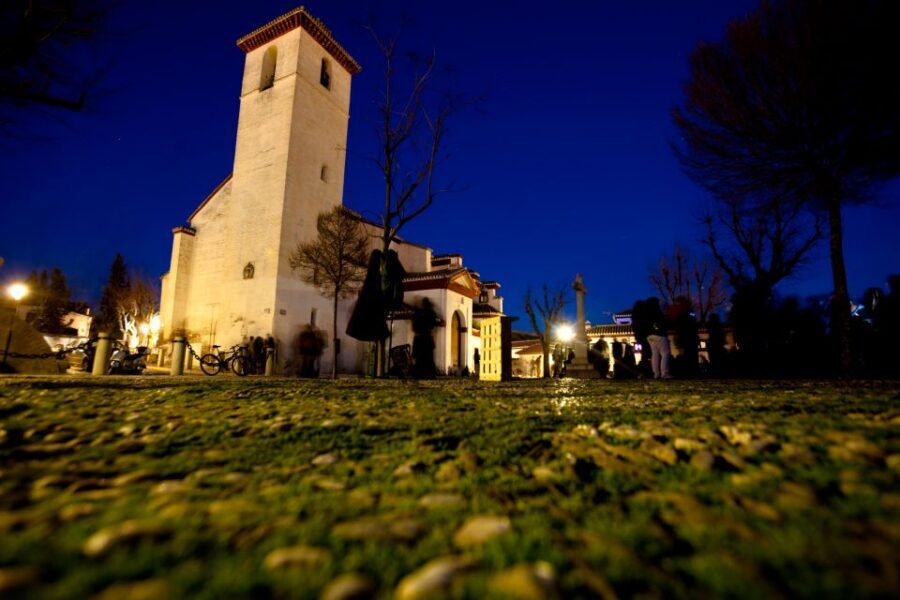
Granada at night has a rhythm: quieter streets, softer shadows, and suddenly the steep neighborhoods feel like part of the show. This tour is designed for that exact mood. In daylight you can spot landmarks; after dark you start to understand how the neighborhoods connect—where people lived, where views mattered, and why certain corners became famous.
Two things make it especially rewarding. First, you get floodlit views that turn the Alhambra area into a real nighttime centerpiece. Second, you walk through places that shaped the last Muslim kingdom in Iberia—then you hear what came after, including the Spanish Inquisition period and the later gypsy lifestyle that helped define Sacromonte.
And yes, the hills are real. You’re not strolling on flat sidewalks. But the upside is that you earn those views step by step, and the route keeps rewarding you with new angles, not repeat scenery.
You can also read our reviews of more walking tours in Granada

Where you meet and how the first 10 minutes set the tone
You meet at Plaza Isabel la Católica, specifically behind the Monument of the Capitulations—the statue group of Queen Isabella I and Christopher Columbus. It’s a central, easy-to-find starting point, and it helps you orient quickly before your eyes adjust to the darker old streets.
Right from the start, you’re in “walk mode.” This is a 2.5-hour walking tour with no transportation included, and it’s also a no-luggage/large-bags kind of walk. So I’d show up light. The faster you can move, the more you’ll enjoy the frequent photo stops and pauses for explanations.
The other practical tip: wear comfortable shoes. The tour is not wheelchair accessible and takes place on a hilly area. Even if you’re athletic, you’ll want grip and cushioning on older paving.
La Calderería: the old-quarter mood begins immediately
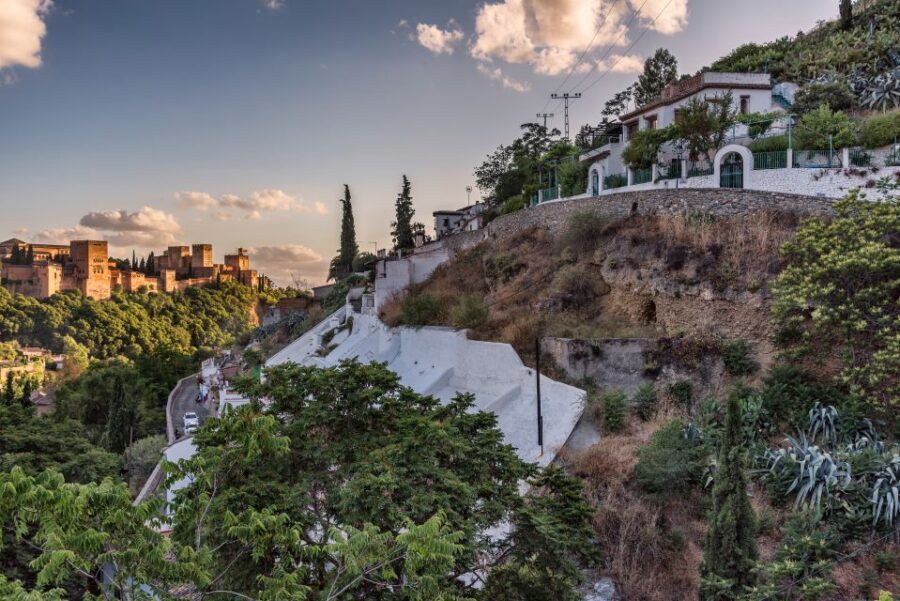
The first stop after the meeting point is La Calderería, a short walk segment (about 10 minutes). This is the kind of neighborhood name you’ll hear as soon as you start exploring Granada—it signals “historic Granada” more than it gives you a checklist.
What I like about this early segment is how it gets you into the right mindset. You’re already walking narrow streets by the time the guide’s stories start connecting the physical place to the people who lived there. Expect alley textures and small urban details—places that feel compact and lived-in rather than museum-like.
Why it matters for your trip: if it’s your first evening in Granada, this is the best place to start. You learn how to read the city’s layout while you’re still fresh, so later landmarks make more sense.
Plaza San Miguel Bajo: small square, big atmosphere
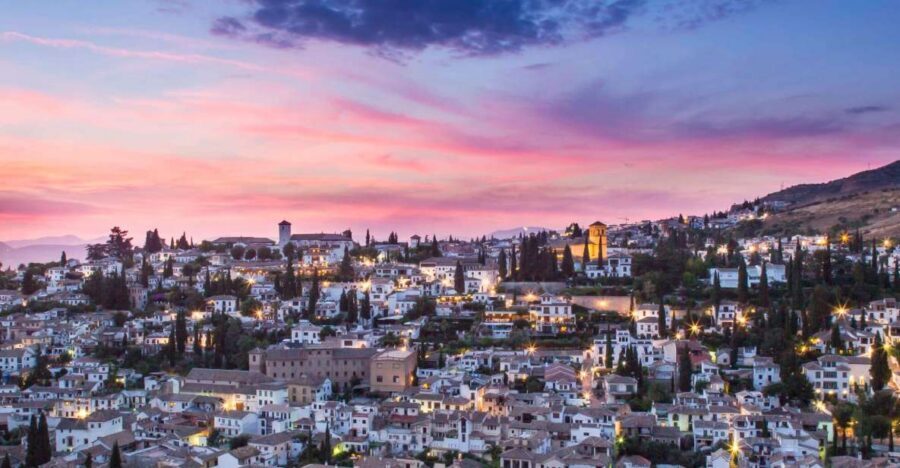
Next comes Plaza San Miguel Bajo (another short stretch, about 10 minutes). Squares like this are where neighborhoods “breathe.” Even when you’re only stopping briefly, you get a sense of where foot traffic naturally funnels—how people used these spaces in daily life.
This is also a good point in the tour to settle into the guide’s style. Many guides on this route are praised for mixing history with local legend and present-day culture, and early stops like this let you build that context before you hit the viewpoint.
If you want photos: keep your expectations realistic here. You won’t have the huge skyline backdrop yet. Instead, focus on the textures—street corners, shadow patterns, and illuminated building faces.
Plaza de San Nicolás: the sunset view everyone wants, timed for success
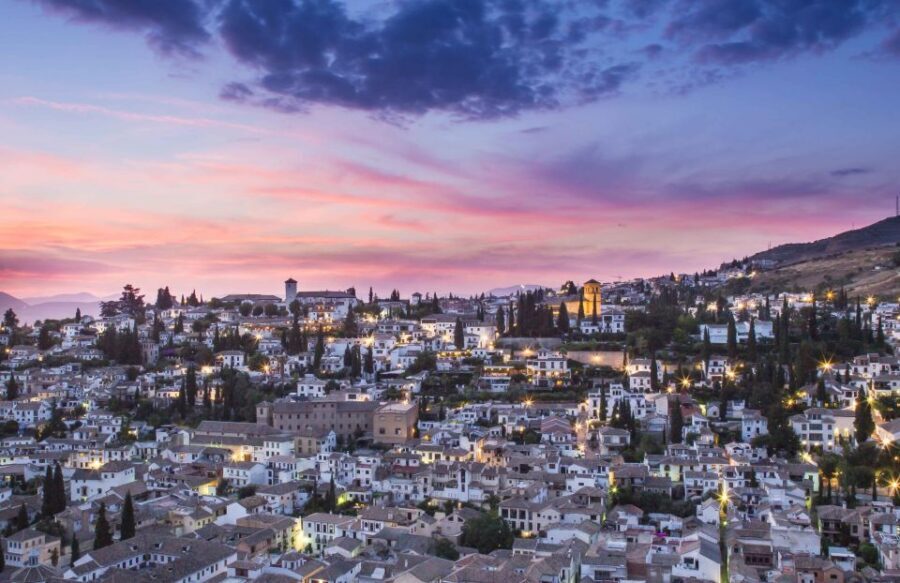
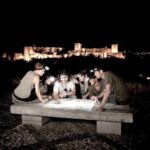
Then you reach the headline moment: Plaza de San Nicolás. You get a longer stop here (about 25 minutes), built around the viewpoint experience. This is where the tour earns its reputation.
The key idea is timing. One reason people love this walk is that it’s set up to catch sunset and then transition into night lighting. So you see more than one Granada: the sky glow shifts, the city lights start turning on, and the Alhambra area looks different in each phase.
This is the perfect stop if you like photos, but it’s also great if you just want to stand still for a bit. The guide often explains what you’re looking at and why that spot became so important, so you’re not just taking pictures—you’re learning how the geography shapes the city’s identity.
Practical note: this is a viewpoint area, so expect people around. Go with a calm plan: take your first shots quickly, then stay to watch the light change.
You can also read our reviews of more evening experiences in Granada

Arco de las Pesas and Plaza Larga: where the Moorish quarter feels real
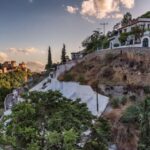
After the big viewpoint, the tour threads through smaller stops: Arco de las Pesas (about 5 minutes) and Plaza Larga (about 5 minutes). These aren’t the places you’d necessarily search for on your own, and that’s exactly why they’re useful.
These short segments work like pauses in a story. The guide can point out how walls, arches, and squares shaped movement in the old city. In an illuminated evening setting, these structures also look different than they do in daylight—edges sharpen, and the shadows make the narrow urban geometry feel even more dramatic.
What to look for here:
- How the street narrows and then opens into a small square
- How light reflects off pale walls
- How arches frame what you see next on the route
Even if you’re not a “historic architecture” person, these tiny stops keep the walk from becoming just a sequence of photo points.
Sacromonte: caves, flamenco roots, and why people lived in mountains
Now the tour swings into Sacromonte (about 25 minutes, including a photo stop). This is where Granada stops being only pretty and starts becoming culturally specific.
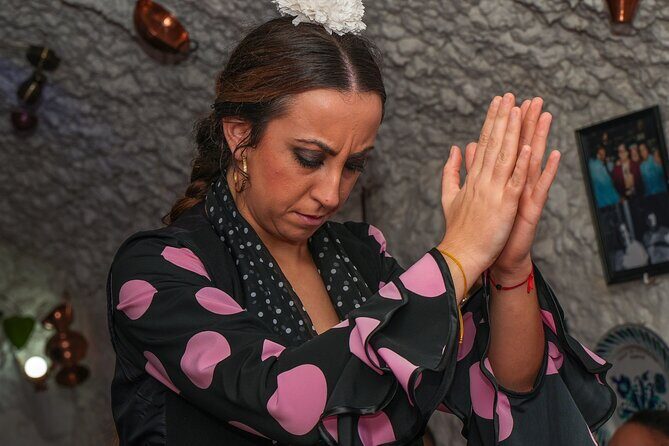
Sacromonte is known for the traditional story of cave dwellings—homes dug into the mountain. The guide explains why locals ended up living in caves, and how that choice connects to the gypsy lifestyle and the region’s flamenco identity.
You’ll feel the difference immediately. Even without stepping deep into performance-focused venues, the vibe changes: the streets seem steeper, the quarter feels more “earthy,” and the scenery around you turns into part of the explanation.
Why this stop is valuable: it gives context. Without it, Sacromonte can feel like a labeled neighborhood you pass through. With it, you understand why the geography and the culture became linked.
Cuesta del Chapiz and Paseo de los Tristes: the walk turns poetic
Two more segments keep the momentum while giving you bigger emotional payoff: Cuesta del Chapiz (about 5 minutes) and Paseo de los Tristes (about 25 minutes with a photo stop).
Cuesta del Chapiz is one of those short climbs that makes you feel the hilliness of Granada. It’s quick, but it reminds you to slow down, breathe, and keep your footing.
Then you reach Paseo de los Tristes—a stretch that people often use as a nighttime photography moment because the lighting and the downhill feel create drama. This is also a good place for the guide to connect themes: how different parts of Granada related to one another, and what people valued enough to build their lives around.
My practical advice: if you’re bringing a camera or phone, keep it ready but don’t rush every shot. At night, lighting can vary fast. Take one or two solid photos, then just watch the city shift around you.
Carrera del Darro and Plaza Nueva: close with Granada’s classic center
The tour finishes the walk with Carrera del Darro (about 10 minutes, guided) and then Plaza Nueva (about 25 minutes). These are the moments that help you connect the hills back to the central city.
Carrera del Darro is often chosen because it feels like a “Granada signature.” Even in a night tour, it works as a final guided stroll—enough time for the guide to point things out while you recalibrate your eyes after the higher quarters.
Plaza Nueva is a broader open space where the tour becomes easier to absorb. It’s also a smart ending because you’re back in an area that feels less steep and more comfortable to linger. Then you head back to Plaza Isabel la Católica.
Why the ending matters: you don’t leave feeling like you only experienced the most dramatic angles. You finish with a clearer picture of how the city moves from old quarters back into daily life.
The guide matters: what to expect from real storytelling
This tour is led by an official guide, and the language options include Spanish, English, and French. The big advantage isn’t just accuracy—it’s delivery.
From what’s consistently praised, guides tend to explain more than dates. They talk about legends and local culture, and they connect the “why” behind what you see: old city walls and gates illuminated for the night, the Moorish quarter streets, the cave tradition in Sacromonte, and the broader political shifts affecting daily life.
Some guide names show up repeatedly in positive feedback—people like Carmen, Chema, Fernando, Sergio, Paula, Maria, Andrea, Marta, and Chema. While each person has a different style, the common thread is clear: they keep the walk lively and answer questions without turning it into a rigid script.
If you enjoy tours where you can ask things and get thoughtful responses, this is a strong match.
Price and value: is $18 a good deal?
At $18 per person for a 2.5-hour guided evening walk, the value comes from how much Granada you cover in one shot. You’re paying for:
- a guided route through two major historic neighborhoods
- illumination-focused timing (sunset to night lighting)
- expert context so the scenery doesn’t just pass by
Transportation isn’t included, and there are no meals. So you’ll still handle dinner on your own. But if you want a first-night orientation that also gives you memorable night photos, $18 for a focused guided walk is fair—especially because you’re not just seeing one monument. You’re learning the neighborhood logic of Granada.
Who should book this evening walk (and who should think twice)
This tour is a great fit if:
- You’re comfortable walking hills and want an evening that feels more local than touristy
- You want viewpoint time at San Nicolás plus cultural context for Sacromonte
- You like history mixed with stories and legends, explained by a live guide
- It’s your first night in Granada and you want fast orientation
Think twice if:
- You have mobility limitations. The walk isn’t wheelchair accessible and is described as hilly.
- You struggle with repeated uphill effort or stairs. Even with a good pace, this route is active.
Also remember: the walk is designed around night viewing, so you’ll want to go in ready—bring your most comfortable shoes and don’t count on big breaks for amenities.
Should you book this Granada evening walk?
If you want an easy win for your first evening—night lighting, classic views, and a story-rich walk through Albaicín and Sacromonte—I’d book it. The $18 price feels right for the length, the official guide, and the way the route mixes photo moments with cultural explanations.
Just be honest with yourself about the hills. If you’re likely to feel worn down quickly on steep streets, you might prefer a less active Granada plan. But if you can handle uneven pavement and uphill climbs, this is one of the most practical ways to experience Granada after dark.
FAQ
FAQ
How long is the Granada Albaicín and Sacromonte evening walking tour?
The tour lasts 2.5 hours.
Where do I meet the guide?
Meet at Isabel la Católica Square (Plaza Isabel la Católica), 18009 Granada, behind the Monument of the Capitulations (the statue of Queen Isabella I and Christopher Columbus).
What languages are the guides available in?
The live guide is available in Spanish, English, and French.
Is the tour wheelchair accessible?
No. This tour is not wheelchair accessible.
Is luggage allowed on the walking tour?
No. Luggage or large bags are not allowed.
What should I wear or bring?
Comfortable shoes are strongly recommended because the route is hilly. It’s also a walking-focused experience.
What’s included in the ticket price?
The price includes an official guide and the 2.5-hour walking tour. Transportation and meals are not included.