REVIEW · 3-HOUR EXPERIENCES
From Granada: 3-Hour Vía Ferrata in Moclín
Book on GetYourGuide →Operated by Vivak Nature · Bookable on GetYourGuide
Iron steps, big courage, and clear views. I like how this guided Vía ferrata is built as a real initiation, with iron footholds and chains plus signature moments like the Tibetan Bridge. It feels adventurous, but the focus stays on helping you move with control.
I also like the confidence factor: you’re not just handed a harness and sent off. You climb with expert guidance, safety equipment, and a route that mixes different challenges without requiring prior experience.
One drawback to know up front: you must be able to climb and descend stairs and handle vertical walking and scrambling. If you have limited mobility or back, neck, joint, or muscular issues, consider carefully before signing up.
In This Review
- Key Highlights You’ll Actually Feel During the Climb
- Granada to Moclín: a short trip that sets the tone
- Gear Up Right: what’s included and how it makes the experience safer
- The 60-meter wall: iron steps, chain support, and real views
- Signature obstacles: Tibetan Bridge, monkey pass, a tricky crossing, and zip line
- Rappelling down: learning control before you’re tempted to rush
- Photos, tea, and snacks: how the day ends on a good note
- Who this is best for (and who should think twice)
- Price and value: what $77 gives you in real terms
- How to prepare so the 3 hours feel fun
- Should you book this via ferrata in Moclín?
- FAQ
- Where does the tour start?
- How long is the via ferrata experience?
- Is prior experience required?
- What safety equipment is included?
- What obstacles will I cross during the route?
- Is transportation included?
- Are meals and drinks included?
- Do I get photos from the activity?
- Who is not allowed on this tour?
Key Highlights You’ll Actually Feel During the Climb
- Tibetan Bridge plus monkey crossing: classic ferrata thrills, built into one route
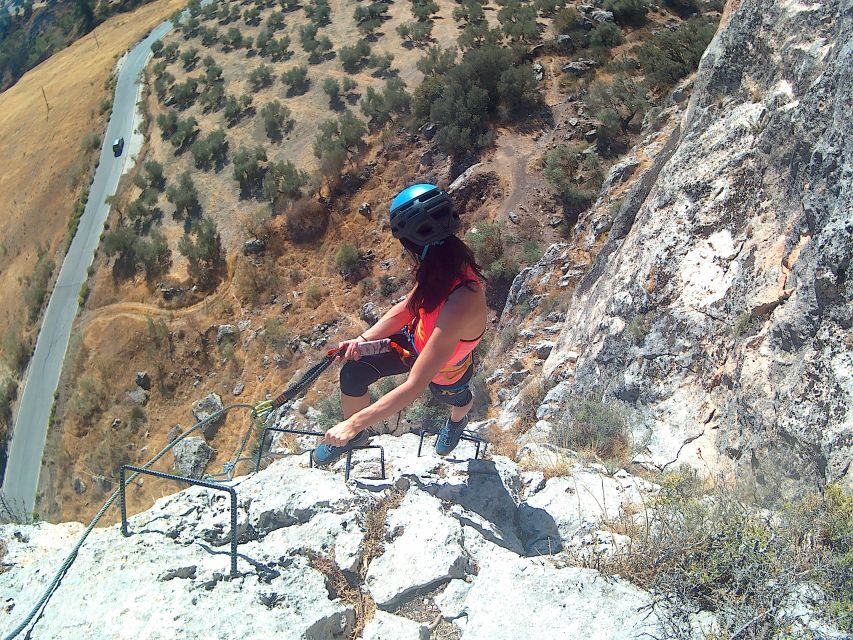
- A 60-meter wall: iron steps and chains that let you test your bravery
- Rappelling practice: descend a rocky cliff with chains as your safety line
- Zip line: a fast reset after the tougher sections
- Small group (up to 10): more attention from your guide when you need it
- Digital photo album + snacks: you get memories and fuel after the fun
Granada to Moclín: a short trip that sets the tone
This starts in Granada city center at Neptuno mall. From there, you’ll join a small group and travel by air-conditioned coach out toward Moclín, with pick-up from central Granada and also Azud de Vélez. It’s a nice way to get out of the city without the hassle of arranging a car or figuring out rural roads.
The whole activity clocks in at about 3 hours, so the pace stays focused. You’re not spending half your day in transit. You arrive, get geared up, climb, handle a rappel and a zip line, then come back the same way.
Because the group is limited to 10 participants, it tends to feel less like a factory tour and more like a hands-on lesson. That matters on a ferrata, where small moments—where to place your feet, how to clip safely—can make the difference between shaky and steady.
You can also read our reviews of more tours and experiences in Granada



Gear Up Right: what’s included and how it makes the experience safer
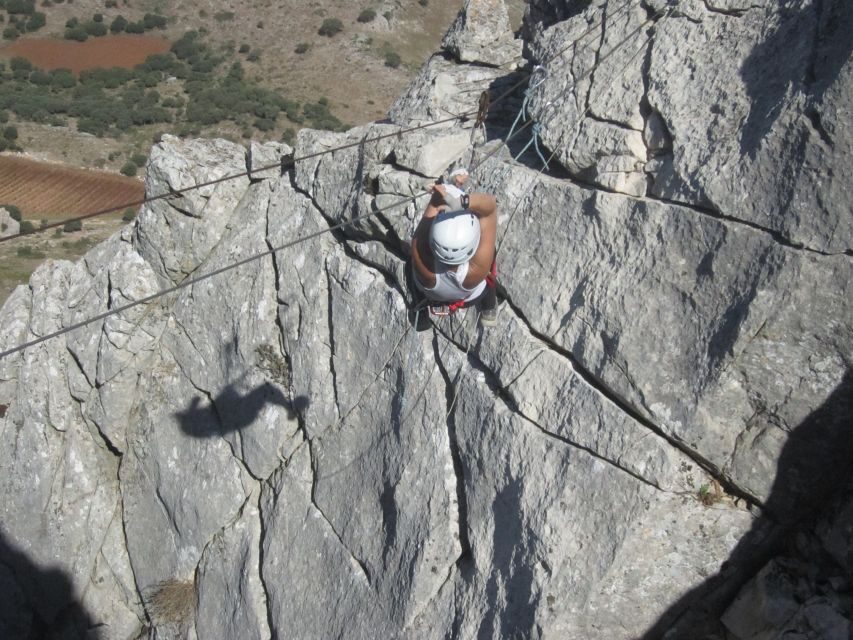
Your safety setup is part of the package, not something you need to source yourself. You’ll wear a helmet and harness, plus a via ferrata dissipation device and anchoring slings and other required materials. That’s the core gear that connects you to the fixed system on the wall.
You also get a guide who knows the route. The value here isn’t only safety gear. It’s how the guide uses that gear to keep you moving confidently through vertical sections, steps, and the more exposed features.
One more practical benefit: you’re covered by total insurance included with the experience. And the group is small enough that your guide can pay attention to how you’re doing, not just tick boxes at each station.
If you’re thinking, I’m new to this, that’s exactly the audience this is built for. The route is designed as low-medium difficulty, and there’s no requirement for previous experience.
The 60-meter wall: iron steps, chain support, and real views
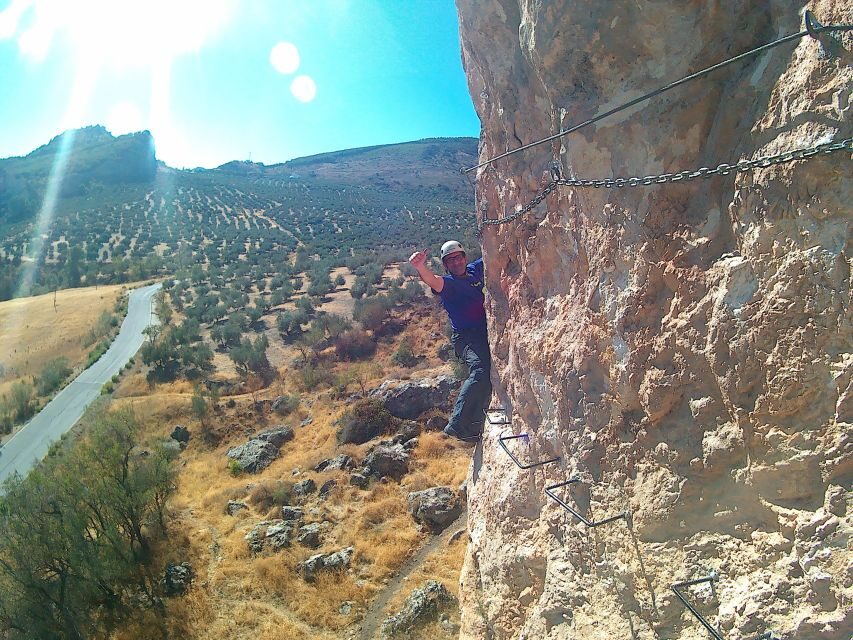
Once you arrive at the starting point below the climb, you’ll put on your gear and begin the ascent. The route uses sturdy iron footsteps and chains installed in the wall, which means your hands and feet have physical guides.
The standout here is the mix of steep vertical movement with a structure that helps beginners. You’re not just scrambling up loose rock. You’re climbing a system—steps, handholds, and a line that stays with you.
You’ll work your way up a 60-meter wall while taking in views over the valley. It’s the kind of scenery you’ll remember because you earn it with your body, not just a photo stop. The route also includes sections that test bravery, especially when the wall feels steeper than you expect.
Physical comfort matters, too. You don’t need to be in peak condition, but you do need to be able to climb and descend. Ferrata is short, but it’s not a gentle walk.
Signature obstacles: Tibetan Bridge, monkey pass, a tricky crossing, and zip line
This ferrata is more fun than it is technical. The route strings together several famous ferrata features into one complete run, so you don’t feel stuck doing the same kind of climbing for the entire 3 hours.
Here are the main moments you’ll encounter:
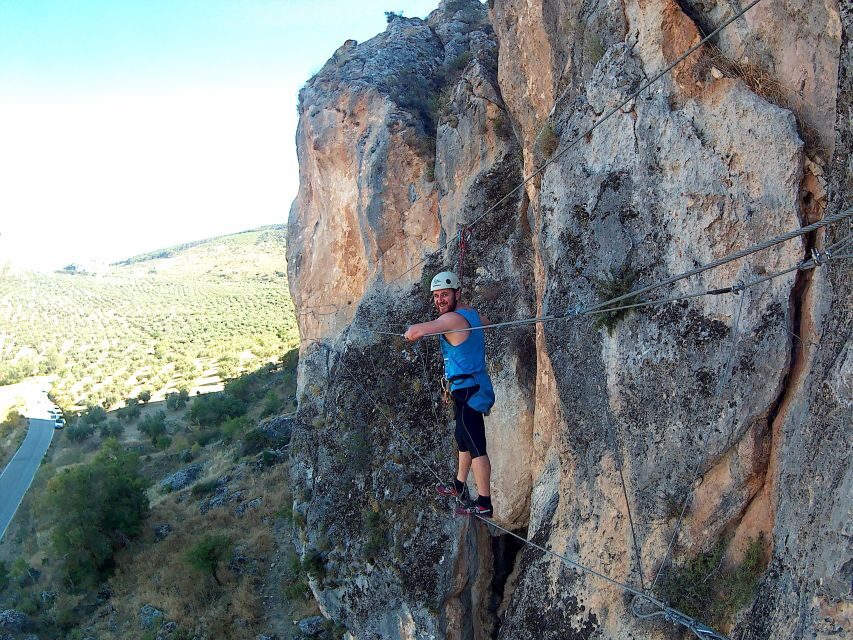
- Tibetan Bridge: the big “wow” section where emptiness under your feet can make you concentrate hard on balance
- Monkey crossing: an active, side-to-side or moving-through style section that keeps you thinking and using the system
- A slightly collapsed crossing: a section that changes the feel of the wall and asks for careful foot placement and steady movement
- Zip line: the playful finish that flips the energy after the harder bits
The best advice for these obstacles is also the simplest: move at the pace your guide sets. When you’re clipped in and supported by chains, you still control your foot placement and rhythm. Try to stay calm during the exposed sections. If you tense up, your movement gets jerky; if you breathe and trust the equipment, it gets smoother fast.
The route has a slightly humorous, fun side too. It’s not just intimidating stunts. It’s an adventure course that lets you experience heights and movement without turning the day into a full-on survival test.
Rappelling down: learning control before you’re tempted to rush
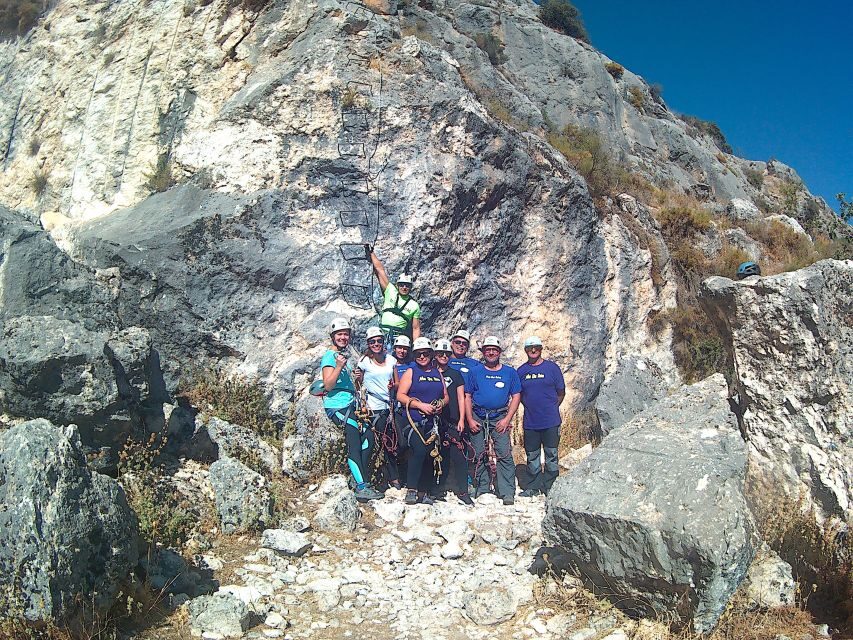
After you’ve climbed the wall and finished the crossing and zip line moments, you’ll test your skills descending. You’ll rappel down a rocky cliffside, using the chain as your safety guide down to the bottom.
Rappelling is where many people either lock up or learn quickly. The route’s setup helps you because the chain gives you a clear reference point while you descend. Your guide is there to help with how you set up and move through the descent safely.
This is also a nice part of the experience because it balances the day. Climbing asks for effort upward; rappelling shifts your focus to controlled movement and staying calm while you lower yourself.
If you’re comfortable descending steps and staying balanced on uneven surfaces, this part will feel more like a skill you’re learning than a test of strength. If not, plan to take it slowly and listen closely when your guide speaks.




Photos, tea, and snacks: how the day ends on a good note
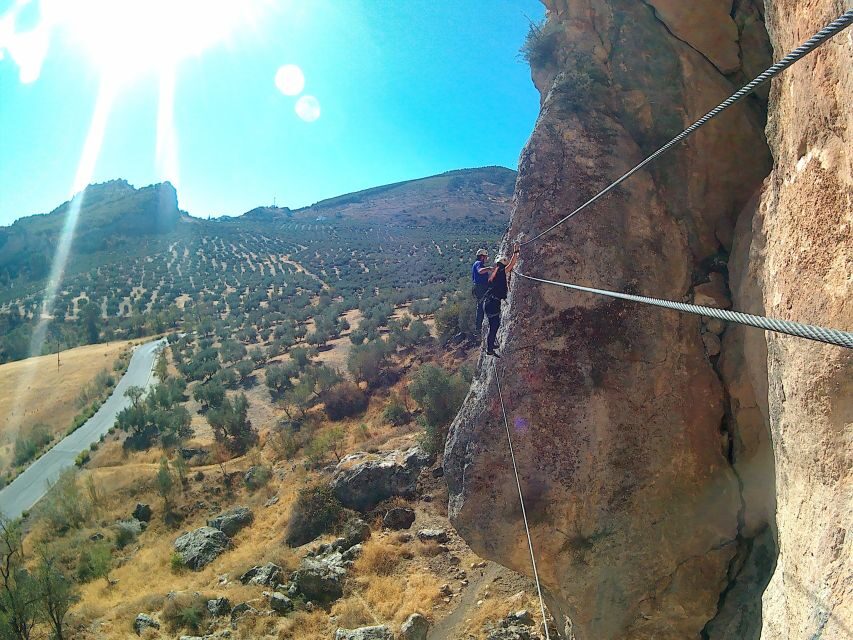
You don’t just climb and leave. You get a digital photo album with shots from throughout the experience. This is great because ferrata is hard to photograph yourself. Someone else is capturing the moments when you’re actually in motion, clipped in, and braced on the wall.
After the vertical fun, the day cools down with a relaxing tea or coffee with muffins and snacks. That simple finish matters more than it sounds. You burn energy, you get that adrenaline edge, and then you need something warm and steady afterward.
On top of that, the small-group setup makes the post-climb moment less rushed. You can swap stories about the hardest section and feel good about what you handled.
The guide quality is part of the payoff here. In the experiences shared by Pedro and Harry, the common theme is attentive, kind, patient coaching that builds confidence when you need it. That kind of support is why initiation routes feel approachable instead of stressful.
Who this is best for (and who should think twice)
This is designed as an initiation for low-medium difficulty, with vertical sections and steps that test bravery. That combination is ideal if you want something more exciting than a hike but still want a guided, structured route.
You’re a good fit if:
- you’re comfortable climbing stairs and descending them
- you’re okay with heights and exposure for short bursts
- you want a guided introduction rather than a DIY adventure
You should think twice if:
- you have back, neck, joint, or muscular problems (the experience advises careful consideration)
- you have limited mobility
- you’re pregnant (not permitted)
Also remember: “no previous experience needed” doesn’t mean “no effort.” You’ll still be climbing and descending during a 3-hour window. The good news is that the route is set up with iron steps and chains to keep you supported.
Price and value: what $77 gives you in real terms
At $77 per person, the value comes from what’s bundled in. You’re not paying just for a guide and rope work. You get round-trip transportation by air-conditioned coach from central Granada (including Neptuno mall area) and Azud de Vélez, plus the full safety gear kit: helmet, harness, dissipation device, anchoring slings, and the equipment needed for the route.
You also get a bottle of water and a snack during the day, then tea or coffee with muffins and additional snacks afterward. On top of that, there’s a digital photo album, which is a real bonus for people who want the memory without guessing what the best photo angle was during the climb.
Finally, total insurance coverage is included. When you add up transport, gear, instruction, and food, the price starts to feel like paying for a complete adventure package rather than piecing together components.
If you were to arrange a similar experience on your own, you’d likely spend more in time and logistics. Here, it’s planned for a smooth flow from pickup to gear-up to descent to the calm end of the day.
How to prepare so the 3 hours feel fun
You don’t need to be an athlete, but you do need to be ready for movement. The tour specifically says you must be able to climb and descend stairs, so treat that as your baseline test.
Here are practical ways to prepare using what’s known:
- Wear clothing that lets you move freely and won’t snag easily on gear. You’ll be on a wall with fixed equipment.
- Expect a mix of steps, chain-supported sections, an exposed bridge, and a descent. If heights make you tense, plan to tell your guide early so they can pace you.
- If you have any back, neck, joint, or muscular concerns, assess whether you can manage the up-and-down effort safely.
- Bring the right mindset: this is meant to be an initiation. Your goal isn’t perfection. It’s getting through the obstacles with control.
Also, arrive at the meeting point on time. The exact pickup point is shared when you arrange transportation, so watch for that message after booking and plan to be ready at Granada city center.
Should you book this via ferrata in Moclín?
If you want a short, guided adventure with real vertical moments, this is a strong choice. The route is built for beginners (low-medium difficulty) and still delivers iconic features: Tibetan Bridge, monkey crossing, a slightly collapsed crossing, plus a zip line and rappelling. That combination is what makes it feel like a full experience, not a one-note climb.
Book it if:
- you’re comfortable with stairs and want guided instruction
- you like the idea of learning rappelling as part of a fun day
- you value safety gear, included insurance, and a small group vibe
Skip it (or at least ask more questions) if you can’t handle stairs or you have relevant back/neck/joint or muscular problems, since the route isn’t permitted for people with limited mobility and pregnant women.
If your plans are flexible, you can cancel up to 24 hours in advance for a full refund, which is reassuring when you’re trying to fit activity time into a trip.
FAQ
Where does the tour start?
The meeting point is Granada city center at Neptuno mall.
How long is the via ferrata experience?
The duration is 3 hours.
Is prior experience required?
No previous experience is needed. It’s designed as a low-medium difficulty initiation.
What safety equipment is included?
You’re provided with a helmet, harness, dissipation device for via ferrata, anchoring slings, and other material needed.
What obstacles will I cross during the route?
You’ll encounter the Tibetan Bridge, a monkey pass, a slightly collapsed crossing, and a zip line.
Is transportation included?
Yes. Round trip transportation is included by air-conditioned coach from central Granada and Azud de Vélez.
Are meals and drinks included?
Yes. You receive a bottle of water, a snack, tea or coffee, muffins, and additional snacks.
Do I get photos from the activity?
Yes. You receive a digital photo album with pictures from throughout the experience.
Who is not allowed on this tour?
Pregnant women and people with limited mobility are not permitted. The tour also advises careful consideration if you have back, neck, joint, or muscular problems.