REVIEW · ALHAMBRA TOURS
Granada: Alhambra Night Visit Entry Ticket
Book on GetYourGuide →Operated by GetYourGuide Tours & Tickets GmbH · Bookable on GetYourGuide
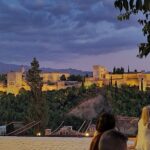
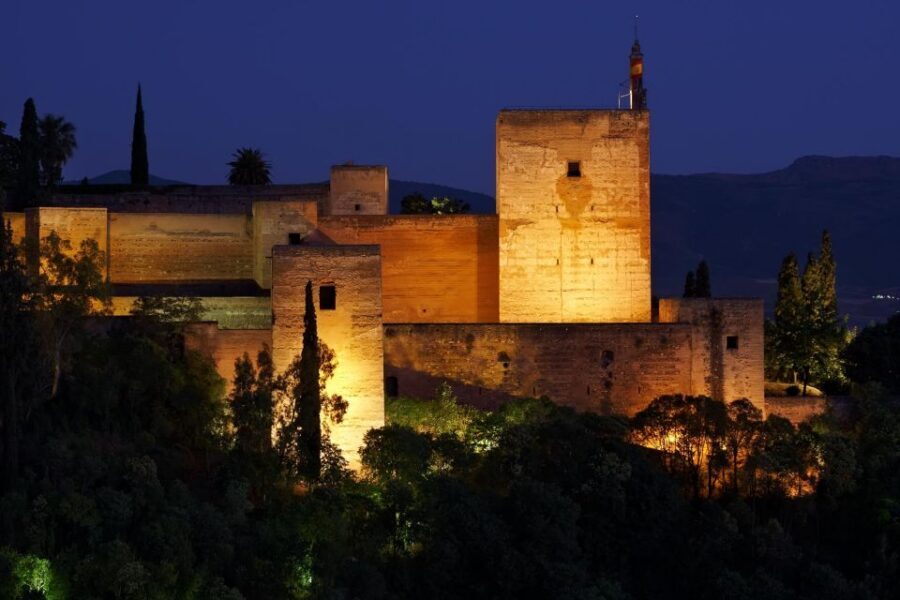
Alhambra at night changes everything. With a timed 1.5-hour night ticket, you can see the Nasrid Palaces and/or Generalife as the light drops and the crowds thin. It’s one of those places where the same stone, arches, and courtyards feel brand-new after sunset.
What I like most is the contrast: the Moorish-style courtyards and royal quarters take on a quiet, secretive mood, and the water-and-stone details feel sharper in the dark. I also love the option to include the Palace of Charles V, where the Spanish Renaissance geometry sits right next to the Islamic world like a loud thought in a whisper.
One thing to keep in mind: even at night, the entry can be busy. If a lot of people funnel in at once, you may not get that perfectly silent, unhurried experience you’re imagining.
In This Review
- Key things to know before you go
- Why Alhambra Night Entry Feels Different Than Day
- From the Access Pavilion to Your First Turning Point
- Generalife Gardens After Sunset: Water, Walkways, and Mood
- The Palace of the Generalife: A Courtyard-First Experience
- Nasrid Palaces: Where the Courtyards Do the Talking
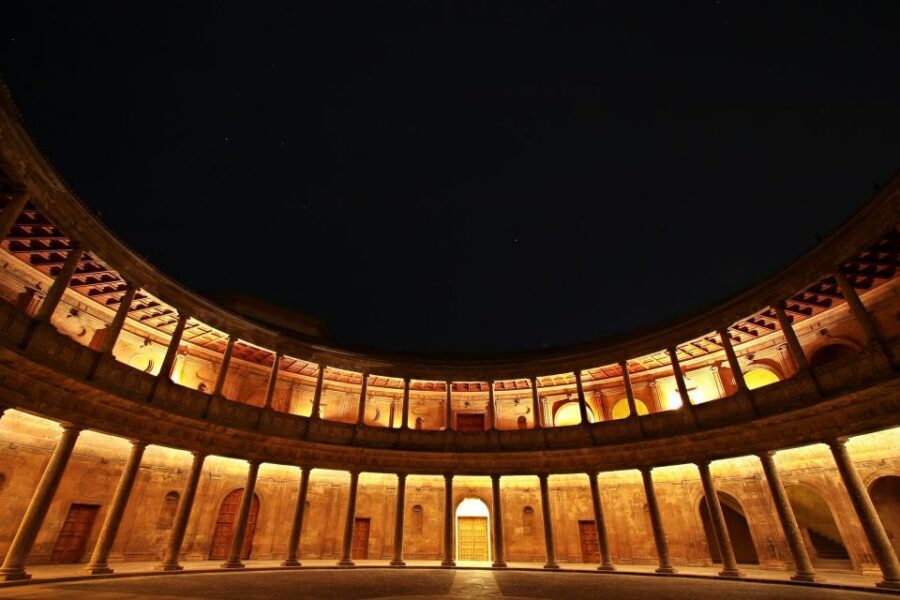
- Charles V Palace: The Renaissance Stop That Changes the Mood
- Timing, Crowds, and How to Actually Get a Calm Experience
- What to Bring (and What to Leave Behind)
- Price Value: Is About $15 Worth It?
- Who This Alhambra Night Ticket Is Best For
- Should You Book the Granada Alhambra Night Visit?
- FAQ
- How long is the Alhambra night visit?
- What parts of Alhambra can I visit with this ticket?
- Is a live or audio guide included?
- Where does the visit start?
- What do I need to bring to enter?
- Are baby strollers allowed?
- Can I use a selfie stick, flash, or a tripod?
- Is the night visit wheelchair accessible?
- Who is this best for?
Key things to know before you go
- Moonlight timing: Night entry means softer light on the arches, courtyards, and gardens.
- You choose your zone: Your ticket option affects whether you get Nasrid Palaces/Charles V and/or Generalife Gardens.
- Route has built-in flow: For the Generalife side, you’ll follow the Promenade of the Walnut Trees to the New Gardens area.
- Signature rooms are the point: In the Nasrid Palaces, expect stops tied to the Mexuar, Palacio de Comares, and Palacio de los Leones.
- Crowds can still stack up: Timed doesn’t always mean empty—plan for some bottlenecks near entry.
- Photo limits matter: No flash, selfie sticks, or tripods in the Nasrid Palaces and closed areas.
Why Alhambra Night Entry Feels Different Than Day
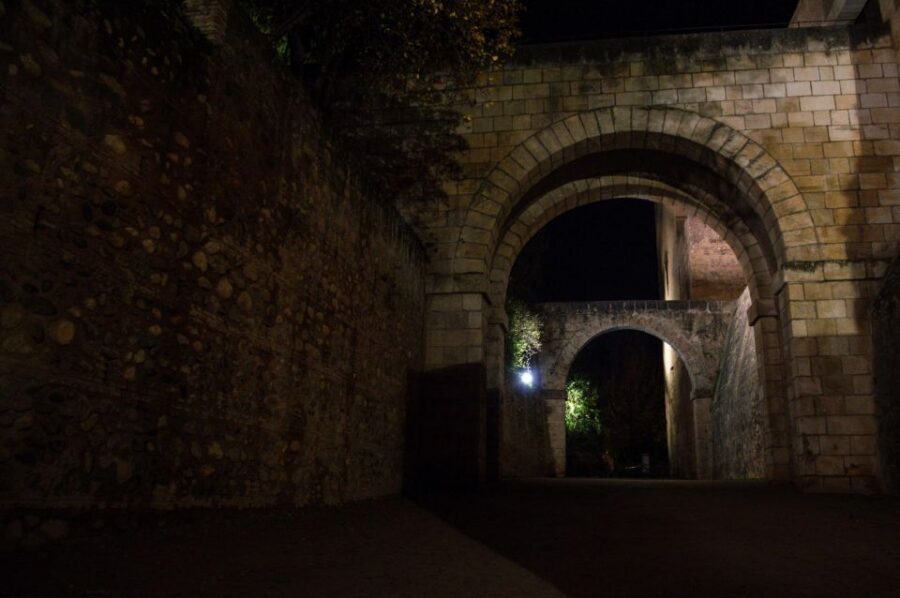
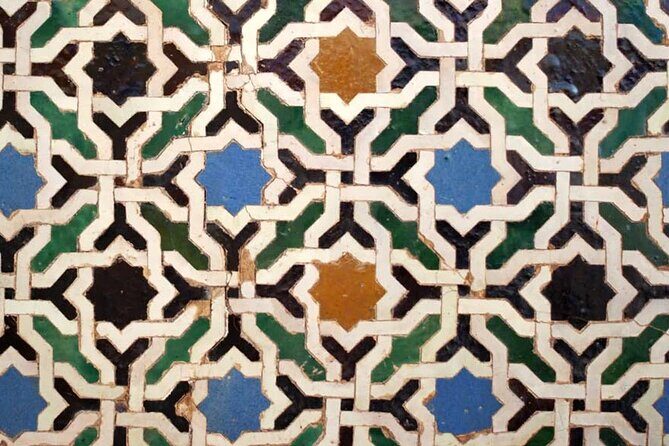
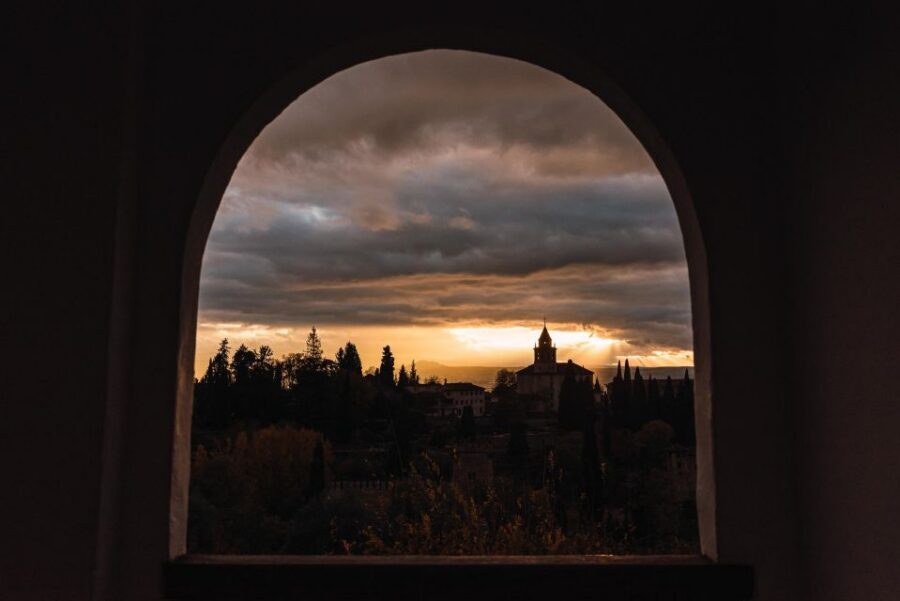
Daytime Alhambra is impressive, but it can also feel like a highlight reel. Night entry turns the volume down. You still see the big wow moments, but the shadows help you notice details—carved plaster patterns, the way arches frame moonlight, and the calm rhythm of courtyards.
The value here is simple: 1.5 hours is long enough to feel like you went somewhere special, but short enough that you’re not stuck fighting crowds for half a day. For many visitors, that’s the sweet spot—especially if you’re already sightseeing in Granada during the day.
Also, Alhambra is a UNESCO site, which means it’s designed for wandering—but it also means you’ll be managing your route. Night entry is a smart way to reduce friction, because the mood makes you move slower (even if you’re trying to cover everything quickly).
You can also read our reviews of more tours and experiences in Granada



From the Access Pavilion to Your First Turning Point
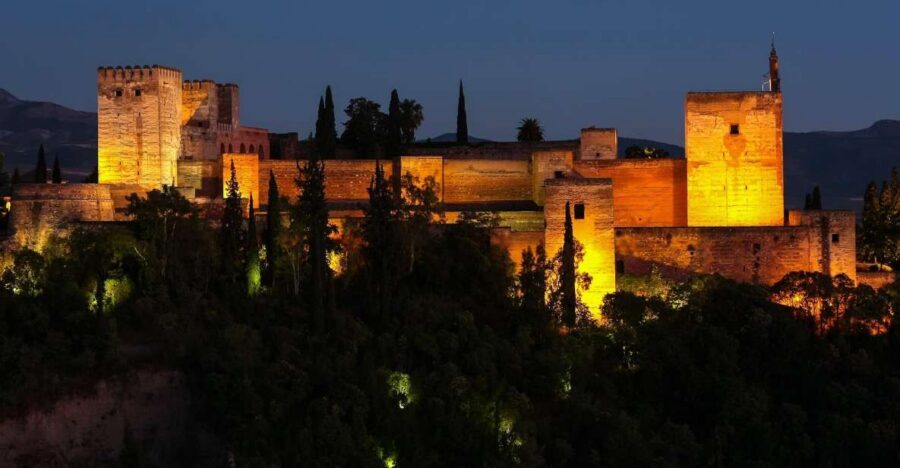
Your route begins through the Access Pavilion. After that, things depend on which part of the complex your ticket option covers.
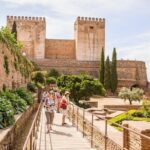
If your ticket includes the Generalife side, you’ll continue through a set path that starts with the Promenade of the Walnut Trees. This is one of those “they built the place to guide your eyes” sections. Instead of random wandering, you get a natural corridor that leads you onward with less guesswork.
If your ticket is focused on the Nasrid Palaces and Charles V, the flow is more about moving through key palace areas and courtyards in sequence. In both cases, timed entry helps you avoid the harshest daytime surge—but you should still expect a bit of crowding at choke points.
The practical takeaway: wear shoes that don’t complain. A night visit still means lots of stone underfoot, plus waiting in small clusters while groups move.
Generalife Gardens After Sunset: Water, Walkways, and Mood
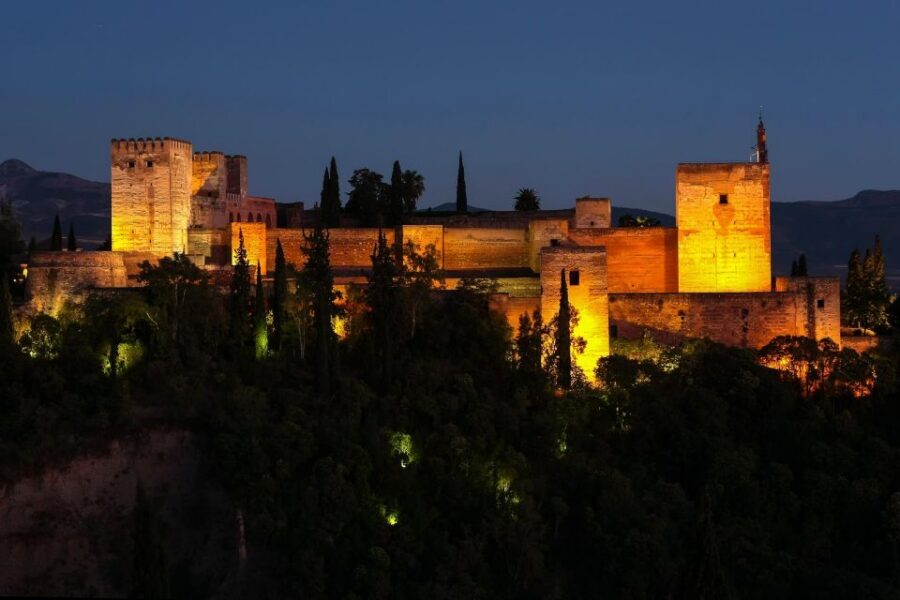
If you booked the Generalife option, you’ll be walking through lush garden spaces that feel calmer after dark. The Generalife is often described as a summer palace and country estate of the Nasrid rulers, and at night it doesn’t feel like a museum garden. It feels like a place meant for drifting.
The route matters. The Promenade of the Walnut Trees is your early orientation. After you pass through, you reach the north area of the New Gardens of the Generalife, and from there you get access to the Palace of the Generalife.
What you’ll love here is the pacing. Gardens can be slow by nature, but at night they become even more about atmosphere than lists. You’ll get the sense of why rulers wanted this outside-the-city escape: cooler air, private views, and a layout that turns walking into part of the experience.
A drawback to plan around: gardens can be one of the prettiest areas, but they also attract people who are trying to “get their photos quickly.” If the group volume spikes, you may hit brief pauses in the most popular spots.
The Palace of the Generalife: A Courtyard-First Experience
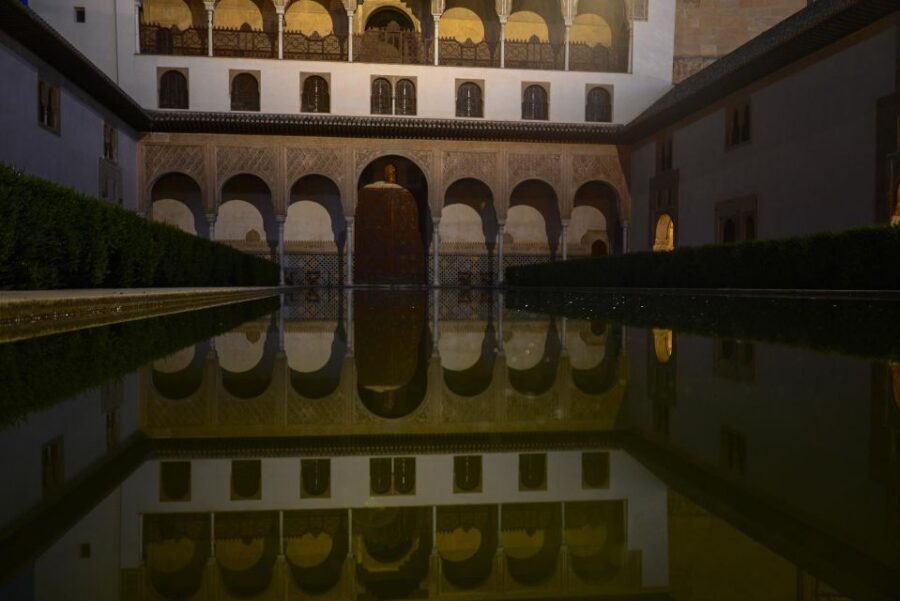
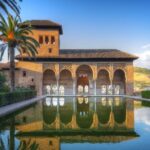
The Palace of the Generalife is the kind of stop that rewards you for arriving without rushing. Even if you don’t know every architectural term, you can read the space through the transitions—garden to palace, open air to covered rooms, bright geometry to softer shadows.
At night, the palace feels more like a memory than a snapshot. The courtyards and passages feel quieter, and that makes the decorations feel less like artwork and more like everyday presence.
One more thing: there are practical limits on what you can bring and how you move through the site. Baby strollers aren’t allowed, and baby buggies can’t enter the Nasrid Palaces or the Generalife Palace (there’s a special area for them). If you’re traveling with kids in strollers, check your plan early so you don’t lose time at the gate.
Nasrid Palaces: Where the Courtyards Do the Talking
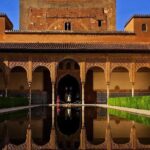
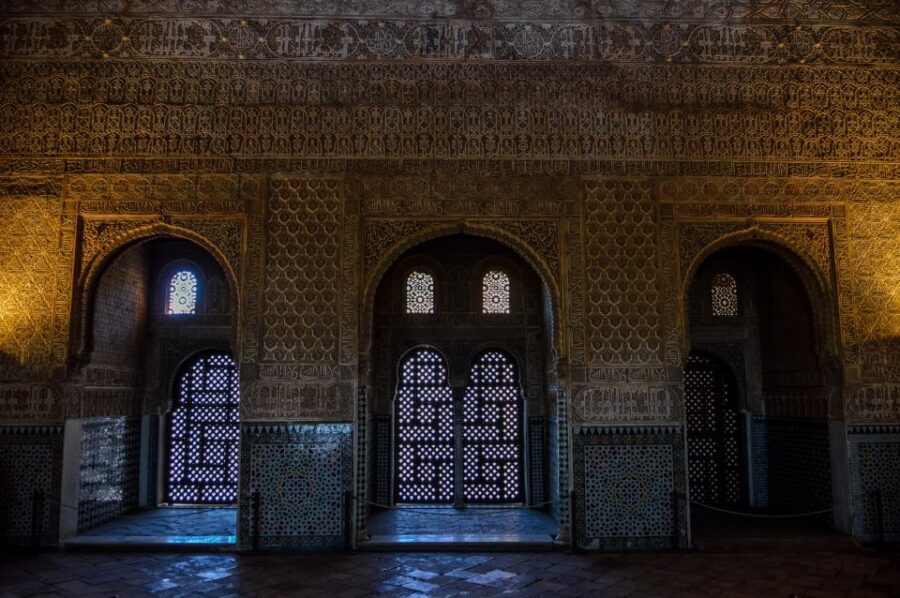
If you’re going for the classic Alhambra magic, the Nasrid Palaces are the center of gravity. After sunset, the experience leans more mysterious. Those signature courtyards—especially the ones tied to royal life—feel more intimate when there’s less bright daylight to flatten everything.
In the Nasrid Palaces, you’ll walk through major areas including the Mexuar, Palacio de Comares, and Palacio de los Leones. These names might sound like a study guide, but in practice they’re useful because they map to distinct spaces:
- Mexuar is often where you sense public-facing palace functions.
- Palacio de Comares is where the scale and detail can really land.
- Palacio de los Leones is the big courtyard moment people remember.
Night doesn’t change the architecture, of course. It changes you. Your eyes start tracking depth—the way light slides across surfaces and the way you can see the outline of arches before you see the fine carvings.
Possible drawback: this is also where photo rules are strict. Selfie sticks, flash, and camera tripods are not allowed in the Nasrid Palaces and other closed areas. So if your travel style includes low-light photography setups, plan to adapt. You can still take pictures, but you’ll need to keep it simple and compliant.
You can also read our reviews of more evening experiences in Granada




Charles V Palace: The Renaissance Stop That Changes the Mood
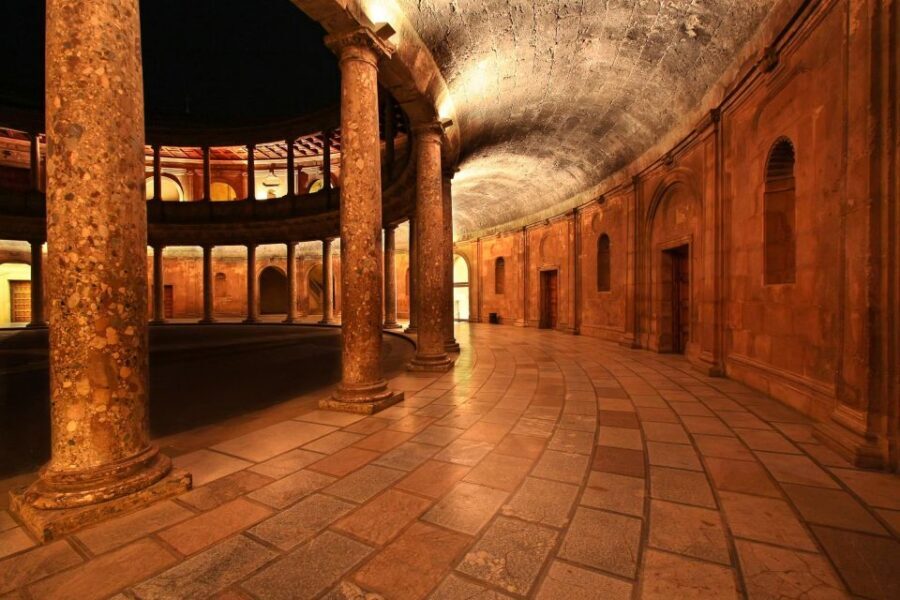
Even if you came for Moorish design, adding the Palace of Charles V is smart because it gives you contrast. The Renaissance palace feels different in feel and structure—more about large, formal presence—while the Nasrid spaces feel more like courtly patterns and flowing courtyards.
That contrast can be the best part of a night visit. You’re not just viewing one style; you’re seeing the overlap of eras and priorities. It’s also a relief for your brain after you’ve spent time inside smaller, detailed spaces in the palaces.
For many people, Charles V is the “breather” zone. You can pause, reset your route, and let the architecture snap back into focus without trying to read every ornament.
Keep in mind your ticket option controls whether you get this stop. If your goal is to see both palace worlds—Nasrid and Charles V—double-check that your chosen entry includes access to both.
Timing, Crowds, and How to Actually Get a Calm Experience
A night ticket sounds like a shortcut to calm. Sometimes it works beautifully. Other times, timed entry still creates bottlenecks right where everyone funnels in.
One thing that matters a lot: the site has multiple parts. If your route includes gardens plus palaces, you’re moving through a schedule of spaces while other groups do the same. That’s why you might feel “packed” even without a daytime crowd.
Here’s how you protect your experience:
- Go slow in the first big space. If you start rushing, you’ll feel behind for the rest of the route.
- Pick your must-sees early. Decide up front whether your priority is Nasrid Palaces or Generalife, then commit.
- Accept short pauses. If a crowd stops you, don’t treat it like a disaster. Alhambra is built for lingering anyway.
Also, the visit is listed as about 1.5 hours, and starting times depend on availability. That means you’ll likely be moving with a sense of “now or later.” If you’re the kind of person who likes to wander and get lost, you may need to set a personal rule: enjoy the wandering, but don’t let it steal your highlight rooms.
What to Bring (and What to Leave Behind)
Alhambra night entry is straightforward, but rules matter because security and space management are part of the deal.
Bring:
- Passport or ID card
Leave at home / don’t bring inside:
- Pets
- Baby strollers
- Luggage or large bags
- Backpacks bigger than 40 x 40 cm
A small-but-real tip: keep your bag modest and easy to manage. Even if you’re only going for 1.5 hours, you don’t want to spend half that time dealing with storage limits or re-packing.
Food and drinks:
- Eating and drinking are only allowed in certain areas. So don’t count on snacking your way through the palace rooms.
If you’re traveling with kids:
- For safety, children under 8 should hold hands with their parents or guardian.
- Child tickets for ages 3–11 must be booked at purchase and managed along with adult tickets. Children under 3 are provided at the monument ticket offices or at the entrance.
Price Value: Is About $15 Worth It?
At about $15 per person, this ticket price is mostly about value through timing and access. You’re paying for a shorter, nighttime window to experience major zones—especially if you would otherwise be stuck in the daytime crush.
The main reason it’s worth considering is the combination of:
- Moonlight atmosphere (the whole “night changes the mood” effect),
- Key architecture stops (Nasrid Palaces and possibly Charles V),
- Generalife gardens if your option includes them.
Is it perfect value for everyone? Not necessarily. If your goal is absolute quiet, you may be disappointed by crowd surges at entry points. And if your ticket option doesn’t match the rooms you most want to see, you’ll end up feeling like you paid for a route you didn’t fully get.
So the best value strategy is clear: pick the option that matches your top priorities, and assume you’ll be moving with a group pace.
Who This Alhambra Night Ticket Is Best For
This is a great fit if:
- You want the Alhambra at night experience without committing to a full-day strategy.
- You like architecture that reads differently under low light.
- You’re okay with a route that’s planned and paced, not totally free-form.
It may be less ideal if:
- You hate crowds even when they’re smaller.
- You’re traveling with lots of bulky luggage or large backpacks (limits are real).
- You’re planning heavy photography setups (tripods and flash aren’t allowed in key areas).
Wheelchair access is listed as available, but the palace spaces can still feel tight. If mobility is a concern, plan your route with your most important rooms first.
Should You Book the Granada Alhambra Night Visit?
If your dream is to see the Nasrid Palaces and/or Generalife with softer light and a calmer rhythm, this ticket is a smart move. For most visitors, the price-to-time ratio is strong: you get access to major highlights in about 1.5 hours, which is ideal when your Granada schedule is packed.
Book it if you:
- Choose the option that matches what you really want to see.
- Arrive ready for rules (no selfie sticks/tripods/flash, no big bags).
- Treat the visit as a focused evening walk, not a private tour.
Skip or reconsider if:
- You’re expecting a fully empty, silent palace experience with zero crowding.
- Your top priority requires specific closed-room access you haven’t confirmed for your exact night.
If you can match your ticket option to your must-sees, an Alhambra night visit is one of those choices that pays off fast—and stays in your head longer than you’d think.
FAQ
How long is the Alhambra night visit?
The visit duration is listed as 1.5 hours.
What parts of Alhambra can I visit with this ticket?
You can explore the Alhambra complex, including Generalife Gardens and Generalife access, and you may also have access to the Nasrid Palaces and the Charles V Palace if that option is selected.
Is a live or audio guide included?
No. A live or audio guide is not included.
Where does the visit start?
The meeting point may vary depending on the option booked.
What do I need to bring to enter?
Bring your passport or ID card.
Are baby strollers allowed?
No baby strollers are allowed. Baby buggies can’t enter the Nasrid Palaces or the Generalife Palace, but there is a special area for them.
Can I use a selfie stick, flash, or a tripod?
No. Selfie sticks, flash, and camera tripods are not allowed inside the Nasrid Palaces and closed areas.
Is the night visit wheelchair accessible?
Yes, wheelchair access is listed as available.
Who is this best for?
It’s best for people who want a shorter night visit to Alhambra’s major areas—especially those who prefer fewer daytime crowds and a calmer evening atmosphere.