REVIEW · 2-HOUR EXPERIENCES
PREMIUM 2 Hour Alhambra and Generalife Tour + tickets
Book on Viator →Operated by Granada Te Guía · Bookable on Viator
Two hours can change how you see Granada. This Alhambra + Generalife guided tour focuses on the standout spaces, with an official guide and entry tickets taken care of. I especially like that it’s structured like a tour of ideas—water, power, and belief—so you come away with stories, not just photos.
I also love the pace: you get multiple highlights in a short window, including Generalife and the fortress views from the Alcazaba. The group stays small (up to 15), and that makes it easier to ask questions and keep moving without losing the plot.
One thing to consider: you’ll see several major areas, but the Nasrid Palaces are not visited, even though the ticketing is included. If those palaces are your number-one must-see, you’ll need a different option.
In This Review
- Key highlights you’ll care about
- How This 2-Hour Alhambra and Generalife Tour Fits Your Day
- Meeting Point and Ending Spot: What to Do Right When You Arrive
- Stop 1: The Alhambra on Al-Sabika Hill (Why the Layout Matters)
- Stop 2: Palacio El Partal and the Pool-and-Sky Idea
- Stop 3: Generalife as a Garden of Rest (Acequia Real Included)
- Stop 4: Alcazaba Fortress (Views That Explain Power)
- Stop 5: Palace of Carlos V (A Brief Renaissance Chapter)
- What You Actually Get: Tickets Included, Nasrid Palaces Not Included
- The Real Value of $164.43: When This Price Makes Sense
- The Guide Factor: Why Juan’s Style Shows Up in Reviews
- Walking Notes: Steps, Shoes, and ID Requirements
- Should You Book This Alhambra + Generalife Tour?
- FAQ
- Is the tour in English?
- How long is the tour?
- Are tickets included?
- Does the tour include the Nasrid Palaces?
- Where do we meet and where does it end?
- What’s the group size?
Key highlights you’ll care about

- Official guide with English and a clear storytelling focus, not just a walk-through
- Tickets included for the monument areas you’ll actually visit
- Generalife’s Acequia Real and garden layout are part of the explanation, not just scenery
- Alcazaba fortress views help you understand how the Nasrid dynasty defended the hill
- Carlos V Palace ends the tour near the finishing point, so you can plan the rest of your day
How This 2-Hour Alhambra and Generalife Tour Fits Your Day

If your Alhambra day is already packed, this format helps you get the basics fast. You’re looking at an “Alhambra complex highlights” route that still takes time to explain what you’re seeing. In about 2 hours, you move from palace-garden design to fortress strategy, then finish by the Carlos V area.
This tour is also built for clarity. The visit is organized into five stops—Alhambra, Palacio El Partal, Generalife, Alcazaba, and a brief look at the Palace of Carlos V—so you don’t spend your limited time wandering. And since it’s offered in English, you won’t have to do mental translation to follow the key points.
The main tradeoff is scope. It’s short by design, and that’s why the tour skips the Nasrid Palaces, which are often the most requested ticket in the whole complex. Think of this as a high-impact sampler that gives you context—then decide later if you want to upgrade to the palaces-only experience.
You can also read our reviews of more tours and experiences in Granada


Meeting Point and Ending Spot: What to Do Right When You Arrive
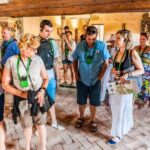
You start at Cam. Viejo del Cementerio, 19, Centro, Granada. That’s where you’ll meet your guide before moving into the Alhambra zone.
You end by the Carlos V Palace area—near Puerta del Vino (Pl. Algibes Alhambra, 2T, Centro, 18009 Granada). Ending here is practical because it places you close to where many people want to continue exploring on their own. It also helps keep the tour from feeling like you’re retracing steps.
Plan for a little walking time even before the official tour begins. The Alhambra area involves elevation and footpaths, and the tour itself includes a lot of movement between stops. Good shoes are not optional; they’re how you keep the experience pleasant instead of annoying.
Stop 1: The Alhambra on Al-Sabika Hill (Why the Layout Matters)
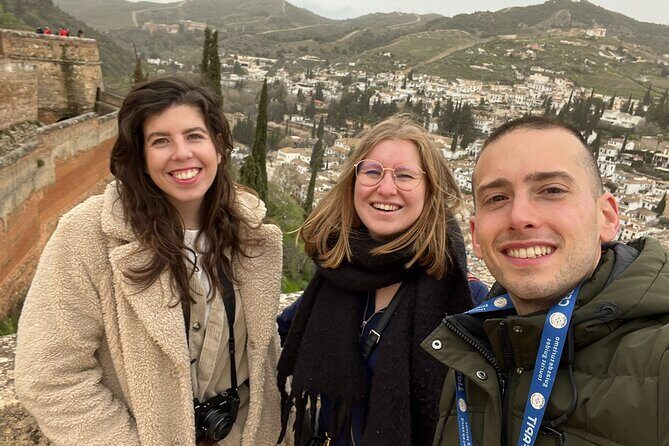
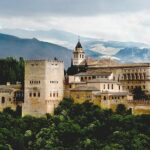
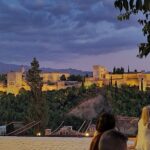
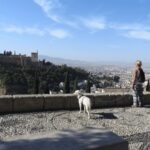
Your first stop is the Alhambra, guided through the meaning behind its design. The complex sits on the hill called Al-Sabika, and the guide frames it as something that evolved over time. At first it was a military fortress, then it became a palatial city with water and gardens.
This is where the stories do real work. You’ll hear about the sultans who dominated the ancient kingdom of Granada, and you’ll get the big turning point at the end of Muslim rule in Spain. The guide connects that shift to Boabdil handing the city over to the Catholic Monarchs Isabel and Fernando, closing 781 years of Muslim rule in the Iberian Peninsula.
The value here is understanding the “why,” not just the “what.” Once you see how a hilltop fortress turns into a water-and-garden palace setting, the rest of the complex makes more sense. Even in a short visit, you’re building a mental map that pays off when you look around on your own afterward.
Stop 2: Palacio El Partal and the Pool-and-Sky Idea
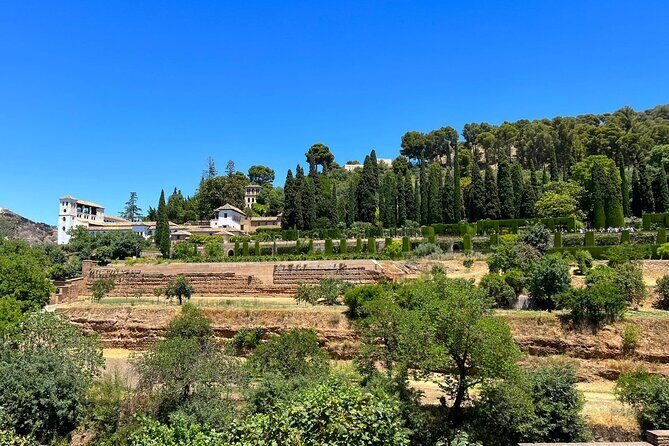
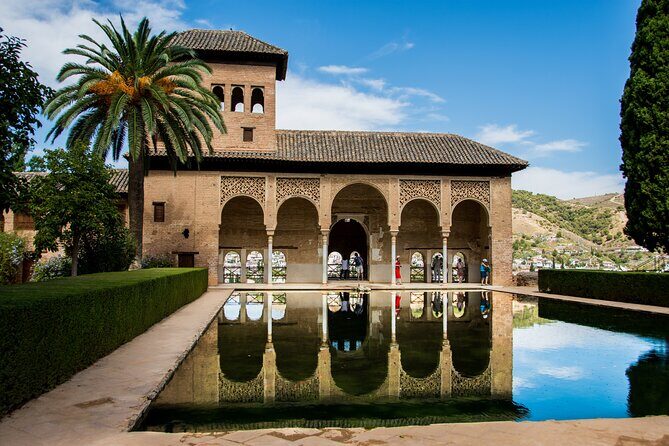
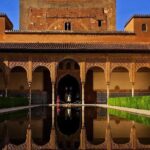
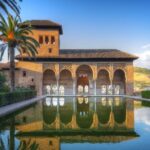
Next comes Palacio El Partal, one of the jewels within the Alhambra complex. This palace is described as a small astronomical observation center, and the guide ties the space to function, not only decoration.
The centerpiece is the large pool and the gardens around it. That combination matters because it shows how design choices served everyday and ceremonial life—water features weren’t just pretty, they were part of how the place worked. You’ll get time to slow down here and absorb the setting rather than rushing through.
In a “fast tour,” this kind of stop is gold. It gives your eyes a break from pure walking and gives your brain something specific to notice. If you love architecture that hints at science, planning, and aesthetics at the same time, this is a strong moment.
Stop 3: Generalife as a Garden of Rest (Acequia Real Included)
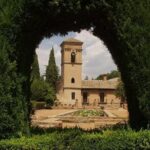
Generalife is next, often the emotional high point of the route. It’s described as a farm for rest and recreation for the Nasrid sultans, and the guide sets the tone as an expression of paradise. You’ll hear the poetic description: Dar al-Mamlaka al Sa’ida, the Royal House of Happiness.
The route includes the famous Acequia Real, a channel that waters orchards and aromatic plants. This is one of those details that makes the gardens feel more intentional. Instead of “pretty plants over there,” you understand how the water system supported the whole experience.
This stop is also where photos can disappoint you if you don’t slow down. The gardens’ effect is tied to spacing, sound, and how water moves through the layout. You’ll want to use the time you get to look at the paths and edges, not just the most photographed angles.
You can also read our reviews of more tours and experiences in Granada


Stop 4: Alcazaba Fortress (Views That Explain Power)
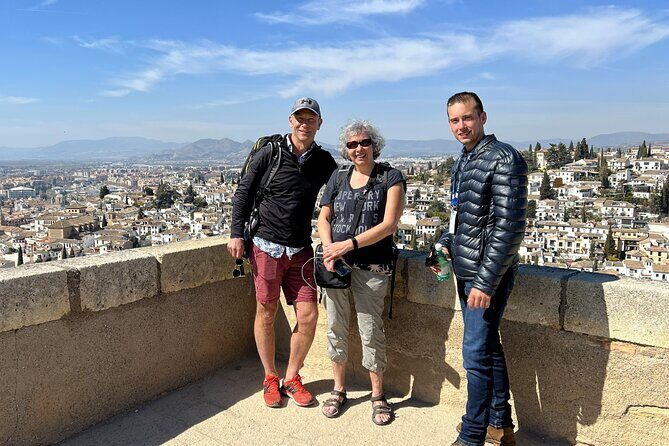
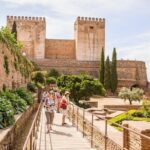
Then you move to the Alcazaba, the fortress and military base of the Alhambra. The key point here is defense: it was strategically built to protect the Nasrid dynasty from attacks, including threats from the Christian side. Even if you don’t consider yourself a history buff, this stop helps you read the whole complex from a new angle.
The payoff is at the towers. The views from the towers are part of why this stop is worth your time. From up there, you can understand why a hilltop stronghold is so effective—and why the placement of different areas matters.
The drawback of fortress viewing is time pressure. You’ll have a set window, so you can’t linger like you might in a full-day visit. Still, even a shorter look can connect the dots between politics, architecture, and survival.
Stop 5: Palace of Carlos V (A Brief Renaissance Chapter)
The tour finishes with the Palace of Carlos V area. This is a Christian construction that began rising in the early 16th century, and it signals a shift in artistic style toward the Renaissance.
The guide frames it as part of the Reconquest story—one of the symbols of Christianity’s triumph after the earlier Muslim rule ended. Even with limited time, that context changes how you see the palace. You’re not just looking at another building; you’re seeing a “new era layered over old ground.”
This ending also makes sense logistically. Since you wrap up near Puerta del Vino by the Carlos V area, you’re positioned to keep exploring without having to backtrack across the whole complex.
What You Actually Get: Tickets Included, Nasrid Palaces Not Included
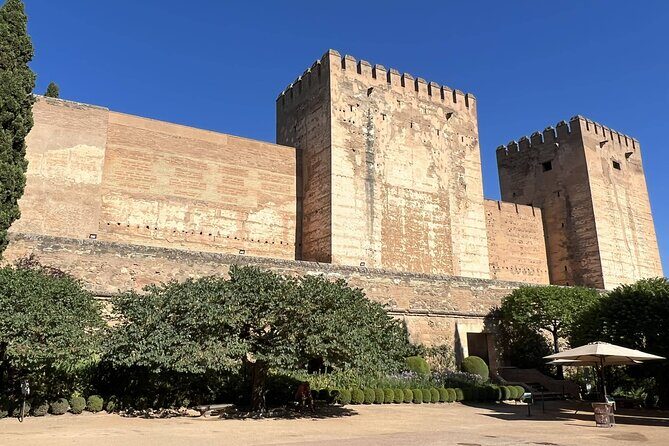
This is a “tickets included” tour, but tickets are only useful for what you’re allowed to enter. The included entry covers the monument areas you visit during the route, and you’re not asked to handle separate payments for those stops.
That said, the Nasrid Palaces are not visited. This is the biggest decision point for your booking. If you’ve come specifically for the Nasrid Palaces interiors, you may feel underwhelmed by a tour that spends time on gardens and fortress areas instead of those palace interiors.
If you’re flexible and want context, this tour can be a smart way to get oriented. You’ll still learn who ruled, why the complex changed, and how water and design shaped daily life. Then, if you later decide you want to see the Nasrid Palaces, you’ll be able to approach them with a much better understanding of what you’re looking at.
The Real Value of $164.43: When This Price Makes Sense
At $164.43 per person, this is not a budget “walk and hope” option. You’re paying for two things: official guiding during your limited time and admission fees for the areas included in the route.
So here’s when the value really clicks:
- You want a structured route in English without managing tickets mid-day
- You care about the story behind the architecture, not just the visuals
- You’re short on time and want the garden, fortress, and city-within-a-fortress feeling in one go
- You prefer a small group (max 15) so the guide can keep pace and answer questions
Where it may feel expensive is when your must-see list is very narrow—especially if the Nasrid Palaces are your top priority. Since they’re excluded here, you’re paying for an “overall understanding” tour rather than a “palace interiors only” experience.
I like to think of it as paying to save your brain’s energy. In two hours, a good guide helps you avoid sightseeing confusion and leaves you with a framework you can use.
The Guide Factor: Why Juan’s Style Shows Up in Reviews
One clear theme from the feedback is the guide experience. Juan is specifically mentioned for being easy to communicate with, waiting patiently when someone arrived late, and delivering history in perfect English. That kind of service matters in a place where timings and entry rules can be stressful.
A strong guide also helps you notice details you’d otherwise miss—like why certain spaces were designed for observation or how water management ties into the atmosphere of Generalife. You get more than a route; you get a set of explanations you can reuse while you explore on your own.
Since the group size tops out at 15, you’re more likely to get attention instead of being one face in a crowd. That can make a short tour feel smoother.
Walking Notes: Steps, Shoes, and ID Requirements
This tour includes walking between stops, and the terrain inside the Alhambra complex involves steps. Comfortable shoes are strongly recommended, and it’s worth taking seriously. If your feet run hot or you don’t like uphill stairs, plan to go slower and take advantage of every resting moment you’re given.
You should also come ready with the right identification. For children over the age of 14, the original ID or passport must be carried throughout the visit. Even if you’re an adult, having your passport or ID handy is a good habit for crowded checkpoints and quick entry moments.
Service animals are allowed, and the meeting area is near public transportation. If you’re managing mobility, just know that this is an outdoor walking experience with stairs and uneven paths.
Should You Book This Alhambra + Generalife Tour?
Book it if you want a short, high-clarity introduction to the Alhambra complex: gardens at Generalife, the astronomical twist of Palacio El Partal, fortress strategy at the Alcazaba, and a guided context for the Christian-era presence at Carlos V. The included entry fees and the official guide make it an efficient use of time in Granada.
Skip it or consider a different option if the Nasrid Palaces are your main goal. This tour can still be enjoyable for the broader architecture and views, but it won’t scratch the “palace interiors” itch.
My practical test for you: if you’re trying to fit Alhambra into a tight schedule, this is a solid way to get the big picture without wasting time on logistics.
FAQ
Is the tour in English?
Yes. The tour is offered in English.
How long is the tour?
It runs for about 2 hours.
Are tickets included?
Yes. Entrance fees to the monument areas included in the tour are part of the price.
Does the tour include the Nasrid Palaces?
No. The tour does not include the Nasrid Palaces.
Where do we meet and where does it end?
You meet at Cam. Viejo del Cementerio, 19, Centro, 18009 Granada, Spain. The tour ends next to the Carlos V Palace, near Puerta del VinoPl. Algibes Alhambra, 2T, Centro, 18009 Granada, Spain.
What’s the group size?
The tour has a maximum of 15 travelers.