REVIEW · HISTORICAL TOURS
Granada: Royal Chapel and Historical Center Walking Tour
Book on GetYourGuide →Operated by Granada Tours a Pie · Bookable on GetYourGuide
Royal tombs and old markets in 90 minutes. On this Granada Royal Chapel and Historical Center walk, I love that you get skip-the-line access to the Royal Chapel and that the guide points out the marble tombs of Isabella and Ferdinand right where the story happened. It’s a tight route through Christian Granada and the city’s earlier Arabic lanes, so you see how power and faith shaped everyday streets.
One thing to plan for: religious dress rules. You’ll need shoulders covered and short skirts are off-limits, and the tour isn’t suitable for wheelchair users. Still, if you pack for comfort, the 1.5-hour pace moves you from Plaza Bib-Rambla to the Alcaicería and finishes at La Madraza, Granada’s 14th-century Islamic university.
In This Review
- Top reasons this Granada historical-center route works
- Royal Chapel: the royal tombs that anchor the whole tour
- Plaza Bib-Rambla: the city gate origin behind the Gate of Ears
- Alcaicería: an Arabic marketplace you can actually wander
- Royal Chapel tombs: what you’re really looking at
- La Madraza: Granada’s 14th-century Islamic university still in use
- 1.5 hours in practice: what the short format gets right
- Dress code and on-the-ground comfort tips for religious sites
- Price and value: is $31 worth it?
- Language and guide quality: what helps most on this route
- Who should book this tour (and who might prefer something else)
- Final call: should you book Granada Royal Chapel and Historical Center?
- FAQ
- FAQ
- Where is the meeting point for the tour?
- How long is the Granada Royal Chapel and Historical Center walking tour?
- What’s included in the tour price?
- Is there skip-the-line access?
- Which languages are the live guides available in?
- What should I wear to enter the religious buildings?
- Is the tour suitable for wheelchair users?
- Can I bring pets or large bags?
- Is free cancellation available?
Top reasons this Granada historical-center route works
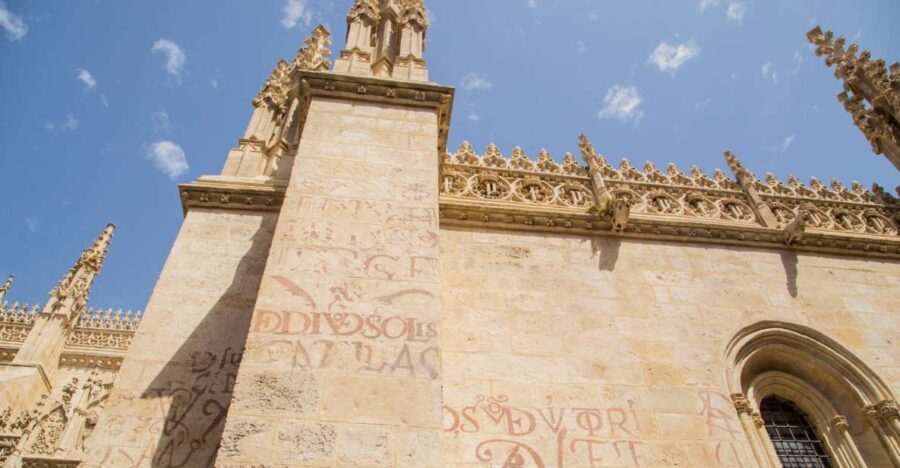
- Royal Chapel stop with major royal burials: Isabella, Ferdinand, Joanna I, and Philip the Handsome
- Plaza Bib-Rambla and the Gate of Ears story, tied to how the city’s entrance worked
- Alcaicería market lanes: narrow walkways, with silks and fragrant spices to browse
- La Madraza’s architecture: Granada’s first Islamic university, built in the 14th century
- A live guide in English or Spanish, plus a separate entrance for less waiting
Royal Chapel: the royal tombs that anchor the whole tour
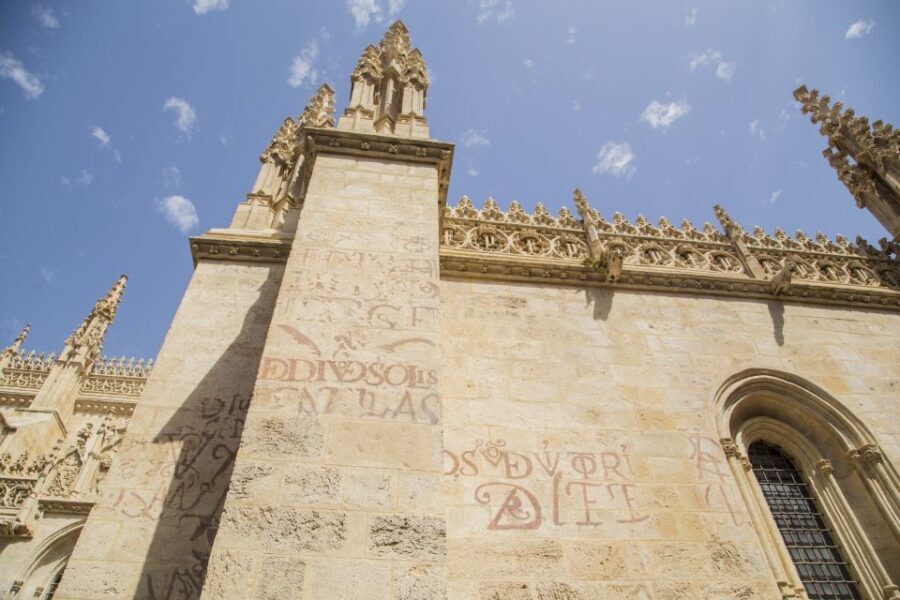
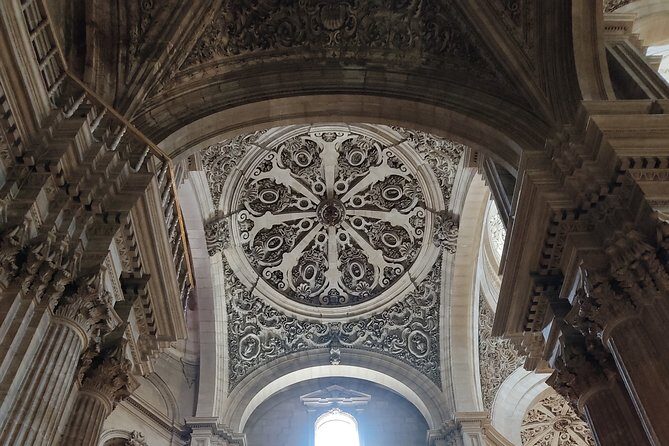
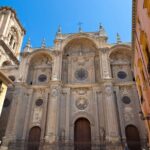
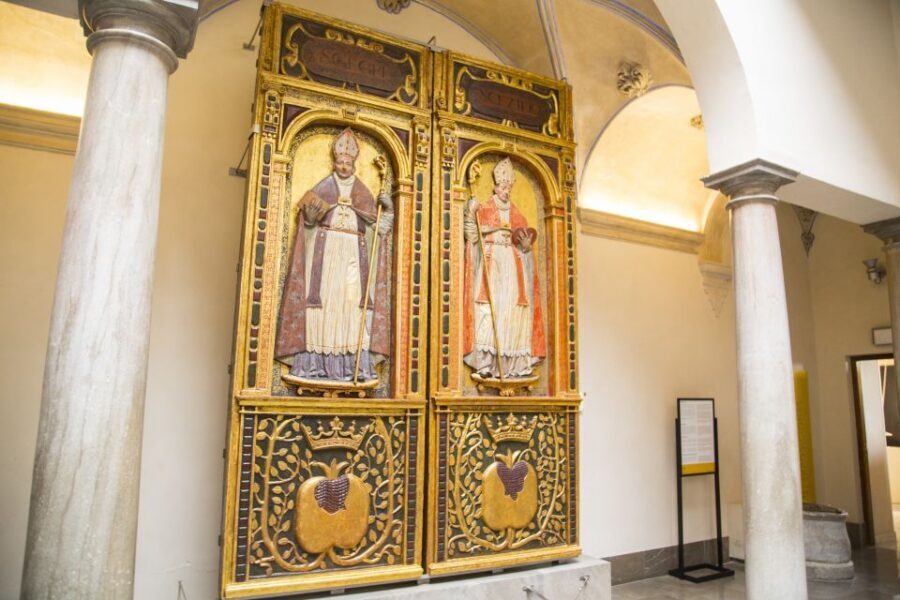
If you only do one “wow” stop in Granada, make it the Royal Chapel. It’s the second most-visited site in the city, and it’s not just pretty inside. It’s where multiple Catholic monarchs are laid to rest, including Isabella and Ferdinand, plus their daughter Joanna I and son-in-law Philip the Handsome.
This is the kind of place where your guide’s job matters. Without context, a chapel can feel like a stunning room you hurry through. With a guide, the tombs become a timeline you can actually follow, and you start noticing details that connect royalty, religion, and Spanish history in one enclosed space.
One practical note: since it’s a religious building, you’ll be managing your expectations about pace. Expect a careful visit, not a casual stroll, and plan to dress so you can comfortably spend time there.
You can also read our reviews of more walking tours in Granada

Plaza Bib-Rambla: the city gate origin behind the Gate of Ears
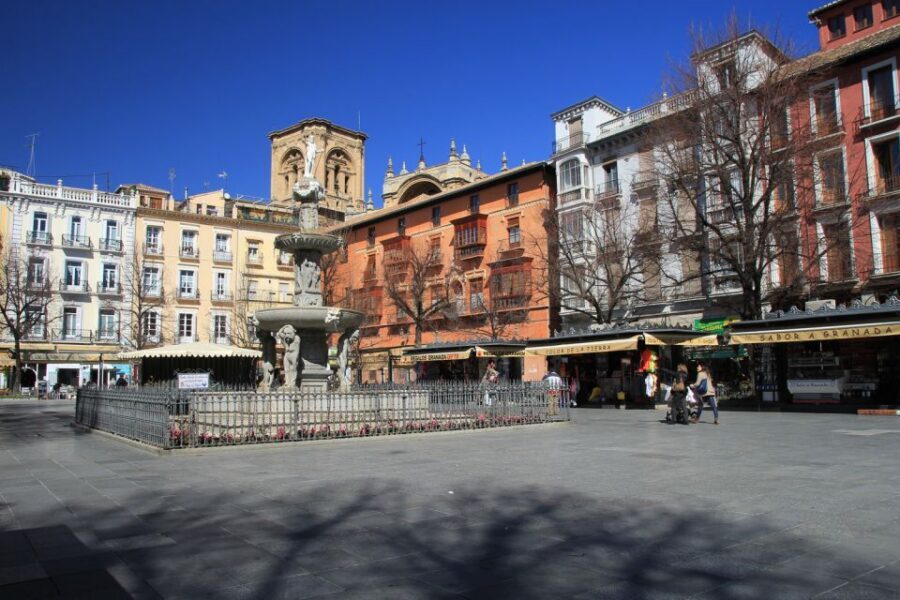
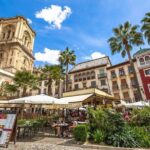
Your tour begins in Plaza Bib-Rambla, a central square that used to act as the city’s entrance area. It’s the perfect warm-up because you’re standing in the middle of everyday Granada, not at the edge of a historical museum.
Here, you’ll learn the story behind the Gate of Ears. Even if you’ve heard the nickname before, hearing the explanation on-site gives it weight. It’s one of those local details that makes you look at a city differently, because the “why” connects names to real places.
It also sets your route up nicely. From the square, you’re soon walking toward the older commercial lanes, so the tour doesn’t feel like a one-room visit. You’re getting the sense of how people moved through town, from an entrance point into markets and institutions.
Alcaicería: an Arabic marketplace you can actually wander
After the square, the next stop is the Alcaicería, Granada’s Arabian marketplace. This is the part of the walk that feels most like “current Granada,” even though the roots are medieval.
You’ll move through narrow, winding walkways where you can browse souvenirs or just soak in the visual chaos in a good way. This market is known for a wide range of goods, including silks and fragrant spices. Even if you don’t buy anything, it helps you understand how trade shaped the city’s identity.
Here’s how to get the most out of this section:
- Keep your eyes up as well as down. The lanes feel best when you notice how the space channels you.
- If you do shop, treat it like browsing for stories, not like a fixed price scavenger hunt.
One potential downside: markets can be crowded at peak times. Since your tour is 1.5 hours total, you don’t get endless wandering time. Think of this stop as a guided orientation to the market, not a full shopping expedition.
Royal Chapel tombs: what you’re really looking at
When you arrive at the Royal Chapel, the highlight is the marble tombs of major royal figures. The key names to remember are Isabella and Ferdinand, along with Joanna I and Philip the Handsome. Your guide’s explanations are what tie those names to the building itself.
What makes this stop powerful is how concentrated everything is. You’re not looking at scattered monuments across town. You’re seeing a physical resting place for people who shaped a nation’s religious and political direction.
Also, the chapel’s popularity can mean lines. That’s exactly why this tour’s format is smart: it includes entrance and skip-the-line via a separate entrance. You trade some waiting time for more time appreciating the tombs and listening to the story around them.
If you’re the type who likes to “connect the dots,” this is your moment. The Royal Chapel stops being a single attraction and starts feeling like the centerpiece for everything you’ll see on the historical-center walk.
La Madraza: Granada’s 14th-century Islamic university still in use
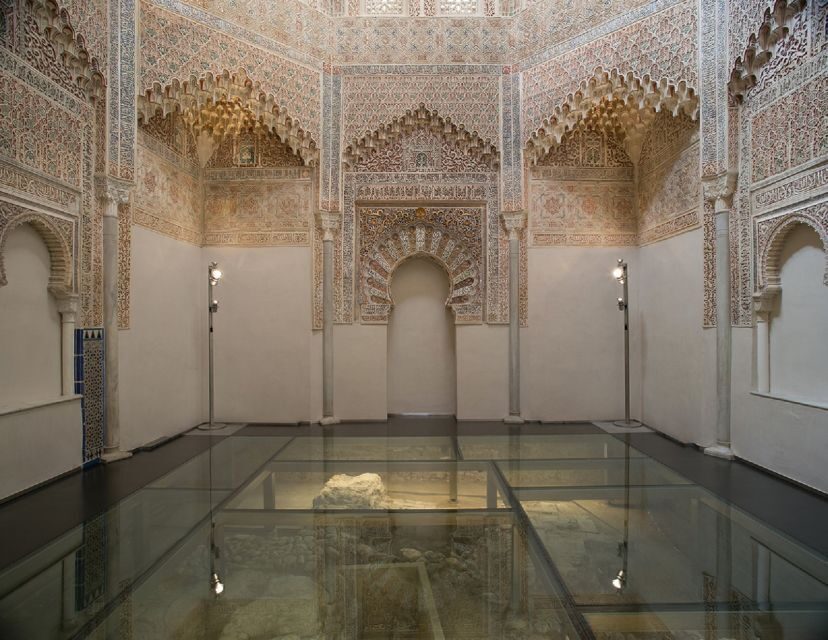
The tour wraps up at La Madraza, an architectural standout with a very specific identity: it’s tied to education. La Madraza is the first Islamic university of Granada, built in the 14th century.
The best part is that it’s not just ruins. The building is still part of the city’s University, so you’re standing in a structure that continues to serve a purpose. That continuity changes how you experience the stonework. Instead of thinking only about what’s gone, you also notice what’s still operating.
From a travel value perspective, this stop balances the Royal Chapel. One site represents Catholic monarchs and royal burial. The other represents Islamic scholarship and civic education. Seeing them close together helps you understand Granada as a layered city, not a single narrative.
If you like architecture, don’t rush this end point. You’ll likely only spend a limited time there, but it’s worth pausing so the shapes and scale register, especially given the building’s age and ongoing role.
You can also read our reviews of more historical tours in Granada




1.5 hours in practice: what the short format gets right
This is a quick tour, clocking in at 1.5 hours. That makes it a strong choice on a day when you want to do more in Granada afterward, like exploring neighborhoods or pairing it with another nearby attraction.
The route also makes efficient sense. You start at Plaza Bib-Rambla, walk through the Alcaicería market area, hit the Royal Chapel, then end at La Madraza. It’s not random. It’s a historical center loop that moves you through different eras and functions: entry square, trading lanes, royal religious space, then educational institution.
Because the total time is short, you should go in with the right mindset. Don’t expect a slow, art-gallery pace. Instead, let the guide “set the frame” for what you’re seeing. Then, if you want more time after the tour, you’ll know exactly what to return to on your own.
Your best scheduling move: book this earlier in your day if possible. Learning the Gate of Ears story and seeing the market layout makes it easier to wander afterward without feeling lost.
Dress code and on-the-ground comfort tips for religious sites
This tour includes religious buildings, so you’ll need to plan your outfit. Shoulders must be covered, short skirts are prohibited, and sleeveless shirts are not allowed. Modest dress is required to enter the spaces.
Also bring comfortable shoes. You’ll be walking through Granada’s central streets and market lanes, which can be uneven or crowded. Comfortable footwear makes the whole experience smoother, especially since the visit is time-efficient and you’ll want to move comfortably between stops.
A couple more “know before you go” items matter for day-to-day comfort:
- Short skirts and sleeveless shirts are out.
- Pets are not allowed.
- Luggage or large bags are not allowed.
If you’re traveling light, great. If not, plan ahead so you’re not stressed carrying items during the tour.
Price and value: is $31 worth it?
At $31 per person for a 1.5-hour guided walk, the value comes from a few specific pieces.
First, you get entrance to the Royal Chapel and entrance to La Madraza. Those stops are the core “ticketed” moments of the tour, and both are major attractions in Granada’s historic center.
Second, you get skip-the-line access through a separate entrance. That’s not just a convenience perk. It’s a time saver in a popular area, and time is the most expensive part of a short visit.
Third, you’re paying for interpretation. The tour isn’t only about being inside impressive spaces. It’s about understanding why the names matter (Isabella, Ferdinand, Joanna I, Philip the Handsome), why the Gate of Ears has that name, and why La Madraza matters as Granada’s first Islamic university.
Could you do the sites on your own? Yes, depending on your comfort with navigating and your interest in independent reading. But if you want the story delivered while you’re standing in front of the details, this price often feels fair for what you get.
Language and guide quality: what helps most on this route
The tour offers live guidance in English and Spanish. That matters on this kind of historical route, because the main “value” is the explanation connecting places to the people and systems behind them.
Some guides are especially good at making the language feel manageable for visitors who aren’t fluent. If you’re not fully confident with Spanish, you’ll still be fine with an English option, and even on Spanish-language tours, it’s reassuring when guides slow down and make the core points clear.
Also, flexibility can matter when you’re dealing with historic buildings and their day-to-day access. If something is closed or restricted, having a guide who can adapt helps you keep momentum and not lose the day’s worth of sightseeing.
Who should book this tour (and who might prefer something else)
I’d recommend this tour if you want:
- A short, guided Granada overview focused on two major indoor historical sites
- A blend of Christian royal history and Islamic educational heritage
- A market stop that’s meant for context, not just shopping
This is less ideal if you want long time inside each building. Since it’s 1.5 hours total, you’ll see highlights and learn the story, but you won’t linger for hours in one place.
It also isn’t suitable for wheelchair users, based on the tour’s stated suitability.
Final call: should you book Granada Royal Chapel and Historical Center?
If your goal is to understand Granada fast, with real context and minimal waiting, this is a solid choice. The Royal Chapel is the main event, and skipping the line makes it feel efficient without cutting the important parts. The pairing with La Madraza gives you a more balanced picture of how different civilizations and institutions shaped the city.
Book it if:
- You’re okay following a modest dress code.
- You want a guided framework for the Gate of Ears story, the Royal Chapel tombs, and La Madraza’s significance.
- You’d rather spend 90 minutes learning key connections than doing a slow self-guided shuffle.
Don’t book it if:
- You need wheelchair-accessible routes.
- You’re not willing to cover shoulders or you won’t be able to dress modestly for religious entrances.
FAQ
FAQ
Where is the meeting point for the tour?
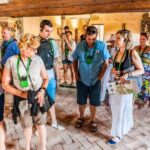
Meet in Plaza Bib-Rambla. Your guide waits with an orange umbrella.
How long is the Granada Royal Chapel and Historical Center walking tour?
The tour lasts 1.5 hours.
What’s included in the tour price?
The tour includes entrance to the Royal Chapel and entrance to La Madraza.
Is there skip-the-line access?
Yes. You’ll use a separate entrance to help you skip the line.
Which languages are the live guides available in?
The live guide is available in English and Spanish.
What should I wear to enter the religious buildings?
You’ll need modest clothing. Shoulders must be covered, and short skirts are prohibited.
Is the tour suitable for wheelchair users?
No. The tour is not suitable for wheelchair users.
Can I bring pets or large bags?
Pets are not allowed, and luggage or large bags are not allowed.
Is free cancellation available?
Yes. You can cancel up to 24 hours in advance for a full refund.